Srbija
 Hrvatska
 Slovenija

Die Linke's Ines Schwerdtner for N1: Without class politics, the left has no future


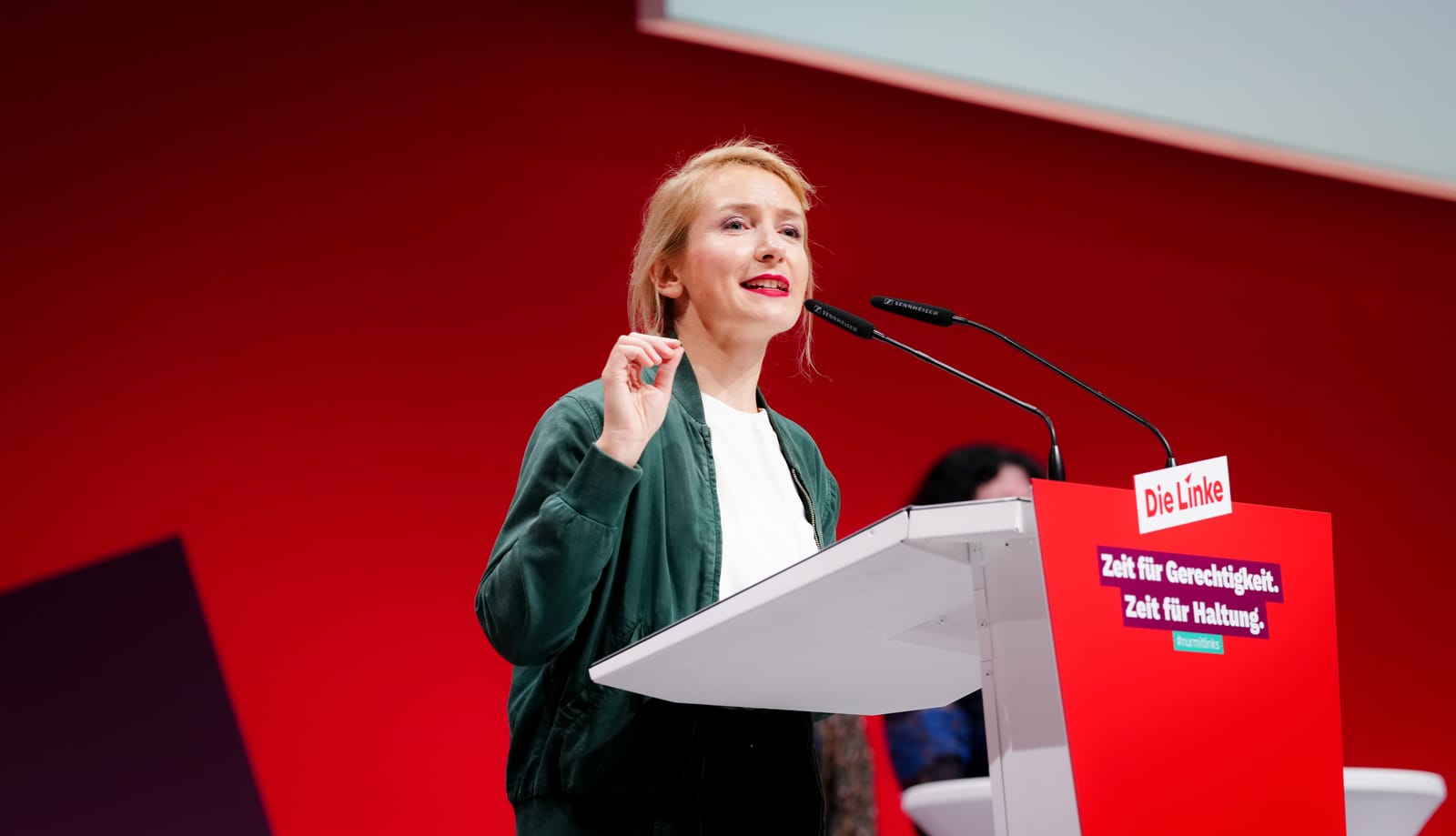
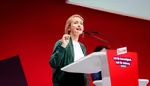
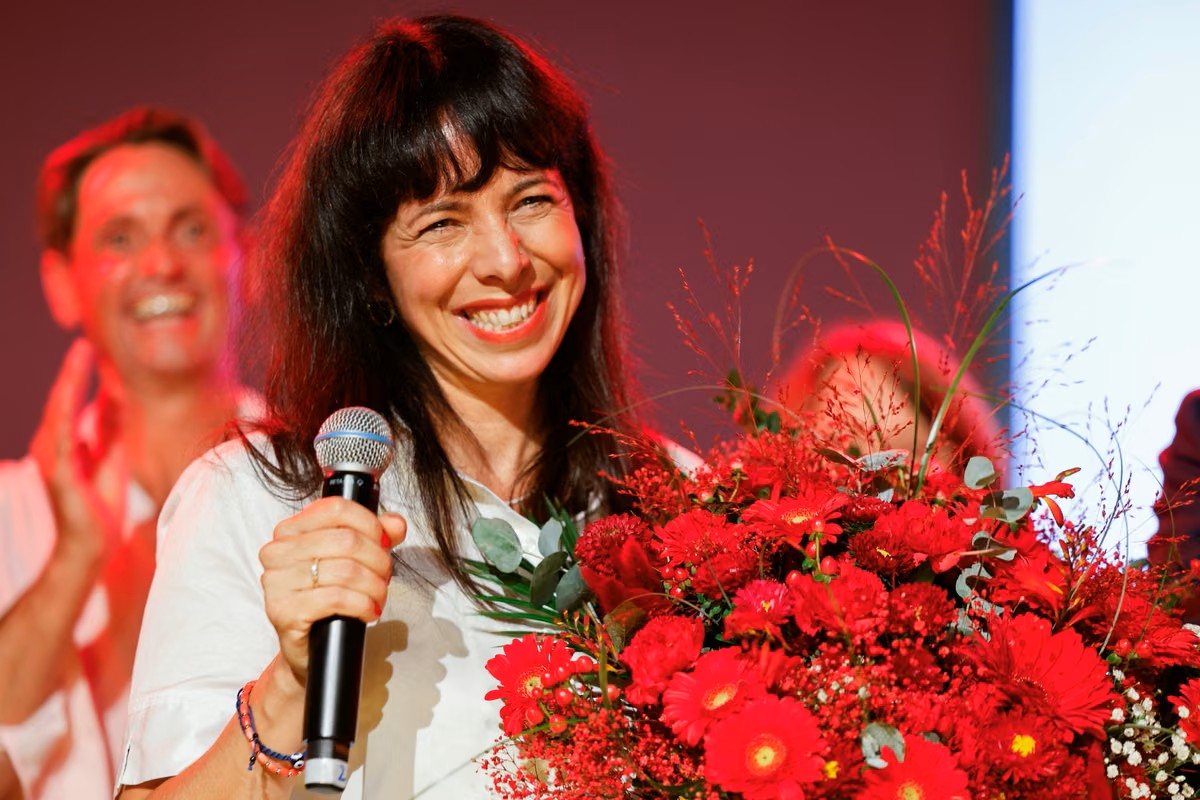
Ines Schwerdtner, co-chair of Germany's Die Linke (The Left), believes that the European left can regain political influence only by putting people's material concerns at the centre of its politics. In an interview with N1's Nikola Vucic, she discusses the party's success in Berlin, the rise of the far right, the relationship between class politics and identity, and the need to build a credible political alternative to neoliberalism.
Schwerdtner, who previously served as editor-in-chief of the German edition of Jacobin magazine, is among the prominent voices of a new generation of German left-wing politicians. Drawing on Marxist political theory and practical organizing, she argues that solidarity must become something people experience in their everyday lives, rather than merely a political slogan. She also responds to Slavoj Žižek's assessment of the Alternative for Germany (AfD), warning that the far right has no viable vision of a better society but remains determined to hold on to political power.
N1: The success of Die Linke in Berlin is particularly remarkable at a time when many European societies are shifting to the right. What has Die Linke found in Berlin that it has lost elsewhere? Is it a new form of class politics, a new political language, or a combination of social and cultural issues?
Ines Schwerdtner: We are very happy with the result. The most important thing is listening. We went door to door, listened to people's concerns and offered practical help. While others tried to explain the world to people, we let people tell us what mattered to them in everyday life. Across Germany, it was prices; in Berlin, it was especially rents. Housing was our number one issue. In 2021, Berlin voted in a referendum to bring the housing stock of major property companies into public ownership. We were the only party clearly committed to implementing that decision.
We focus on a few issues that affect everyone. When I became party co-chair, Die Linke had good policies, but people on the street could not really say what the party stood for. We changed that. It was also important that we nominated Elif Eralp, a very empathetic and charismatic mayoral candidate. She has a remarkable ability to connect with people from different neighbourhoods and backgrounds. I believe she played a major role in making us the only party that could convey optimism during the campaign.
N1: The right has been successful in articulating social insecurity politically, while the left often seems to reach mainly its own political milieu. What kind of political language could help the left reconnect with broader sections of society without abandoning its principles?
Ines Schwerdtner: What matters is a credible commitment to people's material interests. Even before the election campaign, we offered help against excessive rents and incorrect heating bills, and supported tenants in organizing themselves. Listening is the first and most important step. The second is helping people overcome their sense of powerlessness.
I want to defend an enlightened populism. We can and should communicate in a populist way and distinguish ourselves from the mainstream, but the purpose must be to expose the actual relations of power and ownership in society. Our populism should make people more politically aware, not less intelligent. We have a chance against the neoliberal centre and the fascist right only if we make solidarity something people can experience again. We need to establish a third political pole, a pole of hope. But that cannot be achieved through abstract declarations alone. Direct contact with people and practical experience are indispensable.
N1: You come from a background in political theory and journalism. Does today's left primarily lack a new theoretical foundation, or does it need better organization, stronger social roots and a lasting presence in people's everyday lives?
Ines Schwerdtner: One must follow from the other. Left-wing political theory cannot be developed in an ivory tower. I will always defend the value of independent intellectual work, but it must be connected to political practice if it is to bear fruit in society. I personally identify with a tradition of Marxist theory that played a relatively minor role in West Germany and later in reunified Germany: the so-called Marburg School, whose most important representative was Wolfgang Abendroth. In recognizing that Marxist theory must not become detached from the actually existing workers' movement, the Marburg School was ahead of the Frankfurt School. I believe we would be stronger today if that tradition had carried greater weight.
N1: How can Die Linke defend class interests, gender equality, migration and minority rights while developing a common political language that does not fragment into ever smaller identity groups?
Ines Schwerdtner: That is exactly what I am trying to achieve. We do not hide our positions on feminism, anti-racism or queer rights. But our focus is the class question. We openly say that material concerns affect the vast majority of people, and we emphasize what people have in common rather than the differences within the working class. Housing, for example, affects women and queer people even more directly and harshly than others. We defend every group, but we talk about what affects everyone.
N1: I come from Bosnia and Herzegovina, where social issues, ethnic identity, religion and memories of war are deeply intertwined. Can the European left develop a universal political language that transcends national and cultural differences without ignoring specific historical experiences?
Ines Schwerdtner: Of course, the social situation in Bosnia and Herzegovina cannot be directly compared with Germany's, but we are also a very diverse country, and not only in terms of migration. We have strong regional identities, many of which are older than Germany as a nation-state. I was born in East Germany but grew up in Hamburg, so I was shaped by two countries and societies that have still not fully come together. That does not mean I practise East German identity politics. But I relate differently to the biographies of people from the former GDR than someone whose background is entirely West German. People in my constituency in East Berlin and elsewhere in eastern Germany can sense that.
Nevertheless, we emphasize common experiences through a consistent class politics. Everyday problems differ between neighbourhoods and regions, but people everywhere experience the consequences of cuts and exploitation.
N1: Do you see Die Linke's success in Berlin as a possible sign of a new left-wing moment in Europe? What would need to happen for individual electoral victories to become a lasting political and social renewal?
Ines Schwerdtner: I am very critical of thinking in terms of waves of hype. We learned a great deal about successful left-wing communication, both in Berlin and during the 2025 federal election campaign. We built on established organizing and campaigning approaches and learned from others. Of course, we are happy that this has paid off. But if we really want to change the political direction of Europe, we need decades of organizational development. We can learn from the Communist Party of Austria (KPÖ). Its strong position in Graz is the result of decades of work, including work outside city hall. Lasting political strength cannot be built through electoral campaigns alone.
N1: The rise of the AfD worries many people in Germany and across Europe. Slavoj Žižek recently argued that the AfD's success in Saxony-Anhalt was not surprising, but rather surprisingly late, and that the party is now the only major political force offering a genuine alternative to the existing order and articulating the concerns of the majority through mass mobilization. How do you assess this argument? And what should Die Linke do to become a credible political alternative itself?
Ines Schwerdtner: The AfD creates the appearance of offering a genuine alternative to the political order by provoking scandals. What it actually offers is an authoritarian, brutalized and ethnicized form of neoliberalism, similar to what the CDU and large parts of the SPD represent. The right has no functioning economic or social model to offer anywhere in the world. We can see this with Trump, but also with Orbán and Milei. It cannot even contain class conflict in the classical Keynesian sense, even if it wanted to. It can only cover it up. That does not make the right any less dangerous. On the contrary, it means that, in the medium term, it can remain in power only by increasingly intensifying violent repression.
No, fascists have no plan for a better future, anywhere. But that does not mean they are not serious about their intention to seize political power permanently and never give it up. If we want to challenge them, we must offer a genuine alternative that noticeably improves people's everyday lives. Defeating the right is not primarily a question of political gestures. As a left-wing party, we must credibly oppose the establishment, but that begins with material issues. We also demonstrate our credibility by doing politics differently: limiting our parliamentary salaries to the average wage, helping people deal with authorities or landlords, and showing them that we are there for them and that they can rely on us.
N1: One frequently repeated criticism of today's left is that it has become too “woke”, too focused on cultural issues, and has consequently lost touch with the social and material problems of broader sections of society. Do you think this criticism is justified, or does it present an oversimplified picture of the left? How should the left respond?
Ines Schwerdtner: You have to defend your principles, even when doing so makes you unpopular. But that alone will not get you very far. A left that does not place material questions at the centre of its politics is condemned to irrelevance. Defending the material interests of the working class is not everything, but without it, everything else amounts to nothing.
Kakvo je tvoje mišljenje o ovome?
Učestvuj u diskusiji ili pročitaj komentare


Kakvo je tvoje mišljenje o ovome?
Učestvuj u diskusiji ili pročitaj komentare