Srbija
 Hrvatska
 Slovenija

BiH generates over one million tonnes of municipal waste annually, most still ends up in landfills


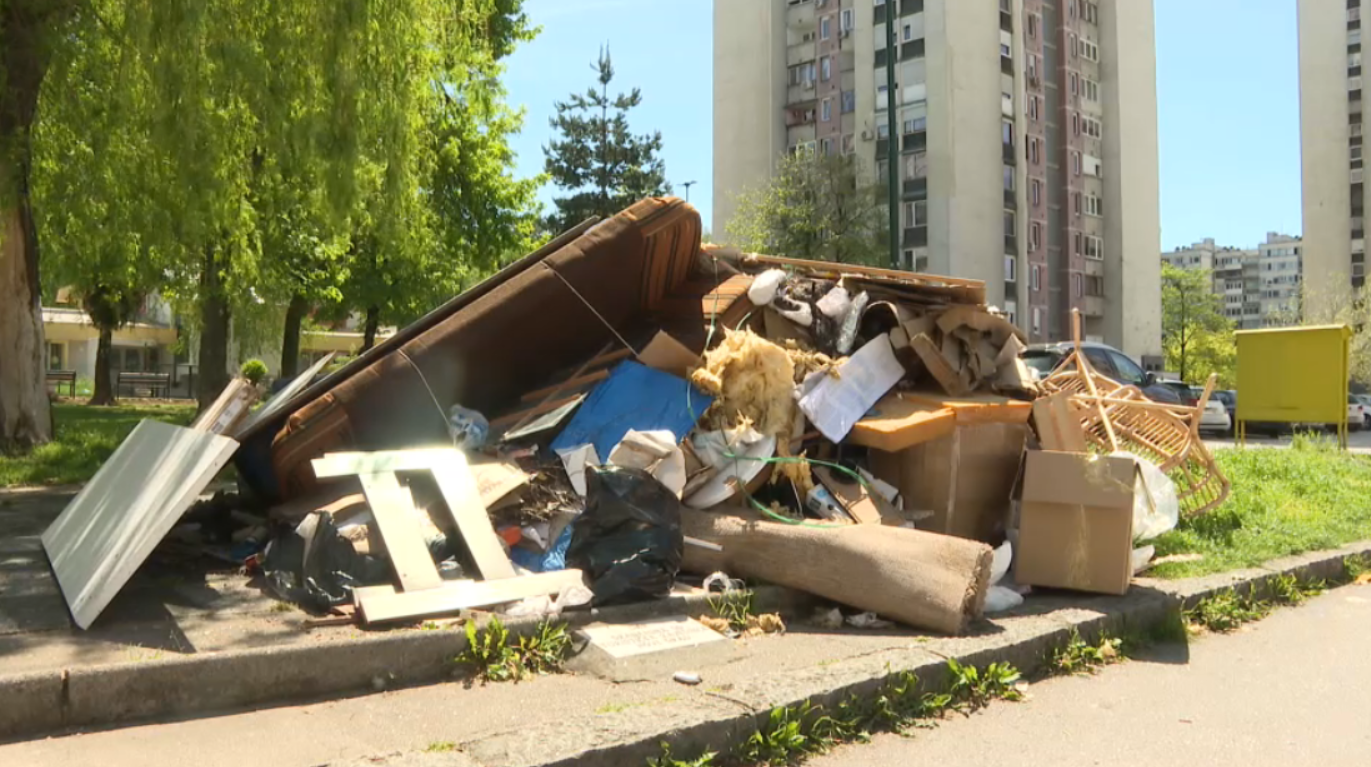
Bosnia and Herzegovina generates more than one million tonnes of municipal waste annually, but most of it still ends up in landfills, while insufficiently developed waste separation systems and limited recycling capacity hinder the recovery of materials that could be reused in production.
According to data from the Agency for Statistics of Bosnia and Herzegovina, 1,122,532 tonnes of municipal waste were generated in 2024, equivalent to an average of 329 kilograms per capita. A total of 976,996 tonnes were collected through public waste collection services, of which more than 857,000 tonnes consisted of mixed municipal waste. Of the approximately 976,000 tonnes delivered to controlled disposal sites, 99.9 percent was permanently disposed of.
Professor Dusica Pesevic, head of the Department of Environmental Protection at the Faculty of Sciences of the University of Banja Luka, warns that reliance on landfills poses environmental risks and results in the loss of valuable raw materials.
"The dominance of landfilling has multiple consequences. Poorly managed landfills can cause soil and groundwater pollution through leachate, methane emissions, unpleasant odours and fires, while illegal dumpsites further threaten ecosystems and human health," Pesevic told FENA.
According to the Federation of Bosnia and Herzegovina's Ministry of Environment and Tourism, 745,582 tonnes of municipal waste were generated in the Federation in 2024, approximately 85 percent of which ended up in landfills. The entity has 39 active non-sanitary dumpsites, while only two of its five sanitary landfills fully meet sanitary requirements.
In Republika Srpska, 372,798 tonnes of municipal waste were generated in 2025, while public utility companies collected 317,769 tonnes. Mixed municipal waste accounted for 97.4 percent of the collected total.
The example of the Moscanica Regional Landfill near Zenica illustrates how difficult it is to recover valuable materials once waste has been mixed. In 2025, the landfill received 85,099 tonnes of waste from 13 local communities. According to a waste composition analysis conducted in May 2025, workers manually recovered approximately 6.68 percent of the PET packaging delivered to the site, while the remainder was permanently disposed of.
"The problem is therefore not just where we dispose of waste, but also the fact that we still treat too many materials as worthless residue rather than as potential resources," Pesevic said.
Recycling and domestic industry
Despite shortcomings in the system, Bosnia and Herzegovina has established collection schemes for packaging waste and electrical and electronic waste, as well as domestic companies that turn waste into raw materials for new products.
In 2025, the packaging waste management operator Ekopak sent 23,479 tonnes of packaging waste for recycling, up from 22,332 tonnes a year earlier. Eko zivot collected and sent 19,565 tonnes for recycling in 2025, compared with 18,057 tonnes in 2024.
Ekopak points out that material quality depends on collection methods. Packaging collected separately from retail outlets and businesses is often of better quality than material recovered from mixed municipal waste, making it easier and more economically viable to process.
Jasmin Osmanovic, director of Eko zivot, warns that Bosnia and Herzegovina lacks sufficient recycling capacity, meaning that most of the packaging collected by the operator is sent abroad for processing. The feasibility of recycling depends on material cleanliness, available quantities, transport costs and the existence of suitable processing facilities.
Sendzana Muslic, senior energy adviser at the Chamber of Economy of the Federation of Bosnia and Herzegovina, says domestic industry already demonstrates how waste can serve as a valuable production resource.
Natron-Hayat, a company based in Maglaj, uses waste paper and cardboard as secondary raw materials to manufacture paper and packaging products, while using wood residues from its production processes to generate heat and electricity. In the plastics sector, companies such as Eko Sirovina, Omorika Reciklaza and Semplast process waste plastic and produce regranulate, a raw material used to manufacture new plastic products.
Omorika Reciklaza, based in Johovac near Doboj, processes PET packaging into PET flakes, regranulate and film for further manufacturing. Muslić also cites Empress in Zenica as an example of a company that reuses textile production waste, and EkoBiH – Mulalic ekologija, which collects used cooking oil and fats. According to Muslić, companies Igman and Ginex return copper and brass production residues to their suppliers for reprocessing.
"Although exports show that there is a market for these materials, they also raise the question of how much of their value could remain in the domestic economy through further processing and the manufacture of new products," Muslic said.
According to data from the Agency for Statistics of Bosnia and Herzegovina cited by Muslic, the country exported 58,978 tonnes of waste paper and cardboard in 2025.
Muslic warns that the development of the domestic recycling industry is constrained by high investment costs, administrative barriers, market instability and insufficient cooperation between public utility companies and businesses capable of using waste as a raw material.
"For an investor, building a facility is not enough. They must be confident that they will have a reliable supply of sufficient quantities of quality waste for years to come, that there will be buyers for the recovered materials and that revenues will cover operating costs," Muslic told FENA.
Underused resources and new plans
Challenges are particularly pronounced in the management of biowaste, textiles and certain special waste categories. Food scraps and green waste could be used to produce compost or biogas, but according to the FBiH's Waste Management Plan, the entity lacks developed biological waste treatment facilities, apart from a composting plant in Prozor-Rama.
Meanwhile, organised collection of electrical and electronic waste enables the recovery of iron, steel, aluminium, copper, plastics and other materials. The operator ZEOS eko-sistem collected 5,796 tonnes of this type of waste in 2025, compared with 4,288 tonnes a year earlier. Components that cannot be adequately processed in Bosnia and Herzegovina are sent to authorised facilities in Germany and Austria.
Professor Pesevic believes that waste prevention, separate collection and reuse must take priority over final disposal.
"There is little benefit in collecting waste separately if the different fractions are subsequently mixed together or if there is no organised market for the recovered materials," she warned.
In July 2026, the Federation of Bosnia and Herzegovina adopted a new Waste Management Plan for 2026–2030, which envisages a shift away from a disposal-based system towards a model prioritising waste prevention, reuse, recycling and appropriate recovery. The plan includes increasing household waste collection coverage to at least 95 percent, introducing separate collection of different waste categories and establishing 12 functional regional waste management systems.
However, implementation of previous measures has been slow. According to an analysis by the FBiH Ministry of Environment and Tourism, only 19 of the 65 measures included in the previous plan were fully implemented.
Additional investment is expected through the World Bank, which approved a €46 million loan to Bosnia and Herzegovina in March 2026 for the Sustainable Solid Waste Management Project (SWEEP). The project focuses on rehabilitating non-sanitary dumpsites, upgrading regional landfills and developing separate waste collection, recycling and composting.
According to World Bank projections, the project is expected to improve municipal services for more than one million residents, increase recycling and recovery rates under the project to 20 percent, and create more than 100 jobs in waste management and related activities.
Experts nevertheless warn that infrastructure development alone will not be sufficient without better separate collection, consistent enforcement of regulations, more reliable data and a stable market for secondary raw materials.
"The goal is not to choose between recycling and properly managed landfills, but to build a system in which as little waste as possible is disposed of and the remainder is managed safely," Pesevic stressed.
She believes that the success of a waste management system should be measured not only by the amount of waste collected, but also by how much waste generation is prevented, how much material is returned to production and how effectively environmental pressures are reduced.
Kakvo je tvoje mišljenje o ovome?
Učestvuj u diskusiji ili pročitaj komentare


Kakvo je tvoje mišljenje o ovome?
Učestvuj u diskusiji ili pročitaj komentare