Srbija
 Hrvatska
 Slovenija

Early access to Schengen area could offer Western Balkans tangible integration benefits


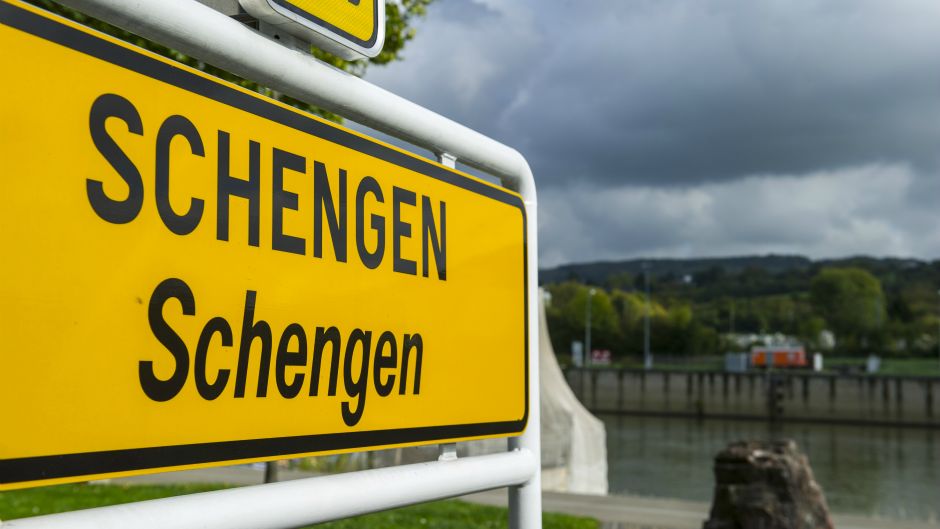
Allowing Western Balkan countries to join the Schengen Area prior to securing full European Union membership has a legal precedent and could deliver tangible benefits for citizens. However, experts remain divided over whether EU member states possess the political will to support such a model, given the stringent requirements surrounding border control, visa policy, and the rule of law.
Kristof Bender, deputy chairman of the European Stability Initiative, recently proposed offering Western Balkan states a roadmap to Schengen as an intermediate milestone. Highlighting non-EU members currently in the area, Bender noted: "Four countries are already part of the Schengen Area without being EU members - Iceland, Liechtenstein, Norway and Switzerland. So Schengen membership without EU membership is clearly possible, and the legal framework exists." He added that "there is no fundamental legal obstacle. It is a question of political will, not legal impossibility."
Conversely, Jovana Marovic, former deputy prime minister of Montenegro and member of the Balkan in Europe Policy Advisory Group, expressed skepticism regarding political feasibility. "The Schengen Area is the most sensitive area of European integration because it is based on complete trust in the control of external borders," Marovic said. "It is completely unrealistic to expect EU member states to suddenly open their borders and allow countries that are still struggling with systemic corruption, organised crime and a dysfunctional judiciary into the Schengen system."
Joining Schengen requires applying the full acquis, controlling external borders, aligning visa policies, and integrating into the Schengen Information System. Recent European Commission assessments show Bosnia and Herzegovina faces key challenges, including staffing shortages in the Border Police and a lack of alignment with EU visa policy.
Despite these hurdles, both analysts agree that intermediate access could motivate regional progress. Bender clarified that Schengen membership would eliminate systematic checks at borders, such as the border between Bosnia and Croatia, though it would not grant automatic rights to work or reside in the EU.
"All new EU members should join Schengen once they meet the criteria. It is only one part of full membership, not a substitute for it," Bender stated, noting that a roadmap could serve as "a concrete and achievable intermediate goal."
Marovic stressed that any merit-based intermediate step must not replace complete integration, stating, "Without a substantive crackdown on crime and corruption, Schengen will remain out of reach."
Kakvo je tvoje mišljenje o ovome?
Učestvuj u diskusiji ili pročitaj komentare


Kakvo je tvoje mišljenje o ovome?
Učestvuj u diskusiji ili pročitaj komentare