Srbija
 Hrvatska
 Slovenija

Murphy ahead of Bosnia elections: If voters make the ‘right choice’, what US does will matter less


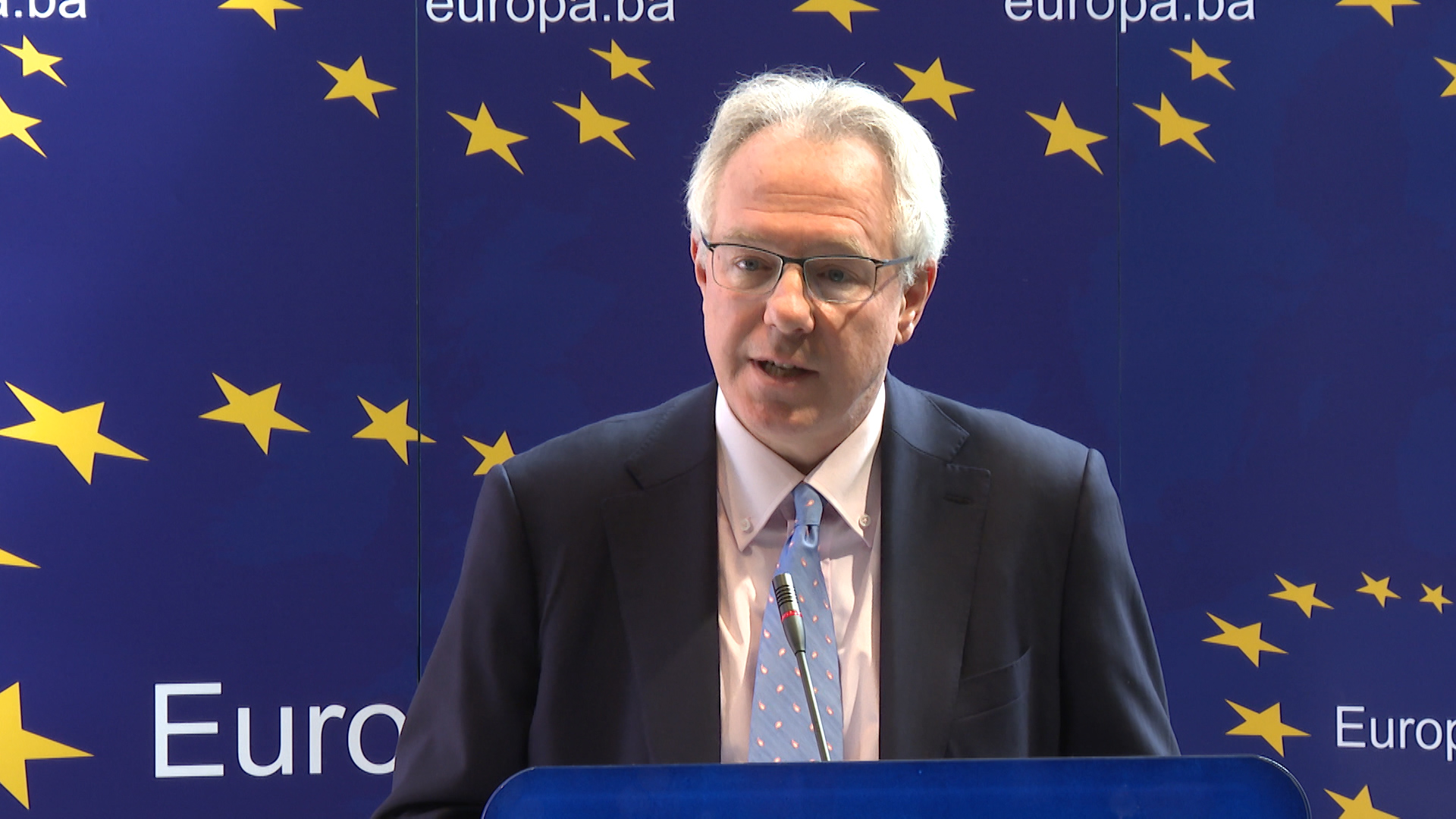
Ahead of Bosnia and Herzegovina’s October elections, former US Ambassador Michael Murphy has said voters will have an opportunity to determine the country’s future direction and whether European Union integration becomes a genuine political priority.
Murphy argued that if voters across the country make what he described as the “right choice”, it would matter considerably less if the United States fails, at least temporarily, to play the role he believes it should in Bosnia.



In an analysis of current US policy towards Bosnia and Herzegovina published by Sarajevo daily Oslobodjenje, Murphy said the country now has an opportunity regarding EU membership that did not exist when he arrived in Sarajevo as US ambassador in 2022.
“Geopolitics partly explains this, but it is also true that some political leaders in BiH have worked harder to secure this opportunity than their predecessors did,” Murphy wrote.
He said those efforts had paid off, crediting politicians who, in his assessment, put the country’s interests first.
At the same time, Murphy argued that Washington should once again play a constructive role in Bosnia’s Euro-Atlantic integration, which he sees as important for the country’s long-term stability.
Voters to decide Bosnia’s future path
Murphy placed particular emphasis on the role of Bosnian citizens in the upcoming elections.
“In the meantime, BiH’s voters will have the opportunity to decide the path their country will take in the future and whether EU integration becomes the priority it should be for BiH’s political leaders,” he wrote.
Murphy said his experience in the country had convinced him that Bosnian citizens understand the importance of that decision.
“If they make the right choice across the country this October, it will matter much less that the United States may, for a time, fail to do the right thing,” he wrote.
The former ambassador questioned whether Washington currently has a coherent long-term strategy towards Bosnia, arguing that some aspects of current US policy strengthen ethnonationalism and could undermine the country’s stability.
His analysis also addresses Washington’s approach towards Milorad Dodik, High Representative Christian Schmidt, the Office of the High Representative (OHR) and the Southern Gas Interconnection project, while rejecting some interpretations of US policy that he considers conspiracy theories.
Murphy noted that the administration has presented stability, greater local ownership and the protection of US economic and commercial interests as central elements of its approach to Bosnia.
However, he argued that publishing a strategy document does not necessarily mean that day-to-day policy is being guided by a coherent strategy.
“The administration may have published a strategy document, but that does not mean a coherent strategy is shaping US policy in BiH,” Murphy wrote.
“Why should BiH be any different?” he asked after arguing that US decisions elsewhere in the world have frequently been made on an ad hoc basis.
Murphy questions Washington’s approach
Murphy also questioned the administration’s stated preference for Washington to listen more to other countries rather than tell them what to do.
He cited US policies towards Venezuela and Hungary to question whether this represents a broader principle of American foreign policy or an argument being applied specifically to justify decisions regarding Bosnia.
“It appears that the administration has redefined US interests in BiH and then used some of these principles to obscure that change,” Murphy wrote.
He also rejected the portrayal of previous US administrations as having pursued “state-building” based on the preferences of American officials while disregarding Bosnia’s ethnic and constitutional realities, calling that interpretation a “caricature” of US policy.
Murphy stressed that the United States, including under the Biden administration, had not supported dismantling the Dayton Peace Agreement or the concept of constituent peoples in favour of establishing a unitary civic state based on majority rule.
Territorial integrity and stability
Murphy also linked the debate over US policy directly to Bosnia and Herzegovina’s territorial integrity.
Historically, he wrote, Washington understood stability to require the preservation of Bosnia’s territorial integrity, respect for the Dayton Peace Agreement and support for state-level institutions.
“If we look at what US officials have said – or not said – about BiH, or what the United States has done – or not done – in BiH over the past 19 months, questions inevitably arise about this administration’s sincerity when it comes to stability,” Murphy wrote.
“In the past, the United States understood that stability meant preserving BiH’s territorial integrity. It should not be necessary to explain why.”
Murphy said Washington had also expected domestic political actors to respect the Dayton framework and Bosnia’s state-level institutions, including institutions established after the war such as the unified Armed Forces and the country’s intelligence service.
Despite his criticism of current US policy, Murphy placed considerable emphasis on the choices Bosnian voters will make in October, arguing that the elections will provide an opportunity to determine whether EU integration becomes a priority for the country’s next political leadership.
Kakvo je tvoje mišljenje o ovome?
Učestvuj u diskusiji ili pročitaj komentare


Kakvo je tvoje mišljenje o ovome?
Učestvuj u diskusiji ili pročitaj komentare