Srbija
 Hrvatska
 Slovenija

Republika Srpska wage negotiations stalle ahead of expected minimum wage hike


The minimum wage in Republika Srpska is set to rise before the end of the year, though regional government officials, trade unions, and business leaders have yet to settle on the exact figure. Discussions are scheduled to resume in mid-November.
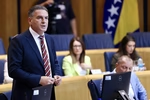
At the most recent meeting of the RS Economic and Social Council, members agreed to step up negotiations, with Minister of Labour and Veterans and Disability Protection Radan Ostojic stating that the ground rules for further talks were now in place.
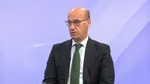
Goran Stankovic, president of the RS Trade Union Confederation, stressed that workers expected pay rises that went beyond covering essential living costs to offer a genuine improvement in their standard of living. The union maintains that higher pay is also vital to stop local workers moving abroad.
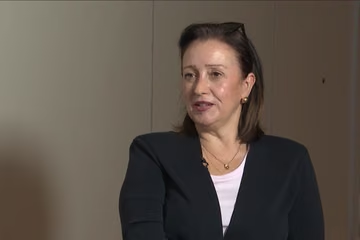
However, Zoran Skrebic, president of the RS Employers' Union, argued that whilst businesses do not object to pay increases in principle, any rise must reflect broader economic conditions. He highlighted a prolonged downturn in manufacturing, alongside falling employment figures, declining exports, and a widening trade deficit.
Employers insist that if labour costs are forced up beyond what companies can reasonably afford, the government must offset the impact through cuts to tax and national insurance contributions. With tax relief firmly on the agenda, the Ministry of Finance is set to join the next round of negotiations.
Figures from the Republika Srpska Institute of Statistics show that the average net monthly salary reached 1,727 Bosnian marks (approx. €883) in September, up 10.9 per cent in nominal terms compared to the same month last year. With consumer price inflation running at six per cent, real pay growth stood at 4.6 percent.
Despite average earnings outstripping inflation, deep disparities across industries remain. The lowest average net monthly pay in September was recorded in the catering and hospitality sector at 1,310 marks (approx. €670), closely followed by transport and storage at 1,333 marks (approx. €682), and construction at 1,336 marks (approx. €683). Average net earnings in manufacturing stood at 1,421 marks (approx. €727).
According to trade union estimates, over 180,000 workers, roughly two-thirds of the total workforce in Republika Srpska, earn below the average, whilst private-sector pay lags behind the overall average by 200 to 400 marks (approx. €102 to €205).
The minimum wage currently varies based on skill level, ranging from 1,000 marks to 1,450 marks (approx. €511 to €741), following an increase of around 10 percent at the start of the year. Public-sector pay has seen two separate five per cent increases over the same period.
Ahead of the talks, the RS Chamber of Commerce submitted a series of proposals for the government's 2027–2029 Economic Reform Programme. Its central demand is a gradual reduction in total social security contributions from the current 31 percent to 29 percent over the next two years, dropping to 30 percent in 2027 and 29 percent in 2028.
To relieve pressure on local firms and safeguard domestic industry amidst falling output and export volumes, the Chamber is calling for both the minimum wage and commercial electricity tariffs to be frozen at current levels. It has also urged ministers to allow employers to pay staff tax-free bonuses of up to 2,000 marks (approx. €1,023) per year.
Kakvo je tvoje mišljenje o ovome?
Učestvuj u diskusiji ili pročitaj komentare


Kakvo je tvoje mišljenje o ovome?
Učestvuj u diskusiji ili pročitaj komentare