Srbija
 Hrvatska
 Slovenija

Taxation agency warns Bosnia's north in Gradiska area could be left without a functioning border crossing from Tuesday


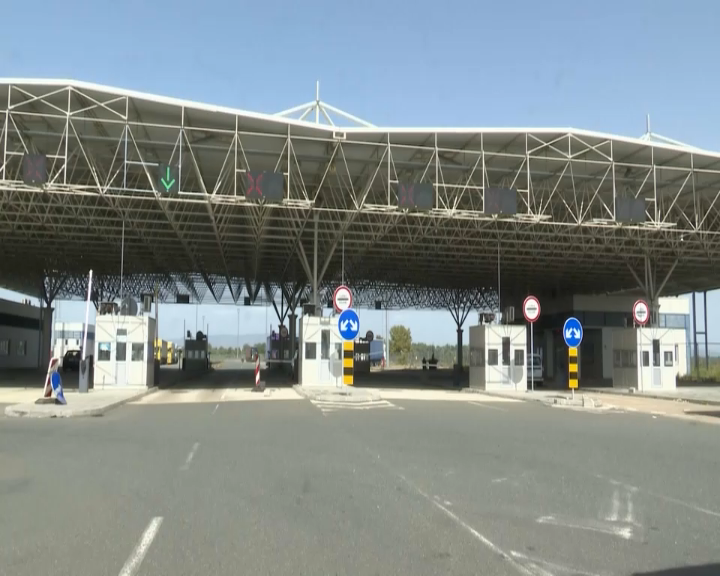
The Indirect Taxation Authority (ITA) of Bosnia and Herzegovina has warned that there is a real possibility that no border crossing for international passenger and freight traffic will be operational in the Gradiska area from Tuesday, June 9, 2026, if a new Agreement on Border Crossings between Bosnia and Herzegovina and Croatia is signed Monday.
According to the ITA, it has been informally told that the agreement is expected to be signed by Borjana Kristo, Chairwoman of Bosnia's Council of Ministers and her Croatian counterpart, prime minister Andrej Plenkovic.
The Authority stated that, if the agreement enters into force within the announced timeframe, there would be no border crossing in northern and northwestern Bosnia and Herzegovina capable of handling goods requiring full border inspection control (BIP).
The ITA stressed that all necessary organizational and administrative prerequisites must be established before the agreement begins to apply. Otherwise, serious disruptions could occur in border traffic operations in the Gradiska area, with significant consequences for businesses, transport operators and citizens.
Why the existing and new crossings cannot operate
The existing Gradiska border crossing cannot continue operating due to ongoing rehabilitation works on the bridge over the Sava River, after damage to the structure led to the suspension of international passenger and freight traffic.
At the same time, the new Gradiska New Bridge border crossing will not be able to operate in accordance with the provisions of the new agreement because the current ITA Rulebook on Internal Organization does not yet include the organizational unit Customs Office Gradiska New Bridge.
The ITA recalled that, in order to ensure continuity of operations after traffic over the old bridge was suspended, it had previously adopted a decision to temporarily relocate the Gradiska Customs Office from the existing border crossing to the location of the new bridge. Based on that decision, the office has been temporarily operating at the Gradiska New Bridge site since May 19, 2026, for a period of three months.
However, implementation of the new agreement requires the establishment of a new ITA organizational unit at the new border crossing location. According to the Authority, this can only be achieved through amendments to the ITA Rulebook on Internal Organization, which would formally establish the Customs Office Gradiska New Bridge. Those amendments must be adopted by the ITA Governing Board.
Businesses warned of potential disruptions
As a result, the Authority warned that there is a possibility that no border crossing in the Gradiska area will be operational on the first day following the signing of the agreement.
The ITA emphasized that such a situation would have direct and serious consequences for businesses, transport operators and citizens, who would be unable to use any border crossing in Gradiska. It added that the business community has already been informed of the potential consequences through chambers of commerce so that companies can prepare for possible disruptions to international freight traffic.
ITA urges continuation of current border regime
The Authority expects all competent institutions in Bosnia and Herzegovina to continue acting in accordance with the current Agreement on Border Crossings between Bosnia and Herzegovina and Croatia until all conditions necessary for the full implementation of the new agreement are met.
The ITA believes it is essential to ensure uninterrupted border traffic operations until repairs to the damaged bridge in Gradiska are completed and amendments to the Rulebook on Internal Organization are adopted.
The Authority also expressed its expectation that institutions in both Bosnia and Herzegovina and Croatia are aware of the serious consequences that could arise if the new agreement is signed on Monday and enters into force the following working day without all organizational and administrative requirements being fulfilled.
According to the ITA, such a scenario could lead to major disruptions in international passenger and freight traffic, with direct consequences for businesses, transport operators and citizens on both sides of the border.
Kakvo je tvoje mišljenje o ovome?
Učestvuj u diskusiji ili pročitaj komentare


Kakvo je tvoje mišljenje o ovome?
Učestvuj u diskusiji ili pročitaj komentare