Srbija
 Hrvatska
 Slovenija

Bosnia's UN envoy calls for global AI governance to remain under UN framework


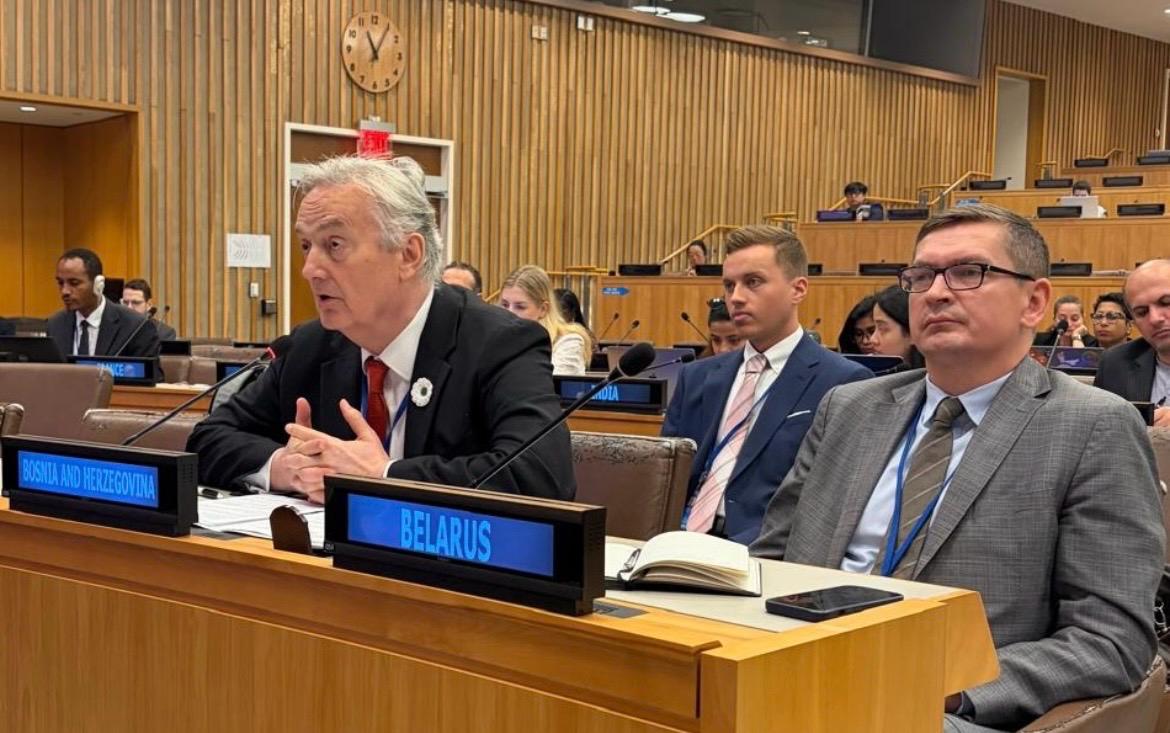
Bosnia and Herzegovina believes global governance of artificial intelligence should remain under the United Nations and be grounded in international law, human rights, transparency, accountability and meaningful human oversight, the country's ambassador to the UN, Zlatko Lagumdzija, said at a briefing on the outcomes of the World Artificial Intelligence Conference (WAIC 2026).
Speaking at UN headquarters in New York, Lagumdzija said that, as a candidate for European Union membership, Bosnia and Herzegovina considers preserving the UN's central role in shaping global AI governance to be of strategic importance.
The briefing followed the World Artificial Intelligence Conference and the High-Level Meeting on Global AI Governance, held in Shanghai from July 17 to 20. Participants reviewed the conference's conclusions, the launch of the World AI Cooperation Organization (WAICO) and a series of initiatives aimed at strengthening AI capacity in developing countries.
China's Permanent Representative to the United Nations, Fu Cong, presented Beijing's vision for global AI governance, built around five principles: balancing innovation, security and governance; ensuring AI remains under human control; narrowing the technological gap between countries; establishing WAICO; and maintaining the United Nations as the primary platform for international cooperation.
Among the initiatives announced were plans to train 5,000 AI specialists, establish six AI application centres and expand the "Mazu" meteorological early warning system to 30 countries.
IAEA could serve as a model
Lagumdzija said WAICO's credibility and long-term relevance would depend on its openness, transparency and inclusiveness, as well as on whether it complements the existing UN system rather than creating parallel international institutions.
He suggested that the experience of the International Atomic Energy Agency (IAEA) could provide a useful model for a future international mechanism overseeing the world's most advanced AI systems.
"We should not copy the IAEA, but explore the possibility of creating a mechanism inspired by its experience," he said.
According to Lagumdzija, such a mechanism could assess advanced AI systems and cross-border risks, develop international standards for safety testing, auditing and incident reporting, and assist developing countries in building regulatory institutions and technical expertise.
He also argued that capacity-building should not become a process in which technologically advanced countries write the rules while others are merely trained to implement them.
"Capacity building does not mean that some countries write the rules while others are only trained to follow them. Every UN member state must have a voice in shaping those rules," he said.
Lagumdzija also asked UN officials to clarify how WAICO would cooperate with the United Nations and whether an institutional framework could be established linking AI safety, accountability and capacity building.
Responding to the question, UN Under-Secretary-General and Special Envoy for Digital and Emerging Technologies Amandeep Singh Gill said WAICO's founding charter was based on the purposes and principles of the UN Charter, allowing it to integrate with existing UN processes.
Gill also warned that excessive regulation could slow the development of beneficial AI applications, while stressing that no country can address the cross-border risks posed by artificial intelligence on its own.
Representatives of Zambia highlighted the lack of computing infrastructure across the Global South, while Dr Song Haitao said open-source AI could help make technological development more equitable and prevent widening global disparities.
Concluding his remarks, Lagumdzija said the rapid development of artificial intelligence requires common international rules and shared responsibility.
"Transformative power without common rules creates shared insecurity. Artificial intelligence must become neither the privilege of a few nor a threat to everyone, but a shared instrument of human progress under collective international responsibility."
Kakvo je tvoje mišljenje o ovome?
Učestvuj u diskusiji ili pročitaj komentare


Kakvo je tvoje mišljenje o ovome?
Učestvuj u diskusiji ili pročitaj komentare