Srbija
 Hrvatska
 Slovenija

DW: Bosnia's World Cup run softens old divides as support grows in Banja Luka


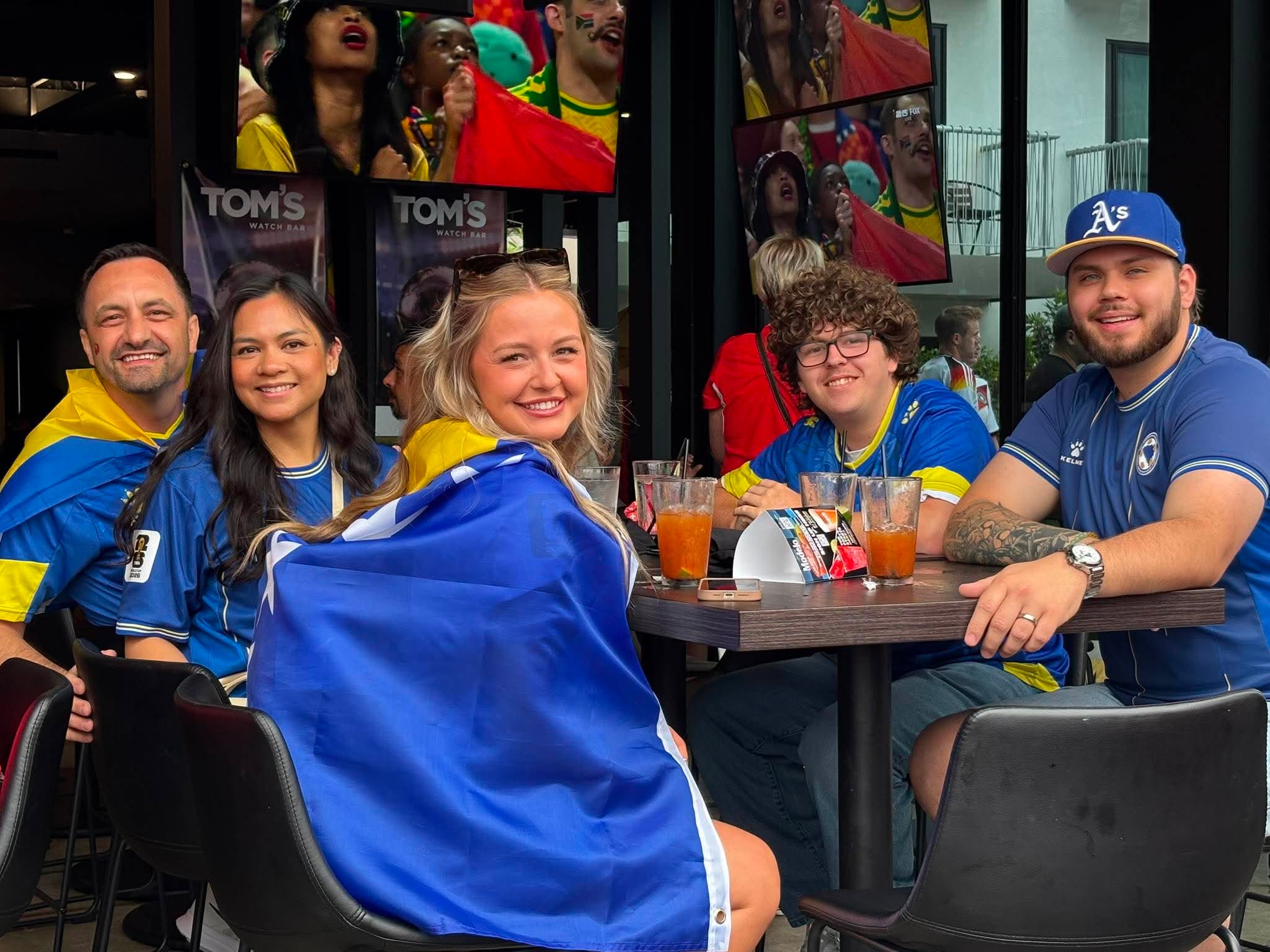
While celebrations in Banja Luka were far more subdued than elsewhere in Bosnia and Herzegovina following the national team's historic qualification for the World Cup knockout stage, many residents say they are quietly backing the team, suggesting that attitudes towards the country's footballers have shifted significantly over the past two decades.
Unlike Sarajevo and many Bosnian communities abroad, where thousands celebrated Bosnia and Herzegovina's victory over Qatar with fireworks, flags and car horns, Banja Luka saw no large public gatherings or spontaneous street celebrations.



However, as Deutsche Welle (DW) reported, the absence of public euphoria does not necessarily reflect a lack of support for the national team.
Residents interviewed by DW said they welcomed Bosnia and Herzegovina's success, even if they did not feel the need to express their emotions publicly.
"The national team of Bosnia and Herzegovina is in our hearts. Wherever we are in Bosnia and Herzegovina, we experience it the way we should," one resident said.
Another interviewee said it was unfortunate that there had been more visible celebrations among Bosnians living abroad than in some parts of their own country.
'Less open hostility than before'
Journalist and political commentator Zarko Markovic believes the reasons behind the restrained atmosphere go well beyond football.
According to him, public attitudes towards the Bosnia and Herzegovina national team have changed considerably over the years.
"There used to be open support against the Bosnia and Herzegovina national team. Today there is much less of that," Markovic told DW.
"Now indifference is more common. If Bosnia and Herzegovina wins, we're happy. If it loses, we're not particularly upset," he added.
DW notes that some residents of Republika Srpska genuinely support the national team but choose not to display their support publicly because of the political climate and concerns over how those around them might react.
That sentiment is also reflected in the streets of Banja Luka, where Bosnia and Herzegovina national team symbols remain rare, while Serbian national symbols are much more visible.
Football achieving what politics could not
At the same time, Bosnia and Herzegovina Football Association president Vico Zeljkovic was among the first to congratulate the national team following its historic World Cup achievement.
He praised the players for showing "character, unity and belief" when it mattered most.
DW concludes that perhaps the biggest change brought about by this World Cup is not measured solely by results on the pitch, but by changing attitudes across the country.
Although enthusiasm remains uneven in different parts of Bosnia and Herzegovina, there is considerably less open opposition to the national team than there was two decades ago.
In a country where political divisions often dominate public life, Bosnia and Herzegovina's World Cup campaign appears to have created at least some common ground.
As DW's report suggests, football may not erase political differences, but it can sometimes move boundaries that politics has failed to shift for years.
Kakvo je tvoje mišljenje o ovome?
Učestvuj u diskusiji ili pročitaj komentare


Kakvo je tvoje mišljenje o ovome?
Učestvuj u diskusiji ili pročitaj komentare