Srbija
 Hrvatska
 Slovenija

International election observers praise introduction of new technologies, note certain shortcomings


OSCE Special Coordinator for the General Elections in Bosnia and Herzegovina and Head of the Short-Term Observation Mission Luis Graça said today that the General Elections held in BiH on October 4 featured genuine competition and opportunities for electoral participants to reach voters, but that the electoral process was accompanied by certain structural and operational challenges.
Presenting the preliminary findings of the International Election Observation Mission, Graça stressed that this was a joint effort by several international organizations that monitored the electoral process across BiH.
A total of 408 observers from 41 countries were deployed on election day, including 272 short-term ODIHR observers, 66 from the OSCE Parliamentary Assembly, 24 from the Parliamentary Assembly of the Council of Europe, 24 from the NATO Parliamentary Assembly and 22 from the European Parliament.
According to the joint preliminary report of the international observers, the political scene in BiH remains fragmented and marked by competing narratives that continue to be rooted in divisions dating back to the war period.
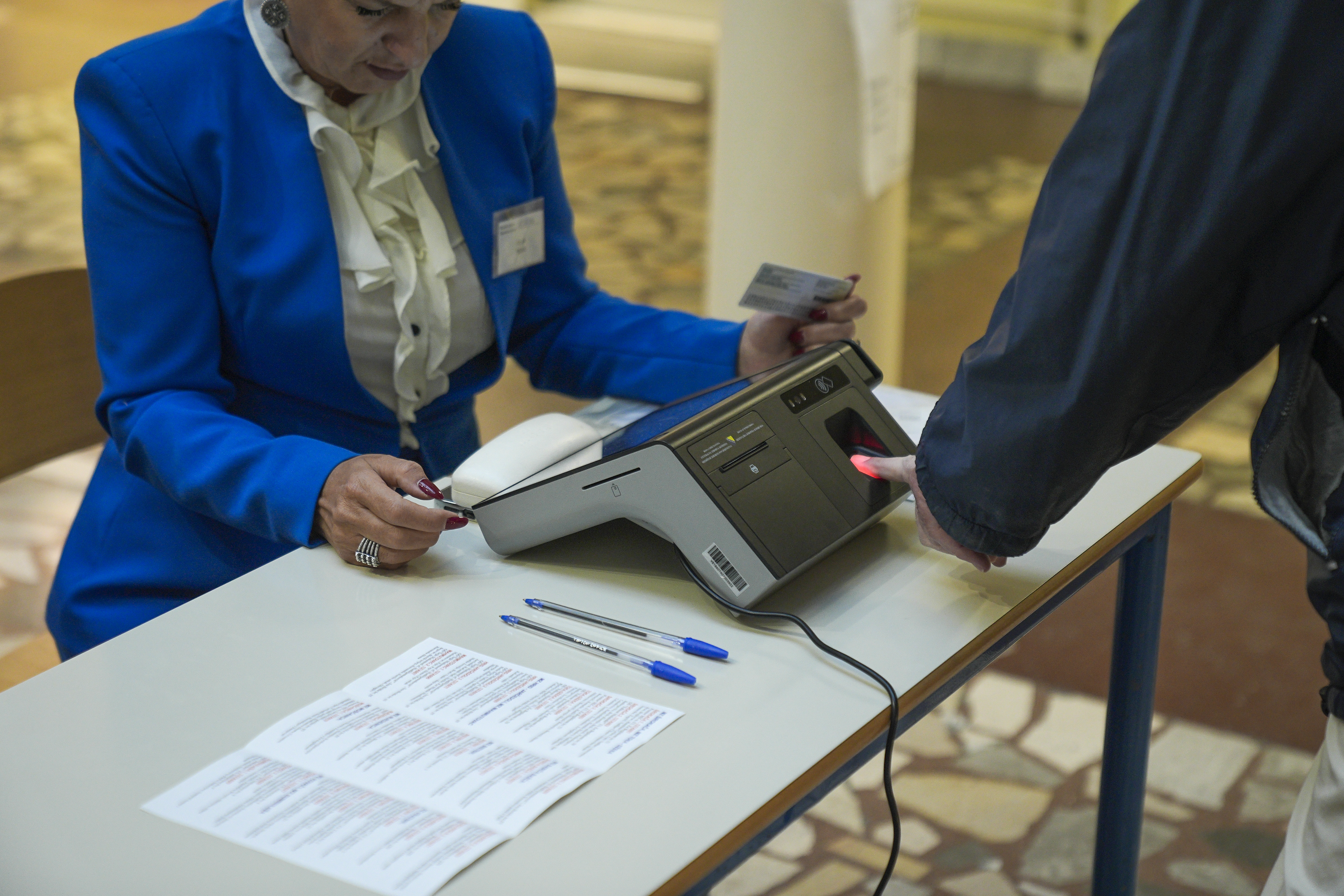
Graça noted that this year's electoral process was marked by the first nationwide introduction of information and communication technologies, aimed at strengthening election integrity and addressing longstanding concerns about the integrity of the process.
“For the first time, information and communication technologies were introduced nationwide to address longstanding concerns about election integrity, although delays and shortcomings limited transparency during the implementation phase,” Graça said.
The report notes that the election administration made significant efforts to organize the elections, but that persistent institutional and operational constraints, along with increased responsibilities, affected the efficiency and timeliness of its work. The mission also noted that the Central Election Commission of BiH was burdened with a large number of complaints, including complaints related to the early start of the campaign.
Observers also pointed to shortcomings in election legislation. According to the report, the exercise of voting rights remains subject to discriminatory restrictions based on ethnicity and place of residence, while certain broadly defined legal provisions unjustifiably restricted political discourse during the campaign.
Speaking about election day, Graça said the process was generally orderly, although observers recorded technical difficulties in using electronic devices, complex voting and counting procedures, as well as certain problems related to the secrecy of the vote.
“At the observed polling stations, manual counting showed only minor discrepancies compared with the electronic results,” Graça said while presenting the preliminary findings of the international observation mission.
International observers said they would continue to monitor post-election procedures and provide recommendations in their final report for further improvement of the electoral process in Bosnia and Herzegovina.
Head of the delegation of the Parliamentary Assembly of the Council of Europe (PACE) Jone Blikra said that the Parliamentary Assembly of the Council of Europe fully supports the joint conclusions of the international election observation mission and assessed that the introduction of new technologies represented an important step forward in the electoral process in Bosnia and Herzegovina.
“The most important thing is that the lessons learned and experience gained from these elections are carefully assessed and translated into the necessary improvements before future elections,” Blikra said.
He stressed that free and fair elections are based on the principle that every citizen matters, that every vote must have equal value and that the will of voters must be respected.
Head of the OSCE Parliamentary Assembly delegation Allesia Claes assessed that the General Elections in Bosnia and Herzegovina took place in a largely peaceful and calm atmosphere, with international observers able to work unhindered in the field across the country.
The OSCE Parliamentary Assembly delegation deployed 66 observers who monitored the opening of polling stations, voting, counting and tabulation of results in several cities and municipalities. Although election officials and voters demonstrated a positive attitude toward the process, observers also identified certain shortcomings that need to be addressed before the next elections.
Particular attention was drawn to the underrepresentation of women, limited accessibility of voting for persons with disabilities, particularly blind and visually impaired voters, and the need for further improvements to the electoral system. Claes called on the newly elected officials to seriously consider the recommendations of international observers and continue working on electoral reforms and strengthening democratic institutions.
“We call on the authorities and all relevant stakeholders to use these findings and continue working to strengthen the electoral process ahead of future elections,” Claes said.
International observers from the NATO Parliamentary Assembly assessed that the electoral process in BiH was generally orderly, with polling station committees working professionally and demonstrating a clear commitment to conducting the vote transparently. Although problems were recorded with the new technologies for voter identification and ballot scanning, observers noted only minor discrepancies between electronic and manually counted results.
The NATO delegation believes that the use of these technologies should be continued and further developed in future elections. At the same time, it warned that very low voter turnout represents a serious challenge for democracy.
“Political leadership, all political parties and all leaders in Bosnia and Herzegovina must take this very low voter turnout seriously,” said Sverre Myrli, head of the NATO Parliamentary Assembly observer delegation.
Davor Ivo Stier, head of the European Parliament observer delegation, said the elections were held in a polarized context, further intensified by the funeral of convicted war criminal Ratko Mladić and pressure on the Srebrenica-Potočari Memorial Center.
According to him, such developments shifted the focus of the campaign away from citizens' everyday problems and substantive political debate.
“Glorifying a person responsible for genocide, war crimes and crimes against humanity is unacceptable and incompatible with our shared European values,” Stier said.
At the same time, the European Parliament positively assessed the introduction of biometric voter identification and ballot scanners, noting that the new technology was largely successfully implemented and could help strengthen confidence in the electoral process.
Stier praised the work of polling station committees, noting that polling station officials were well prepared despite the limited time available for training and delays in the delivery of equipment.
Head of the ODIHR Election Observation Mission Tana de Zulueta assessed that the General Elections in Bosnia and Herzegovina took place peacefully and orderly across the country, despite certain technical problems and procedural shortcomings.
“We noted that election day proceeded peacefully and orderly across the country, for which the greatest credit, once again, goes to the voters,” de Zulueta said.
According to the mission's findings, polling station committee members generally adapted successfully to the use of the new information and communication technologies, although their relatively late introduction affected the quality of training. ODIHR noted certain difficulties in the operation of biometric devices and ballot scanners, as well as problems in ensuring the secrecy of the vote, but assessed that the introduction of new technologies was a significant step toward strengthening the integrity of the electoral process.
“We were able to establish that, overall, polling station committee members managed adequately with the use of the new information and communication devices, which was perhaps the biggest challenge they faced yesterday,” de Zulueta said.
Kakvo je tvoje mišljenje o ovome?
Učestvuj u diskusiji ili pročitaj komentare


Kakvo je tvoje mišljenje o ovome?
Učestvuj u diskusiji ili pročitaj komentare