Srbija
 Hrvatska
 Slovenija

Living costs in FBiH hit record high as consumer basket reaches 3,290 Bosnian marks


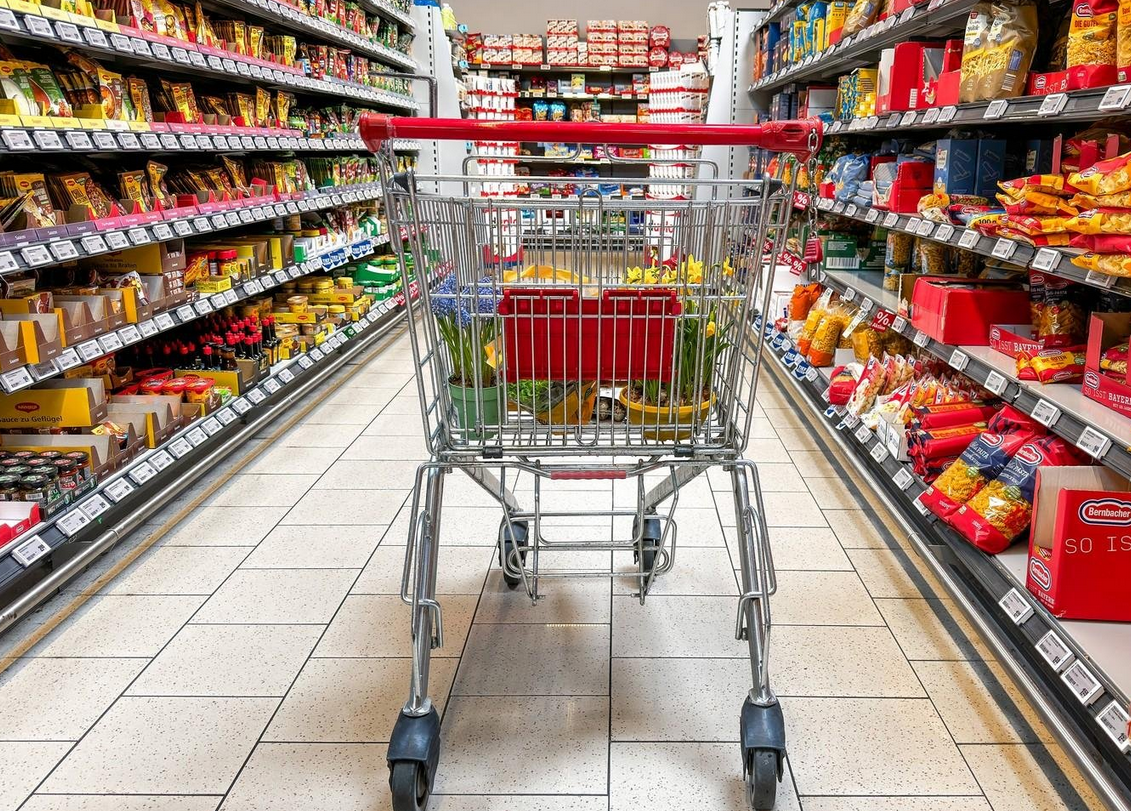
The trade union consumer basket calculated by the Federation of Independent Trade Unions of Bosnia and Herzegovina (SSSBiH) for June 2026 amounts to a record-breaking 3,290.07 KM (approximately €1,682.18). This fresh research from the union highlights a massive gap between the actual cost of living and the real earnings of workers throughout the Federation of Bosnia and Herzegovina.
According to the latest data published by the Federation (FbiH) entity’s Institute for Statistics, the average salary paid out in FBiH for April 2026 was 1,706.00 Bosnian marks (approx. €872.26). This indicates that an average monthly salary covers a mere 51.86% of the total trade union consumer basket. Workers receiving the minimum wage face an even more difficult situation.
Under the current Decision of the Government of the Federation of BiH, the minimum wage is set at 1,027.00 marks (approx. €525.10). This entry-level income covers just 31.22% of the basic living costs for a four-person family, meaning it is insufficient to cover even a third of the required monthly basket.
In generating this calculated total, the Federation of Independent Trade Unions of BiH factored in the absolute minimum living expenses of a four-person household consisting of two adults and two children, with one child in secondary school and the other in primary school. Nearly half of the total household funds must be allocated exclusively to food.
The percentage share of individual categories within the total cost of living reveals that nutrition dominates at 49.02%, followed by housing and utilities at 13.38%, and clothing and footwear at 12.16%. Household maintenance accounts for 7.60%, while hygiene and health maintenance take up 7.24% of the budget. Finally, education and culture make up 6.08%, and transport comprises the remaining 4.56%.
The trade union representatives clarified that for the nutrition category, prices were gathered across three separate shopping centers tracking 86 distinct items. When assessing the remaining sections, the costs for hygiene and health maintenance included ten specific items, while housing and communal services tracked the costs of six regular items.
Kakvo je tvoje mišljenje o ovome?
Učestvuj u diskusiji ili pročitaj komentare


Kakvo je tvoje mišljenje o ovome?
Učestvuj u diskusiji ili pročitaj komentare