

 Srbija
 Hrvatska
 Slovenija


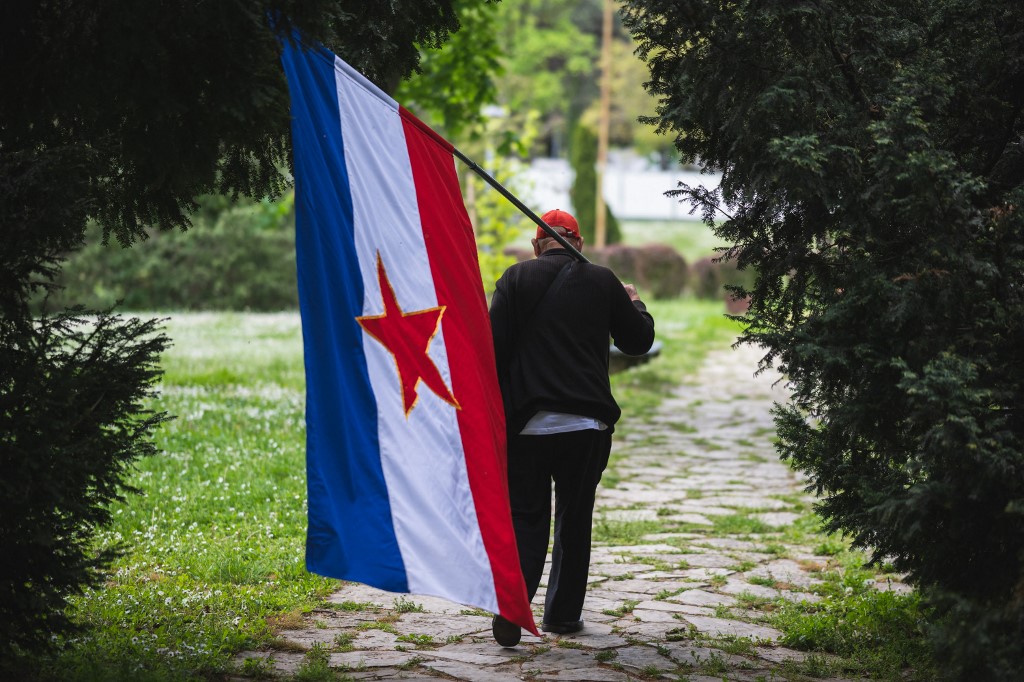
Among the five national holidays celebrated in the former Socialist Federal Republic of Yugoslavia (SFRY), one stood out both symbolically and emotionally: Republic Day, observed on November 29. For decades, this two-day holiday held a central place in the country’s official calendar and collective memory. Its era formally came to an end on November 14, 2002, when the Federal Assembly abolished it.
The significance of Republic Day lies in its connection to a landmark wartime event. It commemorated the Second Session of the Anti-Fascist Council for the National Liberation of Yugoslavia (AVNOJ), held on November 29, 1943, in Jajce, a Bosnia's central town.
At this historic meeting, AVNOJ was constituted as the legislative and executive representative body of the emerging Yugoslav state. Simultaneously, the National Committee for the Liberation of Yugoslavia (NKOJ) became the highest executive and commanding organ of the people's government — effectively forming the backbone of a revolutionary authority taking shape amidst war.
One of the session’s defining decisions was awarding Josip Broz Tito the title “Marshal of Yugoslavia.” The proposal came from the Slovenian delegation and marked Tito’s formal rise to the top of the new political order.
Public holidays in the SFRY
Republic Day was one of several major public holidays in Yugoslavia. Others included:
January 1 and 2 – New Year’s holidays
May 1 and 2 – Labor Day
May 9 – Victory over Fascism Day
July 4 – Fighters’ (Warriors’) Day
These dates reflected the values the state sought to uphold: workers’ solidarity, anti-fascist resistance, and revolutionary heritage.
Republic Day itself was celebrated with notable pomp and ceremony. Honorary salutes, festive academies, and medal presentations were common across the country. Schools marked the date by welcoming new generations of pioneers as students received their symbolic red scarves. Many people used the extended holiday for short trips or visits to their hometowns, embracing both patriotic rituals and family traditions.
The Holiday’s gradual disappearance
The collapse of the SFRY in the 1990s brought an end to almost all celebrations of November 29. One exception was the Federal Republic of Yugoslavia (FRY), which continued to observe the date. From 1997 onward, the holiday marked the moment in 1945 when Yugoslavia formally abolished the monarchy and became a republic.
The holiday was last a non-working day in 2001. A year later, the Federal Assembly eliminated it from the official calendar entirely. Today, Victory Day on May 9 remains a state holiday in Serbia, though it is now observed during working hours.
Yet, despite the changes in political calendars, many people across the region remember this period — and November 29 in particular — with a sense of nostalgia tied to childhood memories, social rituals, and a shared cultural past.
Commemorations in Jajce today
The birthplace of Republic Day continues to honor its legacy. In Jajce, members of the Alliance of Anti-Fascist Fighters (SABNOR) are gathering today to commemorate the Second Session of AVNOJ. The town is also hosting “AVNOJ Fest,” a festival dedicated to the historical event and its cultural resonance. As part of the program, the band Laibach is performing a concert — fittingly scheduled on Republic Day itself.
Kakvo je tvoje mišljenje o ovome?
Učestvuj u diskusiji ili pročitaj komentare


Kakvo je tvoje mišljenje o ovome?
Učestvuj u diskusiji ili pročitaj komentare