Srbija
 Hrvatska
 Slovenija

Bosnia among key topics as EU foreign ministers meet on Ukraine, Middle East and Western Balkans


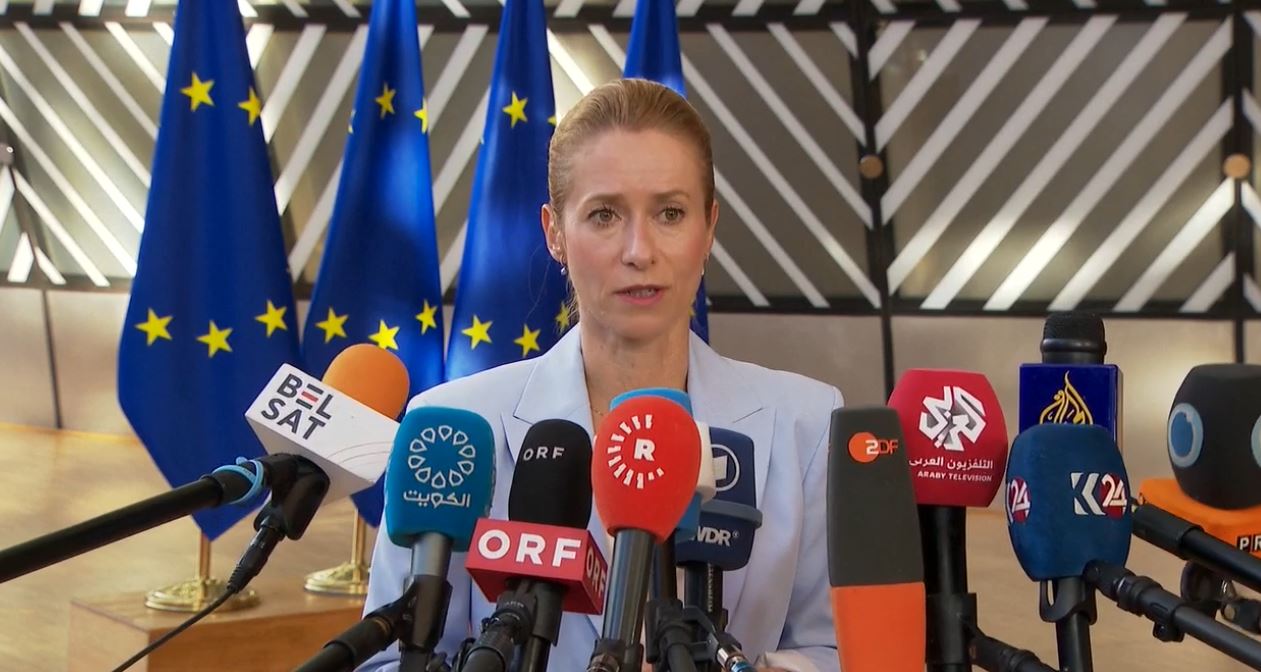
Bosnia and Herzegovina, alongside Ukraine, the Middle East and regional security, is among the key issues on the agenda of Monday's meeting of EU foreign ministers, EU High Representative for Foreign Affairs and Security Policy Kaja Kallas said ahead of the Foreign Affairs Council (FAC) in Brussels.
Speaking to reporters upon her arrival, Kallas confirmed that ministers will discuss the situation in Bosnia, including the process related to the appointment of a new High Representative, as part of a broader debate on the Western Balkans.
The council's discussions will begin with Ukraine, where ministers are focusing on the issue of civilians detained in Russian-occupied territories. Kallas said that while considerable attention has been given to prisoners of war and abducted children, civilians, including teachers and journalists, remain in detention, with information about their whereabouts often difficult to obtain.
Representatives of Ukrainian non-governmental organizations working on the issue are attending the meeting, and the EU plans to launch a new platform aimed at supporting efforts to secure the release of detained civilians and improve information gathering.
Ministers are also expected to discuss additional measures against Russia. Kallas said she hopes agreement can be reached on 250 new sanctions listings, while negotiations continue on the EU's 21st sanctions package, which has yet to receive unanimous backing. She described the proposed measures as a response to Russia's recent attacks on civilians.
The meeting will also cover the EU's Black Sea strategy. According to Kallas, the maritime security hub is ready, with Bulgaria and Romania cooperating to strengthen the protection of critical infrastructure and counter hybrid threats in the region. Ministers are also expected to approve a new Partnership Mission for Armenia focused on tackling hybrid threats and Foreign Information Manipulation and Interference (FIMI).
Attention will then turn to the Middle East, beginning with a working lunch involving Gulf partners on regional security. Kallas acknowledged that the existing Memorandum of Understanding is not functioning as intended, adding that ministers will discuss the need to ensure the Strait of Hormuz remains open, safeguard freedom of navigation and oppose the imposition of transit fees.
An internal discussion on the Middle East will follow, based on an Options Paper prepared by the European Commission outlining possible policy measures. Kallas said ministers will assess whether there is sufficient support among member states for the Commission to further develop any of the proposed options.
The Foreign Affairs Council will conclude with discussions on the humanitarian and security situation in Sudan, where the EU intends to send what Kallas described as clear messages both to mediators and external actors involved in the conflict.
Kakvo je tvoje mišljenje o ovome?
Učestvuj u diskusiji ili pročitaj komentare


Kakvo je tvoje mišljenje o ovome?
Učestvuj u diskusiji ili pročitaj komentare