Srbija
 Hrvatska
 Slovenija

Bosnia's World Cup run sparked collective healing, says epigenetics expert


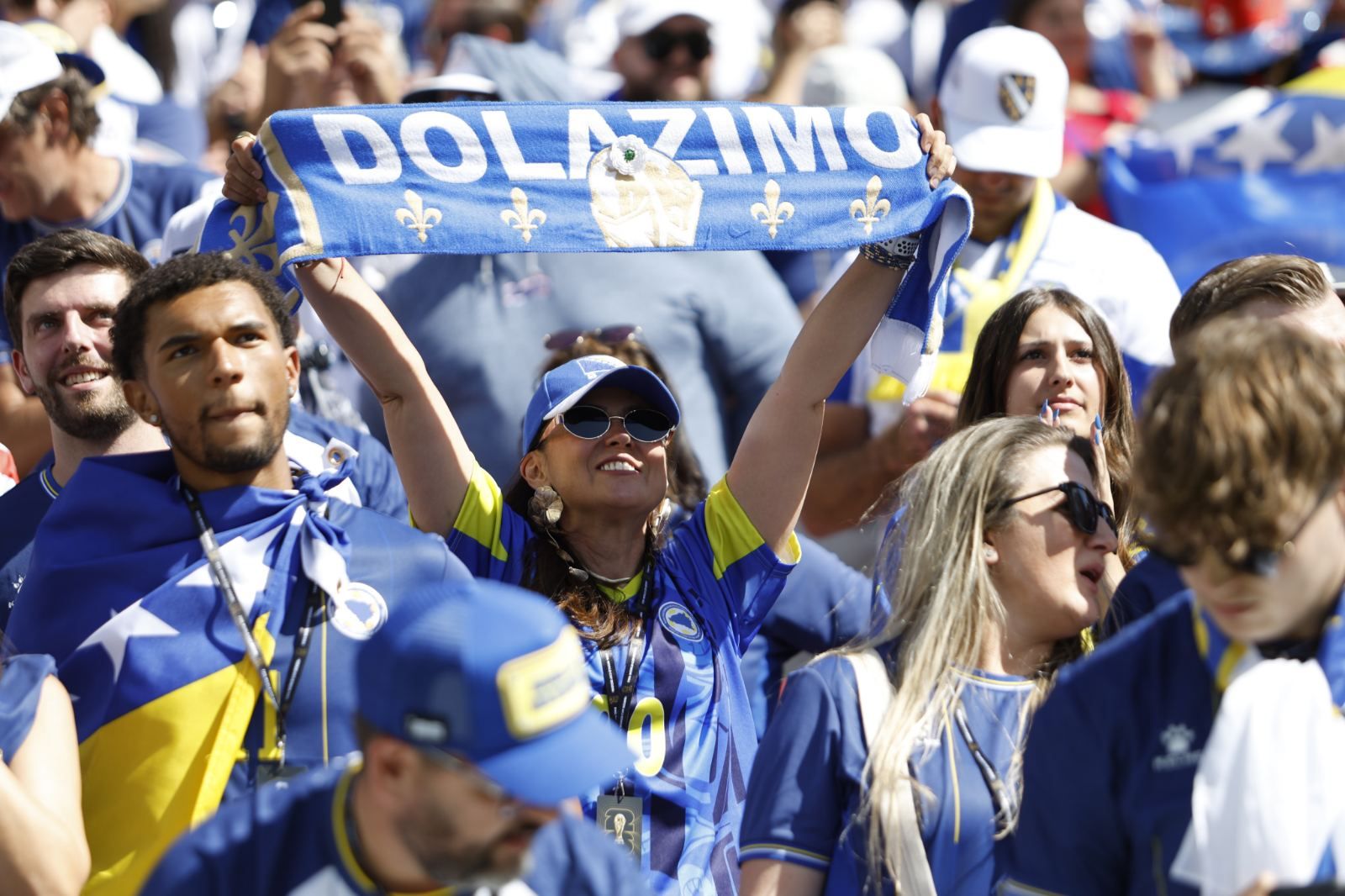
As Bosnia and Herzegovina experienced its football fairytale at the FIFA World Cup, emotions swept through stadiums, city squares, homes and social media. Speaking in N1's Novi dan show, Dr. Senija Selimovic-Hamza, a doctor of biomedical sciences and coach specializing in epigenetics and micronutrition, explained why major sporting successes evoke such powerful emotions, strengthen the sense of belonging and may even contribute to collective recovery.
Reflecting on the emotions surrounding Bosnia and Herzegovina's national football team's World Cup campaign, Selimovic-Hamza said supporters experienced the matches as if they themselves had been on the pitch:
"We were all on the field with them. From a physiological, medical and psychological perspective, we all experienced those matches as if we had played them ourselves. That is something very special, especially for nations with a difficult past like ours, because the threshold of tolerance and the intensity of emotions are different. This World Cup meant much more to us. Football itself became secondary because the emotions and physiological reactions we experienced were something entirely different."
She highlighted the role of Bosnia's diaspora, noting that the large number of national team players with diaspora backgrounds helped strengthen the connection between Bosnians living abroad and their homeland.
"We had a very special national team. Many of the Dragons come from the diaspora, and that helped people abroad connect with both the national team and their homeland for the first time. A national team should represent its people, and we are half in Bosnia and Herzegovina and half across the world. Many people found a sense of belonging through this team," she said.

Recalling the atmosphere in one of the World Cup's matches, she said Swiss supporters also joined Bosnian fans in celebrating:
"When Switzerland played Bosnia and Herzegovina, most Swiss supporters came over to our side to celebrate and cry with us. They were amazed by the amount of love for Bosnia and Herzegovina, especially among those of us living abroad."
Very little is enough to make us extremely happy
Discussing the scientific explanation behind such emotional reactions, Selimovic-Hamza referred to research involving populations that have experienced severe historical trauma, including Holocaust survivors and people in Rwanda.
"The hormones released in our bodies even before the match begins are very similar to those released by the players on the field. That changes the body's physiology and the nervous system. It is something that is reflected on a collective level as well," she explained.
She also said nations with difficult historical experiences tend to perceive success differently:
"Very little is enough to make us extremely happy, unlike societies that have enjoyed stability for decades. Sport is the ideal opportunity to express all those emotions because there are no political divisions or everyday burdens. It becomes a space of hope and unity."
Speaking about epigenetics, Selimovic-Hamza stressed that there is currently no research directly linking sporting success with epigenetic changes. However, she pointed to a study conducted after Chile won the Copa América.
"The study showed that the victory brought significant health benefits. People reported higher self-esteem, stronger social cohesion and improved vital health indicators. I believe we can use that study to compare Bosnia and Herzegovina with Chile. If interpreted that way, we may already be experiencing epigenetic effects from this World Cup, and this could mark the beginning of a positive catharsis," said the expert.
She added that epigenetics emphasizes the importance of powerful positive emotional experiences:
"Epigenetics tells us that we need meaningful positive emotional moments for beneficial genes to be expressed, while genes associated with negative predispositions become less active. I believe we may have achieved that during the World Cup. Of course, the effect is temporary, and now it needs to be preserved through a culture of remembrance."
After returning to Sarajevo, she said she noticed a different atmosphere compared with her previous visit.
"Everything is different. People are more optimistic and cheerful. Flags are still everywhere, people are wearing national team jerseys and you can still feel the sense of togetherness. That is my subjective impression, but it seems to me that a new positive energy has emerged," according to her.
Asked how such positive feelings can be preserved after the World Cup, Selimovic-Hamza emphasized the importance of maintaining a culture of remembrance.
"During the World Cup, our hormonal responses were completely different. Before the match begins, dopamine is released, followed by oxytocin, endorphins and serotonin, while victory also triggers testosterone. Together with social cohesion, this creates what psychology calls 'flash memory'—detailed memories of important events. Those are the memories we should preserve through remembrance and by continuing to talk about these experiences," she explained.
She also noted that the World Cup took place in July, a month associated with painful historical memories in Bosnia and Herzegovina.
"I am glad the World Cup was held in July, the month we consider our most difficult. During those days, we had the opportunity to experience hope and happiness. This is a phenomenon known as collective post-traumatic growth—when societies that have endured immense suffering find the strength to emerge stronger than before. I believe we now have an opportunity to use sport as something that brings people together and helps the wounds of the past finally begin to heal," Selimovic-Hamza concluded.
Kakvo je tvoje mišljenje o ovome?
Učestvuj u diskusiji ili pročitaj komentare


Kakvo je tvoje mišljenje o ovome?
Učestvuj u diskusiji ili pročitaj komentare