Srbija
 Hrvatska
 Slovenija

Brcko as Bosnia's security Achilles' heel: Why the same warning keeps resurfacing


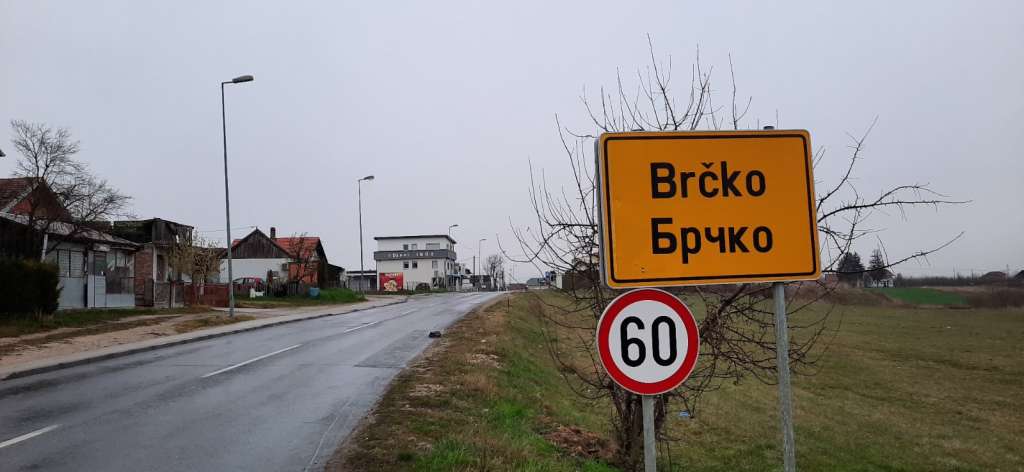
The latest warning has come from Ukraine. Security expert and reserve Major General Mykola Zentsov has warned that Bosnia and Herzegovina could emerge as another focal point of Russian hybrid activity in Europe, singling out the strategically important Brcko District as a potential flashpoint.
"While the West's attention is focused on Russia's war against Ukraine, another potential hotspot of instability is emerging in the Balkans. Developments in Bosnia and Herzegovina are increasingly moving beyond the boundaries of an internal political crisis and taking on significance for European security as a whole," Zentsov wrote in an analysis for Ukrinform.
In his assessment, an escalation in Bosnia and Herzegovina would serve Moscow's interests by diverting European and NATO attention and resources away from Ukraine.


The most consequential part of his analysis concerns Brcko.
"Among the scenarios of military escalation, experts most often consider an attempt by Serb forces to break through a corridor via Brčko in order to connect their eastern and western territories," Zentsov wrote.
His warning about Brcko's strategic importance is far from new. The same small area on the map has repeatedly surfaced in assessments of BiH's security vulnerabilities over the past four years.
Brcko is the "key point to secure"
Just days after Russia launched its full-scale invasion of Ukraine in 2022, Kurt Bassuener of the Democratization Policy Council warned that BaH had long faced a "security vacuum" that risked becoming a "vacuum bomb".
He welcomed the deployment of an additional 500 EUFOR troops to Bosnia but argued that it fell well short of what was required, pointing instead to the need for a brigade of approximately 5,000 troops.
He argued that Russia is calling on its "friends" to intensify divisions, in line with their own objectives, warning that BiH's security vacuum required a "rapid and well-calibrated NATO response".
Even then, he singled out Brcko as the key point to secure, arguing that the first additional EU or NATO troops should be deployed there.
Why Brcko?
The answer lies both in BiH's geography and in the foundations of its post-war constitutional order.
Brcko was so contentious during the 1995 Dayton peace negotiations that the two entities - the Federation of Bosnia and Herzegovina and the Serb-majority Republika Srpska - could not agree on the Inter-Entity Boundary Line in the area. The dispute was therefore submitted to binding international arbitration.
The 1999 Final Award created a unique arrangement. The territory of the District is held in "condominium" by both entities, preserving the Dayton territorial allocation, but neither entity exercises governmental authority within it. Instead, Brcko operates as a single, self-governing administrative unit under the sovereignty of Bosnia and Herzegovina.
Its geography gives that legal arrangement considerable strategic significance: Brcko lies between the eastern and western parts of Republika Srpska.
Any serious security crisis there - or an attempt to unilaterally alter its status - could therefore have consequences far beyond the District itself.
"The connecting tissue" of Republika Srpska
The warning resurfaced in 2024.
Following Donald Trump's US presidential election victory, analysts Toby Vogel and Bodo Weber argued that Europe needed to assume greater responsibility for security in the Western Balkans.
They specifically called for EUFOR's deterrent capacity to be strengthened, including through deployment in Brčko.
"Bolstering EUFOR's overall deterrent capacity, including deploying EUFOR to Brčko, the connecting tissue between the two halves of Bosnia's secessionist entity Republika Srpska, would put an end to the ambitions of local strongman Milorad Dodik, Putin's main asset in southeastern Europe," they wrote for EUObserver.
Vogel and Weber argued that such measures would also curb Moscow's influence and demonstrate European resolve.
"At a time when liberal democracy is under direct threat in Washington and a resurgent, imperialist Russia is waging a war of extermination against Ukraine, the EU no longer has the luxury of bureaucratic inertia," they concluded.
"The circuit breaker of Bosnia"
Bassuener returned to the same argument in a Just Security analysis in December 2024, describing Brcko in even more striking terms.
"It is not coincidental that Dodik's maps show Brcko as part of his domain. But his secessionist agenda and accompanying narrative would be immeasurably weakened by the presence of a preventive force of Western troops in an area that essentially serves as the circuit breaker of Bosnia," he wrote.
Bassuener proposed a concrete interim measure: temporarily deploying a battalion of the US Army's 173rd Airborne Brigade to Brčko until EUFOR and other partners could generate sufficient forces. He argued that EUFOR ultimately needed to return to brigade strength, or approximately 5,000 troops, to provide credible deterrence throughout Bosnia and Herzegovina.
He returned to Brcko in a 2025 interview with N1, arguing that sanctions against Milorad Dodik and his associates had failed to produce lasting political change and needed to be complemented by security measures.
"To achieve that, other tools need to be applied, particularly on the security side. That is why we are calling for EUFOR to go to Brcko, to remove the secessionist narrative and calm the situation," Bassuener told N1.
Four years, the same point on the map
From the first days of Russia's full-scale invasion of Ukraine in 2022, through the warnings issued in 2024 and Bosnia's political crisis in 2025, to Zentsov's assessment in 2026, Brcko has repeatedly returned to discussions about a potential deterioration of Bosnia and Herzegovina's security environment.
None of this proves that a concrete plan for conflict in the District exists, or that Moscow is preparing a new hybrid front in Bosnia and Herzegovina, as Zentsov contends. What it does show is how durable the underlying diagnosis has been: Brcko's strategic weight comes from BiH's geography and the District's unique place in the post-Dayton order - realities that have not changed regardless of who is issuing the warning.
There is also a paradox. Brcko's special legal status and the sustained international attention it attracts may make attempts to destabilise it more difficult. Yet because of its position between the eastern and western parts of Republika Srpska, a serious disruption in this relatively small area could have implications for the security and territorial integrity of Bosnia and Herzegovina as a whole.
The analysts change and the geopolitical context shifts. The point on the map remains the same.
Kakvo je tvoje mišljenje o ovome?
Učestvuj u diskusiji ili pročitaj komentare


Kakvo je tvoje mišljenje o ovome?
Učestvuj u diskusiji ili pročitaj komentare