Srbija
 Hrvatska
 Slovenija

Konakovic warns Rubio: Reduced US role in BiH would open space for Russia


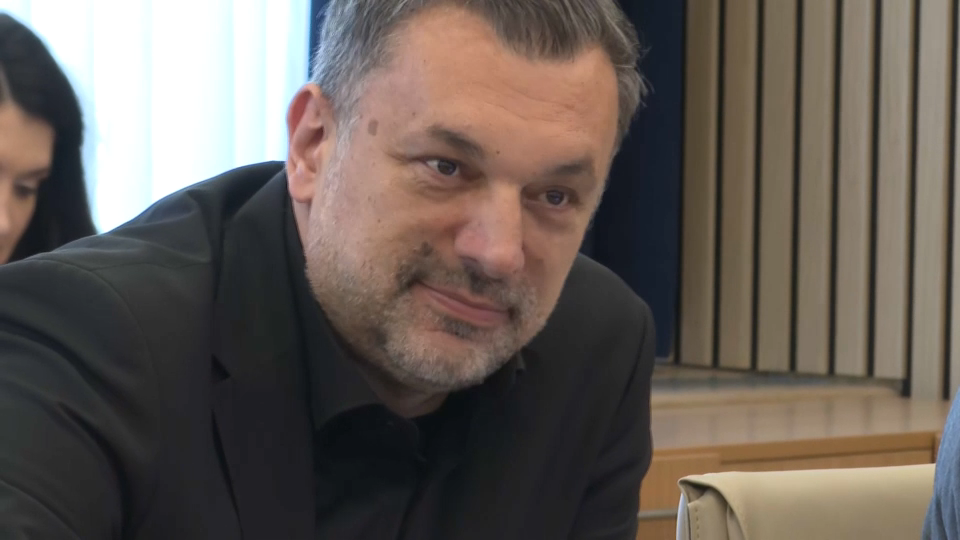
Bosnia and Herzegovina’s Foreign Minister Elmedin Konakovic has sent an official letter to US Secretary of State Marco Rubio, warning that any reduction of US engagement in Bosnia and Herzegovina could create a dangerous vacuum for Russia and its local allies.
In the letter, dated June 30, 2026, Konakovic said Bosnia deeply values its historic and strategic partnership with the United States, stressing Washington’s decisive role in ending the war, shaping the Dayton Peace Agreement and preserving peace in the country.
Konakovic expressed concern over a recent statement by the US Embassy in Sarajevo regarding the appointment of the next High Representative and the role of the Peace Implementation Council.
He said Bosnia had taken “with particular seriousness” the message that continued European indecision and the inability of the PIC to fulfil its responsibility could force the United States to reconsider its role in the current international presence in Bosnia and Herzegovina.
According to Konakovic, any weakening of the US role would risk opening space that could quickly be filled by the Russian Federation, its allies and local proxies.
He argued that their goal is not stability, but the weakening of the Dayton framework, obstruction of Bosnia’s Euro-Atlantic path and the spread of malign influence across the Western Balkans.
Konakovic told Rubio that the current crisis in Bosnia and Herzegovina should not be understood as an ethnic or interethnic conflict, but as a geopolitical crisis deliberately generated and instrumentalised by Russia through its main local ally, Milorad Dodik.
To illustrate what he described as genuine reconciliation among people in Bosnia, Konakovic referred to his own wartime experience, saying that as a teenager in 1992 he joined the Army of Bosnia and Herzegovina, while a current member of the Bosnian Parliament and senior official of the Serb Democratic Party was on the opposite side of the front line.
“We were literally on opposite sides of the war. Today we sit together, talk, cooperate and work for a better, peaceful and European future for our children and our country,” Konakovic wrote.
He said the current threat must not be misread as inevitable ethnic confrontation, but as a secessionist political project backed by Moscow.
Konakovic also warned that Bosnia would not allow the remains of Srebrenica victims to be separated from their homeland, recalling that the genocide of more than 8,000 Bosniak men and boys remains a permanent warning of where extremist ideologies can lead.
In the letter, Konakovic accused Milorad Dodik of continuing to obstruct Bosnia’s EU and NATO path. He noted that since Russia’s full-scale invasion of Ukraine, Dodik has met Russian President Vladimir Putin nine times, including during commemorations in Moscow in May.
Konakovic also raised concern over Dodik’s public claims that, through US-based lobbyists and political intermediaries, he is able to shape or influence US policy toward Bosnia and Herzegovina, including policy within the State Department.
He named Rod Blagojevich, Ari Ben-Menashe and Marc Zell among those figures.
According to Konakovic, such claims have caused deep concern among Bosnian citizens, particularly after Dodik and his network were removed from the US sanctions list and following Dodik’s claims that his lobbying efforts helped remove the High Representative.
Konakovic stressed that the Office of the High Representative and its executive powers, including the Bonn Powers, remain a necessary last-resort mechanism against secessionist actions until the 5+2 agenda is fully implemented.
Konakovic also warned about Bosnia’s energy vulnerability, citing public announcements of expanded cooperation with Gazprom and plans for the Russian company to build power plants in Bosnia and Herzegovina.
He said these moves run counter to the goals outlined in the US Congress report on US policy in the Western Balkans.
The Foreign Minister highlighted the Southern Interconnection gas pipeline as a key project for reducing Russian influence.
He described the pipeline not only as an energy project, but as a strategic tool for diversification, resilience and reducing dependence on Russian gas.
Konakovic said strong US support for the project is highly appreciated in Bosnia and Herzegovina, adding that its implementation would strengthen the country’s energy security, contribute to regional stability and create more space for future US investment and a stronger American economic presence.
At the end of the letter, Konakovic added what he called a lighter note in a moment of serious political concern, referring to the upcoming FIFA World Cup Round of 32 match between Bosnia and Herzegovina and the United States.
He said he hoped for a fair and sporting match, adding that “the better team on the pitch” should win.
Whatever the result, Konakovic said, the match would add another memorable chapter to the friendship between Bosnia and Herzegovina and the United States.
Kakvo je tvoje mišljenje o ovome?
Učestvuj u diskusiji ili pročitaj komentare


Kakvo je tvoje mišljenje o ovome?
Učestvuj u diskusiji ili pročitaj komentare