Srbija
 Hrvatska
 Slovenija

Spence and Forto warn of growing normalization of hate speech in Bosnia and Herzegovina


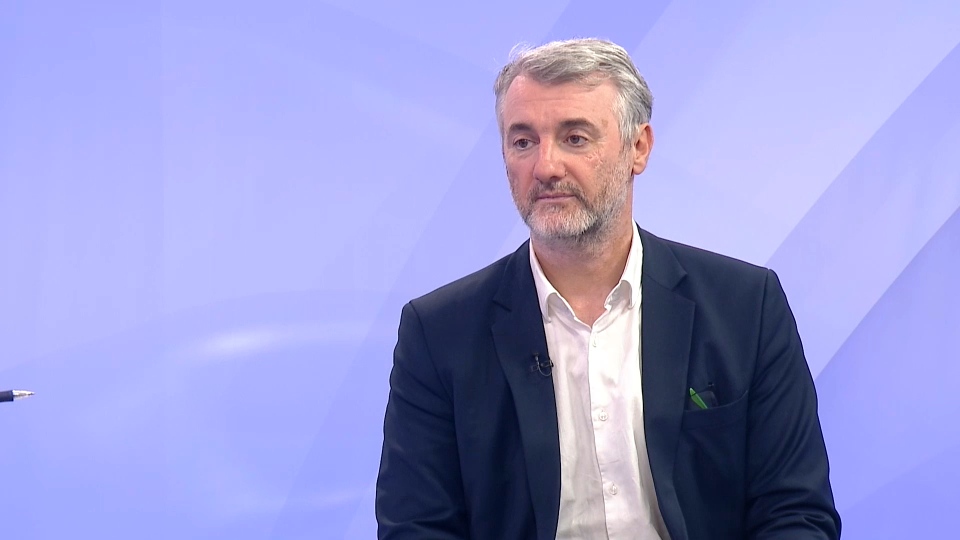
Arnhild Spence, the United Nations Resident Coordinator in Bosnia and Herzegovina, and Edin Forto, Minister of Communications and Transport of Bosnia and Herzegovina, warned about the growing denial of crimes, glorification of war criminals, and normalization of hate speech, which seriously threaten social cohesion and the country’s democratic resilience.
They made the remarks during the launch of the project 'Partnerships for Equality: Say No to Hate Speech and Divisive Narratives in Bosnia and Herzegovina', aimed at improving public discourse and strengthening social cohesion.
The conference marking the launch of the project is being held today in Sarajevo as part of the observance of the International Day for Countering Hate Speech and the first United Nations Peacebuilding Week 2026—a global initiative promoting dialogue, inclusion, and joint action for sustainable peace.
Spence said the initiative was launched in response to a reality requiring urgent action, stressing that the quality of public discourse directly affects trust among communities, democratic resilience in Bosnia and Herzegovina, and prospects for sustainable peace.
She warned that narratives continue to exist in Bosnia and Herzegovina that deny suffering, glorify convicted war criminals, and relativize genocide and other crimes already adjudicated by courts.
Speaking about the upcoming election cycle, Spence said all public actors have a responsibility to support constructive public discourse.
''Such responsible behavior includes rejecting genocide denial, not inciting hatred, not relativizing genocide, avoiding glorification of war crimes and convicted war criminals, fighting disinformation, and supporting journalists and civil society,'' she said.
Forto pointed to increasingly prevalent divisive narratives, insults, and the normalization of such language in public discourse.
He stressed that hate speech and offensive rhetoric are becoming more frequent and socially acceptable, partly due to new technologies that allow individuals—whether anonymously online or openly under their own names—to direct severe insults at others.
Forto also shared a personal example, saying that after posting a photo from a BiH Pride March, he received around 1,500 comments, most of which contained hate speech.
He emphasized that criticism directed at him as a public figure is one thing, but what is concerning is that many reactions suggested people participating in such events, in the opinion of some, ''do not deserve to live in Bosnia and Herzegovina''.
According to him, such narratives, often encouraged by political structures, could lead to renewed trauma and deeper social divisions, the full extent of which, he said, is still impossible to fully assess.
Speaking about the initiative, Forto said that with significant funding planned in the coming years, it could form part of a long-term process of changing social patterns.
Today's event marks the launch of a new initiative jointly implemented by UNESCO, UN Women, and the United Nations Development Programme, in partnership with the Ministry of Communications and Transport of Bosnia and Herzegovina, with support from the UN Secretary-General’s Peacebuilding Fund.
During the conference, the project's objectives and planned activities will be presented. The initiative will operate through three interconnected tracks: improving responses in media and digital spaces, strengthening institutional prevention and response mechanisms, and addressing the gender dimensions of hate speech, including its disproportionate impact on women and girls.
Kakvo je tvoje mišljenje o ovome?
Učestvuj u diskusiji ili pročitaj komentare


Kakvo je tvoje mišljenje o ovome?
Učestvuj u diskusiji ili pročitaj komentare