Srbija
 Hrvatska
 Slovenija

Expert warns against weakening OHR amid crucial selection period


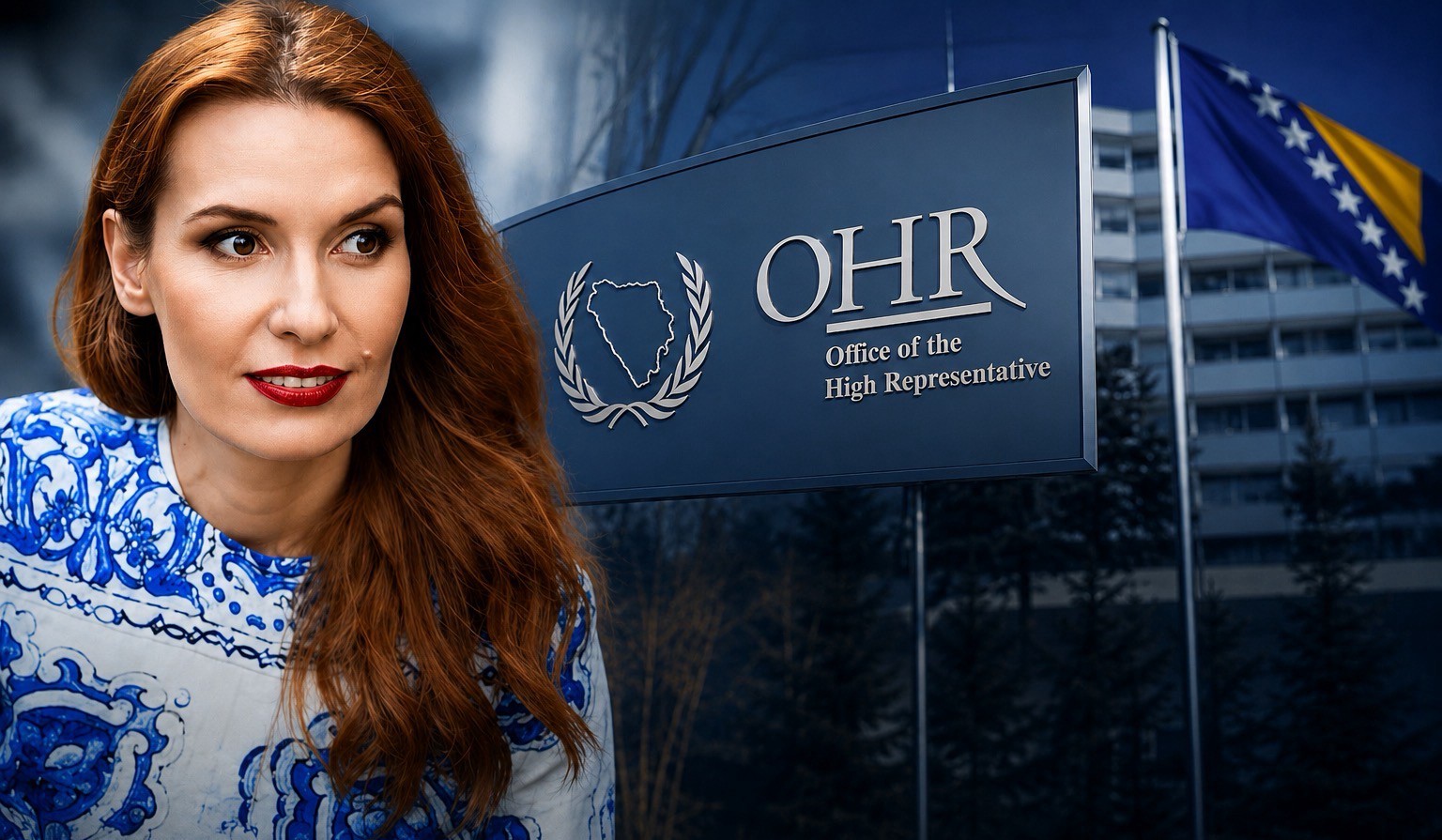
Czech political scientist and Bosnia and Herzegovina (BiH) expert Dr. Michaela Ulbrichtova warned in an interview with N1 that the coming week could be decisive for selecting a new High Representative. She cautioned that weakening the Office of the High Representative (OHR) in the current political climate could further complicate the situation in the country. Ulbrichtova stated that if the Peace Implementation Council (PIC) member states fail to reach an agreement on a candidate, the selection process could be delayed and repeated at a later date.
Speaking on the future of the OHR, she recalled that discussions about its role and potential reduction of powers have been ongoing for over two decades. "The international community's approach after the war was distinctly interventionist, only to be later replaced by a policy that favored 'local ownership,' which implied, among other things, minimal use of the Bonn powers. With the arrival of Christian Schmidt, we have again seen a more active, or 'hands-on' approach (the renewed use of the Bonn powers)," she pointed out.
Ulbrichtova believes that current debates on the OHR's future cannot be viewed separately from the wider international context. "The United States has always had significant influence on the work of the OHR and within the PIC. What we are seeing today is a combination of global geopolitical changes, disagreements within the international community regarding the strategy of peace-building and state-building in Bosnia and Herzegovina, and the transactional approach to politics that characterizes the administration of US President Donald Trump," she assessed. In her opinion, the absence of a unified stance among key international actors further complicates the situation in the country.
Although she emphasizes that she has never been an advocate for a model that places Bosnia in the position of a sort of international protectorate or for the broad use of the Bonn powers, she believes their existence is not coincidental. "The reason why these powers still exist is linked to secessionist threats that have been very loud in recent years. The international community is continuously assessing whether those threats could one day grow into a political reality," states Ulbrichtova. She added that it is precisely because of such circumstances that any weakening of the High Representative's institution should be carefully considered.
Ulbrichtova warns that the current political and security situation in Bosnia is not suitable for experiments with the institutional framework established after Dayton. "The situation is so complex that no changes to the High Representative's position should be introduced at this moment. However, since the question of redefining that function has already been opened, PIC members should take care that the new High Representative is not someone's puppet, without real powers, if they want to prevent further deterioration of the situation," she argues.
Speaking about the international community's broader relationship with Bosnia and Herzegovina, Ulbrichtova said that such a relationship stems from the divided responsibility of domestic and international actors within a "stabilitocratic" game. "It has often proven true that if you cannot agree, someone else will decide for you. The problem is that someone else does not necessarily have to take care of local interests and the welfare of citizens, but primarily of their own interests," she says. She concludes that the international community has undoubtedly achieved certain positive results in the country, but at the same time, it has become part of the problem because it did not bring processes to an end.
"Since ethnopolitical practices continue to dominate the political scene of Bosnia and Herzegovina, with negative consequences for the functionality of the state, the key question, not only for the new High Representative but also for other important actors of the international community in Bosnia and Herzegovina (EU, OSCE, etc.), is how to effectively respond to the phenomenon of a 'captured state' and the accompanying 'brain drain' that Bosnia and Herzegovina has been in for years. Also, there is the question of how to improve the level of social cohesion, which is closely linked, among other things, to key reforms in the education sector, with a special focus on primary education," Ulbrichtova believes.
She added that "although the aforementioned areas are of crucial importance for improving the overall functionality of Bosnia, the transactional way of conducting politics does not put them in the foreground. Because of this, Bosnia and Herzegovina remains a victim of its own political system, with a lack of consensus on necessary reforms."
Additionally, although Bosnia’s integration into the European Union remains a declared priority of the authorities, and the EU’s role in state-building remains significant, the destabilizing influence of other external actors (such as, for example, the Russian Federation), through their local and regional allies, who are closely linked to efforts to prevent BiH’s progress toward Euro-Atlantic integration, further complicates an already turbulent geopolitical environment.
The open question remains whether the future of Bosnia and Herzegovina will be determined by the preponderance of economic interests of external actors, in alliance with a part of the domestic ethnopolitical elites.
"The case of BiH not only illustrates changes in the international community's approach to peace-building and state-building in the context of deeply divided perceptions of its character, but also exposes increasingly deep divisions within the international community itself, as well as an increasingly pronounced hybridization of external peace-building and state-building actors with other authoritarian actors, which will have a direct impact on the selection of a new High Representative, but also on the nature of his actions," Ulbrichtova concluded.
Michaela Ulbrichtova recently received her doctorate in international relations and European studies at the Metropolitan University Prague and is considered one of the researchers from Central Europe who has been engaged with Bosnia the longest and most intensively. Over many years of work, she has researched the activities of the international community in BiH, the Dayton Peace Agreement, the role of the Office of the High Representative (OHR), and the phenomenon of stabilitocracy (stability without real democracy) in the Western Balkans. Her research has included numerous interviews with politicians, diplomats, journalists, and representatives of civil society across Bosnia and Herzegovina.
Kakvo je tvoje mišljenje o ovome?
Učestvuj u diskusiji ili pročitaj komentare


Kakvo je tvoje mišljenje o ovome?
Učestvuj u diskusiji ili pročitaj komentare