Srbija
 Hrvatska
 Slovenija

Helsinki Committee demands answers over Bosnia’s UN vote against Anti-Nazism Resolution


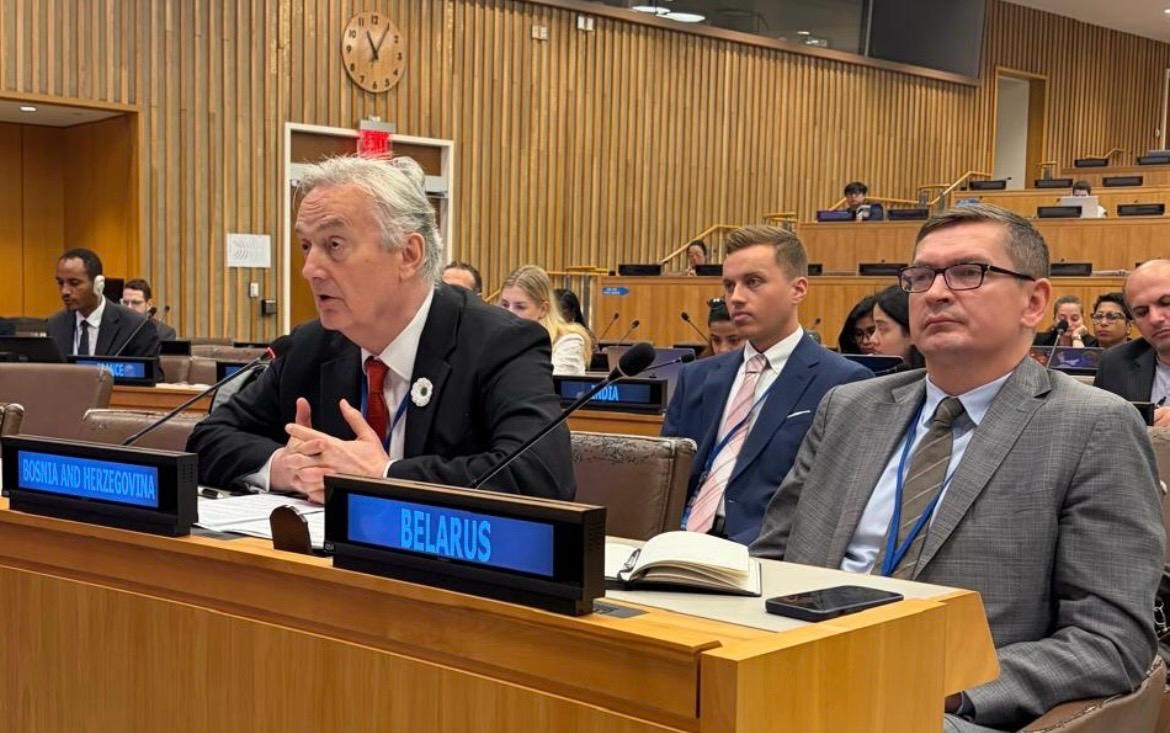
The Helsinki Committee for Human Rights has called on Bosnia and Herzegovina’s Ambassador to the United Nations, Zlatko Lagumdzija, alongside the BiH Presidency and the Ministry of Foreign Affairs, to publicly explain the country’s vote against a UN draft resolution combating the glorification of Nazism.
The vote took place on 10 November within the Third Committee of the UN General Assembly, which ultimately approved the amended draft ahead of a forthcoming plenary session vote. Whilst Ambassador Lagumdzija justified the decision by citing Bosnia and Herzegovina’s foreign policy alignment with the European Union, the Committee has demanded transparency regarding who authorised the stance, whether the Permanent Mission received formal voting instructions, and which specific provisions of the text were deemed problematic.
In its statement, the organisation emphasised that Bosnia and Herzegovina must formulate its foreign policy positions independently through its constitutional institutions, warning that bypassing prescribed procedures or Article V(3)(a) and (c) of the BiH Constitution, which entrusts foreign policy to the Presidency, would be unacceptable. Consequently, officials have been urged to clarify how the position was reached and reveal how Sarajevo intends to vote at the upcoming plenary session.
Condemning all forms of neo-Nazism, the Committee described the vote as deeply disappointing given the nation’s history of mass suffering and persecution during both the Second World War and the 1992–1995 conflict. It stressed that respect for victims obliges the state to consistently oppose ideologies that justify violence.
Furthermore, the Committee reminded authorities that, regardless of the UN vote, Bosnia and Herzegovina remains bound by international law, specifically Article 4 of the International Convention on the Elimination of All Forms of Racial Discrimination and Article 20 of the International Covenant on Civil and Political Rights, to prohibit racist propaganda and publish data on hate speech prosecutions and rulings.
Kakvo je tvoje mišljenje o ovome?
Učestvuj u diskusiji ili pročitaj komentare


Kakvo je tvoje mišljenje o ovome?
Učestvuj u diskusiji ili pročitaj komentare