Srbija
 Hrvatska
 Slovenija

Menachem Rosensaft on Mladic: For Srebrenica genocide survivors, glorifying him is like glorifying Hitler


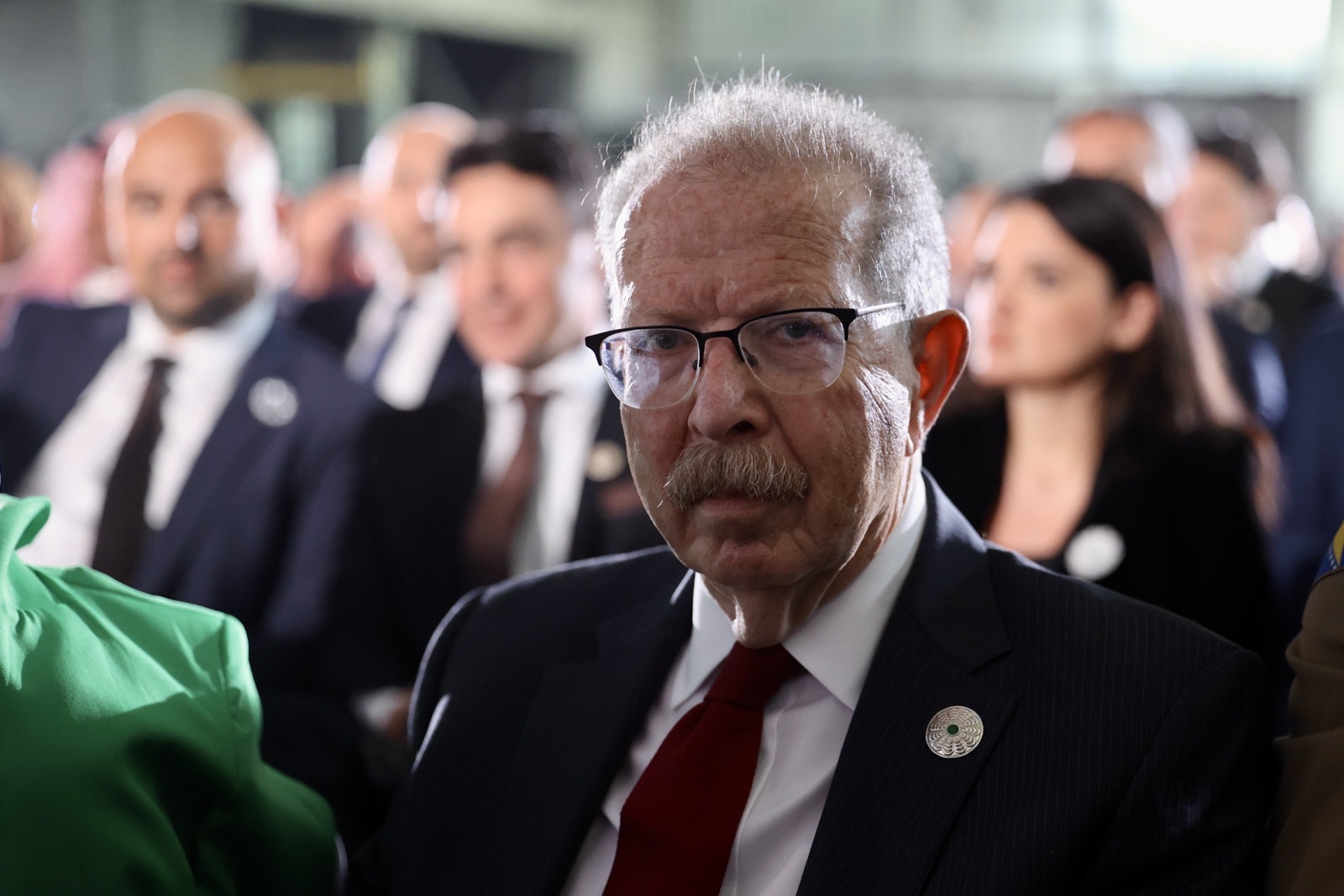
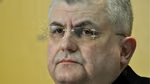
Menachem Rosensaft, a law professor at Cornell and Columbia universities and former general counsel of the World Jewish Congress, has reflected on the death of Ratko Mladic in an opinion piece for the Jewish Telegraphic Agency, condemning the continued glorification of the former Bosnian Serb military commander and comparing its impact on Srebrenica genocide survivors to the public glorification of Nazi leaders in Germany.
Rosensaft begins by saying that, in keeping with Jewish tradition and Proverbs 24:17, he does not rejoice at Mladic’s death. He does, however, feel “profound satisfaction” that survivors of his crimes and families of his victims lived to see him spend the final 15 years of his life in prison.
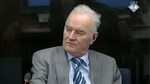

“Mladic, the Bosnian Serb general who died Thursday in a prison hospital at The Hague, was convicted of the crime of genocide in November 2017 by the International Criminal Tribunal for the former Yugoslavia,” Rosensaft wrote.
Mladic, the former commander of the Army of Republika Srpska, was sentenced to life imprisonment for genocide in Srebrenica, crimes against humanity and war crimes committed during the 1992-1995 war in Bosnia and Herzegovina.
Rosensaft noted that he had visited the Srebrenica cemetery numerous times during his tenure at the World Jewish Congress, standing there alongside survivors of the genocide.
“As a law professor at Cornell and Columbia, and in direct appeals to the Jewish community at large, I have long held up Mladic as epitomizing the legal definition of genocide,” he wrote.
Rosensaft recalled that Mladic and then Republika Srpska President Radovan Karadzic oversaw the ethnic cleansing of Bosniaks and Croats from territories sought by Serb nationalist forces during the Bosnian war.
He also pointed to Mladic’s role in the shelling of Sarajevo, the taking of UN personnel hostage and the crimes committed following the fall of the UN-designated Srebrenica “safe area” in July 1995.
More than 8,000 Bosniak men and boys were killed following the fall of the enclave, while thousands of women, children and elderly people were forcibly expelled.
Rosensaft recalled Mladic’s statement upon entering Srebrenica that the town was being given “to the Serb people as a gift”, followed by his declaration that the time had come to “take revenge on the Turks”, a derogatory reference to Bosniaks.
He also cited the International Court of Justice’s 2007 judgment, which found that the crimes committed in Srebrenica were carried out with the specific intent to destroy, in part, the Bosnian Muslim population as such and therefore constituted genocide.
A significant part of Rosensaft’s commentary concerns the debate over the use of the term genocide in relation to Israel’s war in Gaza.
“Simply put, I believe that as a matter of prevailing international law, while Mladic perpetrated a genocide at Srebrenica, Israel did not do so in its two-year war against Hamas in Gaza,” he wrote.
Rosensaft argued that the crucial distinction lies in the specific intent, or dolus specialis, required under international law for an act to constitute genocide.
According to his interpretation, the objective of Mladic and other Bosnian Serb officials convicted of genocide was to destroy the Bosniak presence in the Srebrenica area. Israel’s objective in Gaza, he argued, was to eliminate Hamas as what it considered an existential threat rather than to destroy the Palestinian population.
“That is the fundamental, irrefutable difference between Srebrenica and Gaza,” Rosensaft wrote.
He also argued that what happened in Srebrenica in July 1995 was more comparable to the Hamas-led October 7, 2023 attack on Israel than to Israel’s subsequent military campaign in Gaza.
These assessments represent Rosensaft’s interpretation of international law and the conflicts.
In the final part of the article, Rosensaft focused on the continued celebration of Mladic among sections of Serbian and Bosnian Serb society.
He referred to statements describing Mladic as an important national figure, as well as murals honouring him in Bosnia and Herzegovina and Serbia.
For survivors and families of those killed in the Srebrenica genocide, Rosensaft argued, such public glorification carries a particularly painful meaning.
“For the survivors of the Srebrenica genocide, for the families of the thousands murdered there, and for Bosniaks throughout BIH and around the world, this is tantamount to having larger-than-life images of Hitler, Himmler or Eichmann on prominent display in Germany,” he wrote.
Rosensaft concluded by naming several Srebrenica survivors, including Almasa Salihovic, Azir Osmanovic and Srebrenica Memorial Center Director Emir Suljagic.
“It is with them, through them, that we must contemplate who Ratko Mladic was, the crimes he committed, and his gruesome, permanent legacy,” he concluded.
Rosensaft is president of the World Federation of Bergen-Belsen Associations and teaches law at Cornell and Columbia universities. He previously served as general counsel of the World Jewish Congress. In January 2024, he and Bosnia and Herzegovina’s Grand Mufti Husein Kavazovic signed the Muslim-Jewish Peace and Remembrance Initiative in Srebrenica.
Kakvo je tvoje mišljenje o ovome?
Učestvuj u diskusiji ili pročitaj komentare


Kakvo je tvoje mišljenje o ovome?
Učestvuj u diskusiji ili pročitaj komentare