Srbija
 Hrvatska
 Slovenija

RS entity opposition announces protests over planned 800 million KM borrowing increase


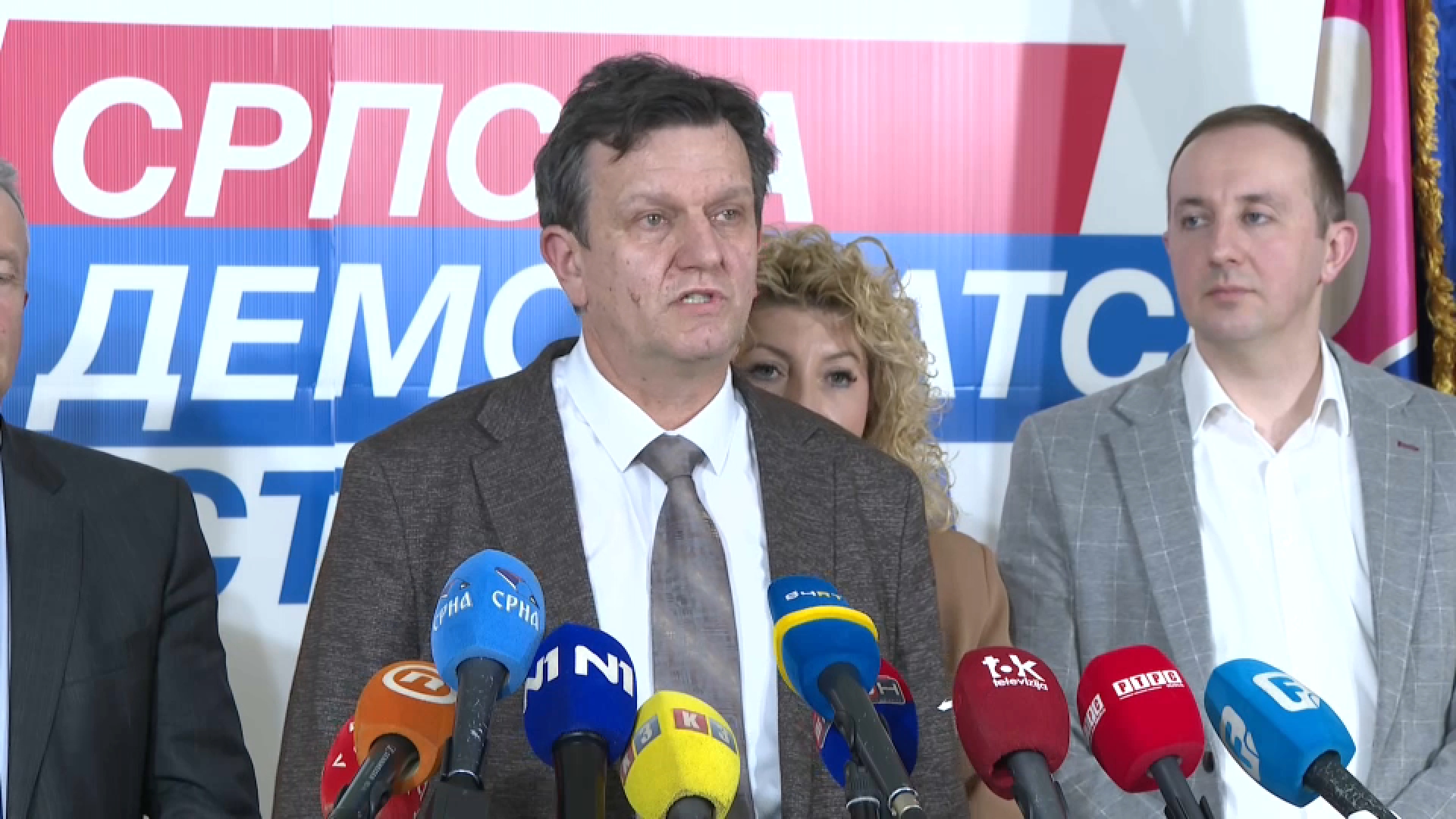
Opposition parties in Republika Srpska announced joint actions on Sunday to oppose the entity government's plan to increase long-term borrowing by an additional 800 million KM, arguing that the move is financially unsustainable and will place a heavier burden on citizens and future generations.
Representatives of the Serbian Democratic Party (SDS), the Safe Srpska Movement (PSS) and the People's Front (NF) said they would coordinate activities aimed at preventing the adoption of the proposal, which is expected to be discussed by the Republika Srpska National Assembly (NSRS).
Following a meeting of opposition leaders, PSS President Drasko Stanivukovic said the issue was too important to be considered under an urgent parliamentary procedure.
“Lawmakers will receive the materials tomorrow, and the session will, as usual, be scheduled for Tuesday. We are talking about an 800 million KM increase in borrowing and higher guarantees for the liabilities of public enterprises and institutions. These are extremely serious decisions that require a regular procedure and broad public debate,” Stanivukovic said.
He said opposition parties had agreed to coordinate their efforts despite initially planning separate activities.
According to Stanivukovic, opposition lawmakers and young activists will gather in front of the NSRS building on Monday to send a message that they do not want to repay debts created by the current government.
He also announced that a “debt counter” would be installed at Krajina Square in Banja Luka, displaying the pace at which Republika Srpska is increasing its debt on a minute-by-minute, hourly and daily basis.
“Citizens will be able to see how much the authorities are borrowing in their name at every moment. It will be a symbol of the true state of Republika Srpska's public finances,” he said.
Stanivukovic added that the opposition expects a response to its request for a regular parliamentary session instead of an extraordinary one and warned that further action would follow if the assembly majority approves the new borrowing plan.
People's Front leader Jelena Trivic argued that the public lacks reliable information on the current level of Republika Srpska's debt, noting that the latest official data available dates back to the end of 2024.
“It is already mid-2026, and the Ministry of Finance has not published public debt figures either for the end of last year or for this year. Because of that, we cannot say with certainty how large the actual debt of Republika Srpska is,” Trivic said.
She accused the authorities of withholding information about the state of public finances and warned that around 1.7 billion KM in obligations are due this year. According to Trivic, economic growth remains weak while budget revenues increasingly depend on loans and new borrowing.
“You cannot achieve serious economic development if you rely solely on new borrowing and increasing fiscal burdens. GDP growth is low, private investment is modest and debt is becoming an ever greater burden on future development,” she said.
Trivic also claimed that most of the proceeds from the planned borrowing would be spent on current expenditures rather than investment projects.
SDS President Branko Blanusa said the public had not been given sufficient information about how the new funds would be used or under what conditions the borrowing would take place.
“Citizens have the right to know which capital projects will be financed, under what terms the loans will be taken and who the creditors are. Transparency is essential when decisions of this magnitude are being made,” Blanusa said.
He added that many infrastructure projects are delayed, public enterprises continue to operate at a loss and industrial production has fallen by 10 percent, while major investments remain scarce.
“We need a serious development strategy, support for businesses and agriculture and a better investment climate. Instead, we are facing constant new borrowing,” he said.
Blanusa further claimed that 42 percent of the Republika Srpska budget is planned to be financed through borrowing, calling such a structure of public finances unacceptable.
The three opposition parties said they would continue coordinating efforts aimed at preventing further borrowing and demanding greater transparency in public finances.
Last Thursday, the Republika Srpska government approved a proposal to increase the ceiling for long-term borrowing from 1.7 billion KM to 2.5 billion KM. The proposal must now be approved by the National Assembly.
A session of the NSRS Collegium is scheduled for June 15.
Kakvo je tvoje mišljenje o ovome?
Učestvuj u diskusiji ili pročitaj komentare


Kakvo je tvoje mišljenje o ovome?
Učestvuj u diskusiji ili pročitaj komentare