Srbija
 Hrvatska
 Slovenija

RTRS accounts frozen, casting doubt on August salaries for 603 employees


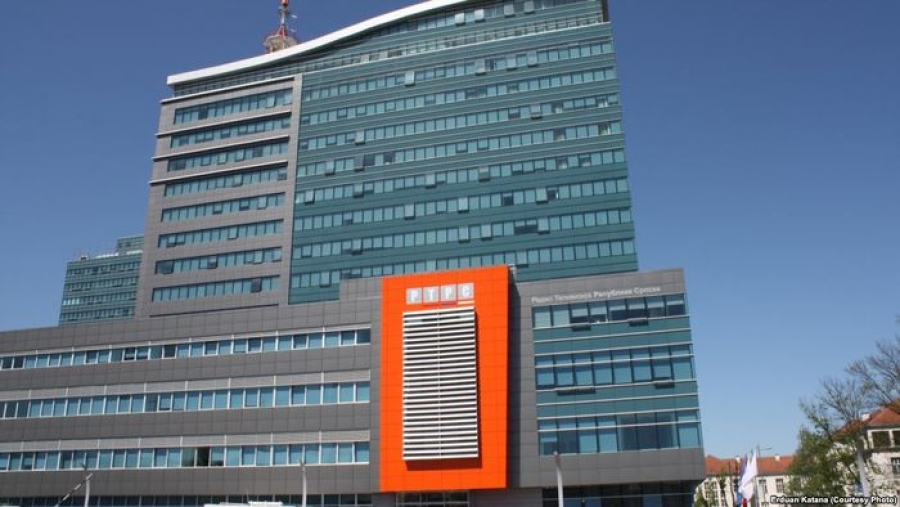
The bank accounts of public broadcaster Radio Television of Republika Srpska (RTRS) have been frozen since July 7, raising questions over whether the broadcaster’s 603 employees will receive their August salaries, RTRS said.
The freeze was ordered by the District Commercial Court in Banja Luka, based on a final ruling issued in April requiring RTRS to pay 5.4 million Bosnian convertible marks (KM) to Bosnia and Herzegovina’s public broadcaster, BHRT.
RTRS said a new hearing on the account freeze was held two days ago. Employees are now awaiting the court’s decision, concerned about whether they will receive their salaries on August 20.
According to RTRS, its employees have never experienced a delay in salary payments over the past two decades.
The dispute is part of a much larger and long-running financial conflict between the two public broadcasters. BHRT had appealed only the costs of the court proceedings in this particular case, which arose from the substantial debt RTRS has accumulated toward the state broadcaster over the years.
The broader debt currently stands at around 105 million KM, according to the information provided by RTRS, and relates to unallocated television and radio licence fees collected over the past nine years.
Dispute over public broadcasting funding
Disagreements over the financing of Bosnia and Herzegovina’s public broadcasting system date back to 2017, when RTRS stopped transferring part of the collected licence fee revenue to BHRT, contrary to provisions of the 2005 Law on the Public Broadcasting System of Bosnia and Herzegovina.
The law regulates the relationship between the country’s three public broadcasters — BHRT, RTRS and the Federal Television (FTV) — as well as the financing and distribution of collected revenues.
The licence fee was collected across the country and then distributed according to a legally prescribed model. BHRT was assigned a central role in the system, while the entity-level broadcasters were required to transfer the portion of the revenue allocated to the state broadcaster.
Over the years, political disputes, the dysfunction of joint institutions and disagreements over the collection and distribution of licence-fee revenues have further deepened the financial problems facing Bosnia and Herzegovina’s public broadcasting system.
Kakvo je tvoje mišljenje o ovome?
Učestvuj u diskusiji ili pročitaj komentare


Kakvo je tvoje mišljenje o ovome?
Učestvuj u diskusiji ili pročitaj komentare