Srbija
 Hrvatska
 Slovenija

Aleksandar Vucic resigns as President of Serbia


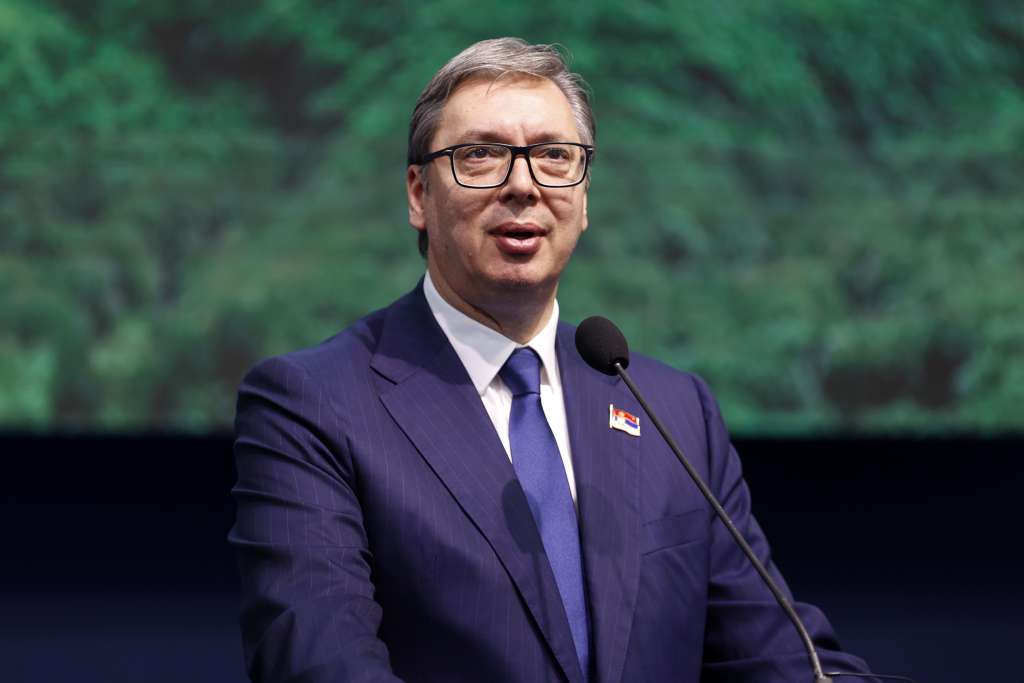
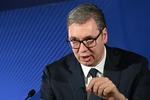
Aleksandar Vucic has resigned as President of Serbia, announcing his decision in a public address on Sunday evening.
Under Serbia’s Constitution, National Assembly Speaker Ana Brnabic will assume the duties of president following Vucic’s resignation.
The Constitution stipulates that when the president’s term ends before its scheduled expiry, the speaker of parliament temporarily performs the duties of president for a maximum of three months. A presidential election must be called so that it is held no later than three months after the president’s term ends.
Before announcing his resignation, Vucic said he had pardoned 49 people, including 23 individuals connected to what he described as “all these terrible events over the past year and a half,” despite, he said, assessments by Serbia’s security services.
“I have decided to pardon 12 people from the Novi Sad group, led by Mila Pajic, just as I have decided to pardon 11 people who, on the other side, took part in incidents against the protesters who organised blockades,” Vucic said.
He said it had been difficult for him to see some young people spend their youth outside Serbia, “regardless of how serious the acts they committed” may have been. Vucic described the pardons as an “act of mercy” and said he wanted to help young people.
Twelve Novi Sad activists and students have been charged with an alleged attempt to overthrow the constitutional order.
Proceedings against them began on November 24 last year. Those charged include activists from the Movement of Free Citizens (PSG) – Marija Vasic, Davor Stefanovic, Lado Jovovic, Srdjan Djuric and Mladen Cvijetic – as well as members of the Students Against Authoritarian Rule (STAV) organisation – Lazar Dinic, Mila Pajic, Doroteja Antic, Anja Pitulic, Branislav Djordjevic, Jovan Drazic and Dejan Bagaric.
Six of them spent months in detention before being transferred to house arrest, while six others remained outside Serbia and proceedings against them were conducted in absentia.
Earlier on Sunday, Vucic had announced that he would make decisions on pardons and the abolition of criminal proceedings for some people in connection with events in Serbia over the past year and a half.
He also said he was pursuing a strategy of a “quiet presidential election,” adding that this “should have been clear to everyone six months ago.”
Vucic said there would be more than a month between the conclusion of the parliamentary elections and the calling of the presidential election, noting that the campaign period for a presidential election is shorter.
Kakvo je tvoje mišljenje o ovome?
Učestvuj u diskusiji ili pročitaj komentare


Kakvo je tvoje mišljenje o ovome?
Učestvuj u diskusiji ili pročitaj komentare