Srbija
 Hrvatska
 Slovenija

DW: Gas pipeline could cut Bosnia’s reliance on Russia, but raises EU concerns


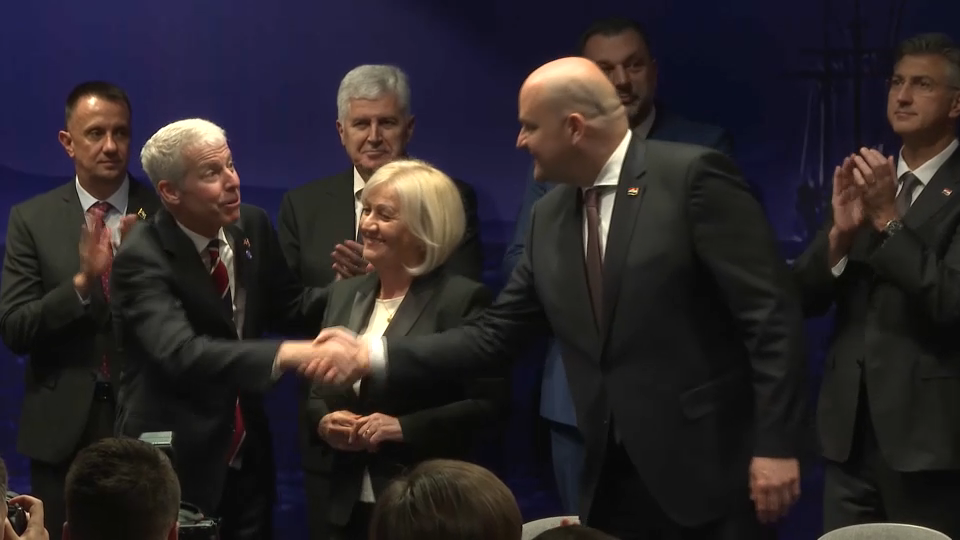
A planned gas pipeline linking Bosnia and Herzegovina to Croatia could reduce the country’s dependence on Russian energy, but European Union officials have warned that the way the project is being pursued may undermine Bosnia’s EU membership ambitions, according to Deutsche Welle.
The “Southern Interconnection” pipeline is intended to connect Bosnia with a liquefied natural gas terminal in Croatia, offering an alternative to Russian gas supplies.
The project is considered strategically important, particularly after Russia’s invasion of Ukraine, which prompted the European Union to push both member states and candidate countries to diversify energy sources.
BiH currently imports most of its gas from Russia, and the pipeline could help integrate the country into the wider European gas market.
Concerns over how the project is awarded
The controversy centres not on the pipeline itself, but on how the project is being allocated.
In March, authorities adopted legislation that effectively designates a specific US-based company, AAFS Infrastructure and Energy, as the investor. The firm was established in late 2025 and, based on publicly available data, has no track record in building gas pipelines.
This has raised concerns in Brussels. Ahead of final approval, the EU’s ambassador to Bosnia, Luigi Soreca, urged authorities to comply with EU rules.
He said BiH must “carefully consider” its obligations under the Energy Community treaty, stressing that progress toward EU membership depends on aligning legislation with European Commission recommendations.
EU officials support reducing reliance on Russian energy, but insist that such projects must follow transparent procurement and competition rules.
Criticism from watchdogs
The proposal has also drawn criticism domestically.
Ivana Korajlic from TI BiH warned that bypassing transparent procedures would set a “very dangerous” precedent.
She argued that the law appears tailored to favour a specific investor, raising concerns that private interests are being prioritised over the public good - something not in line with EU standards.
Korajlic also questioned the credibility of the reported $1.5 billion investment and whether the company has the capacity to carry out a project of this scale.
She further pointed to reported links between the firm and individuals close to Donald Trump, suggesting political influence may have played a role. The company did not respond to requests for comment, Deutsche Welle reported.
EU path under pressure
The dispute reflects broader challenges in Bosnia’s EU accession process, which has been slowed by political divisions and delays in reforms.
BiH applied for EU membership in 2016 and was granted candidate status in 2022. Accession negotiations formally opened in 2024 but have made limited progress.
Analysts say the EU is now taking a firmer stance, signalling that alignment with its legal and regulatory standards - including in the energy sector - will be essential for further progress.
Kakvo je tvoje mišljenje o ovome?
Učestvuj u diskusiji ili pročitaj komentare


Kakvo je tvoje mišljenje o ovome?
Učestvuj u diskusiji ili pročitaj komentare