Srbija
 Hrvatska
 Slovenija

EU warns of funding suspension, HJPC says it can continue independently


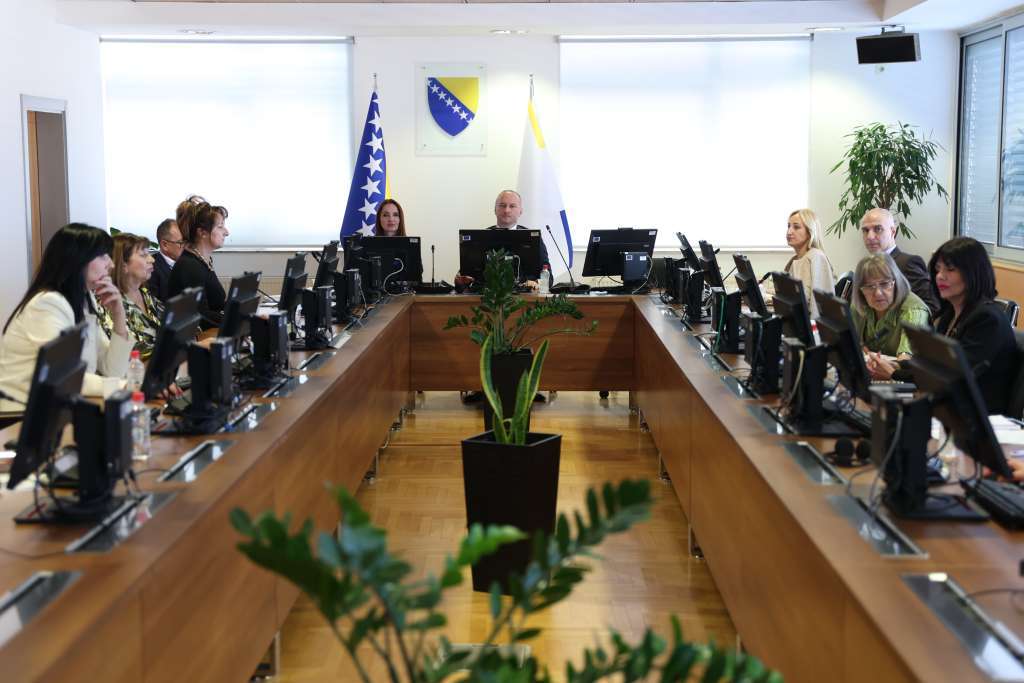
If the High Judicial and Prosecutorial Council of Bosnia and Herzegovina (HJPC BiH) does not withdraw its amended rulebook governing the engagement of external experts overseeing asset verification of judges and prosecutors, it is highly likely to lose the financial support the European Union has been providing for the process. The HJPC says that, in such a case, it would engage experts funded through the budget of Bosnia and Herzegovina’s institutions.
Detektor has unofficially learned from its sources that a decision has already been made in Brussels on the possible suspension of funding for oversight of judges’ and prosecutors’ assets if the HJPC does not revoke the disputed rulebook in the meantime.
The HJPC stated that it had not received an official response from the European Commission. Asked how it would proceed if the EU decided to halt funding, the Council said it ''does not base its actions on speculation and assumptions appearing in the public sphere from unofficial sources''.
At the same time, the HJPC stressed that the ''Department for Proceedings Based on Reports, responsible for asset verification of judges and prosecutors, is entirely funded from the budget of Bosnia and Herzegovina’s institutions''.
''No employees of the Department, material resources, premises, IT equipment, or cooperation with other institutions are financed through international partners’ funds,'' the HJPC stated.
It added that any ''hypothetical termination of partnership cooperation between the European Commission and the HJPC in implementing integrity provisions could relate exclusively to experts serving in an advisory role to the Department for Proceedings Based on Reports''.
At its April 15 session, the HJPC adopted amendments to the rulebook concerning the external oversight of the department responsible for verifying the assets of judicial office holders and the method of appointing external experts monitoring its work. Council members decided that external experts would be selected through a public competition, with two members of the selection commission appointed by the EU and one by the HJPC.
The decision was adopted without consultation with the EU.
According to the Law on the HJPC, the Council said it is solely responsible for appointing experts authorized to advise Department staff. It added that the European Commission funds only those experts who do not directly participate in verifications but instead provide advice to the Department when deemed necessary or requested.
Valentina Superti, Director for the Western Balkans at the European Commission’s Directorate-General for Neighbourhood and Enlargement Negotiations, had previously expressed concern in letters to HJPC President Sanin Bogunić regarding the draft amendments, warning of possible consequences for the effectiveness, credibility, and independence of the external oversight system.
The HJPC said it was satisfied with its cooperation with the European Commission so far, noting that in four publicly available reports, international experts had assessed the Department’s work as highly professional and of exceptional quality.
The Council added that it would welcome the continued engagement of the currently appointed experts, given the mutual satisfaction with the cooperation and quality of work.
In the event of a suspension of funding for advisory positions - which the HJPC claims do not perform essential functions necessary for the Department’s operation - the Council said it would ensure, through a transparent procedure and based on legal authority, the engagement of experts funded from the budget of BiH institutions.
Ivana Korajlic of Transparency International Bosnia and Herzegovina said the move undermines the expert mechanism designed to ensure independent external oversight of the Department’s work and the functioning of the entire system.
According to her, the intention was for European experts delegated by the EU to conduct independent oversight and monitoring of the Department’s work, particularly regarding efficiency, given that the asset verification system is still in its early stages.
''It is obvious that there is an effort to shield the HJPC from any independent oversight and make it accountable only to itself,'' Korajlic said.
She added that external oversight is important not only for independence and objectivity, but also for transparent reporting and performance analysis.
The HJPC stressed that the Department’s results so far demonstrate its effectiveness, noting that it was established in a short period and has already completed asset checks of more than 130 judges, prosecutors, and HJPC members, while hundreds of reports on the assets and interests of judicial office holders are publicly available on the Council’s website.
Detektor previously reported on EU external experts’ findings, warning that the Department for asset verification of judges and prosecutors continues to operate with insufficient capacity and that its work is further slowed by household members refusing to provide data.
The HJPC responded at the time by criticizing what it described as excessive EU interference in the verification process.
Kakvo je tvoje mišljenje o ovome?
Učestvuj u diskusiji ili pročitaj komentare


Kakvo je tvoje mišljenje o ovome?
Učestvuj u diskusiji ili pročitaj komentare