Srbija
 Hrvatska
 Slovenija

“Historic mistake”: Bosniak officials warn UN Court against freeing war criminal Ratko Mladic


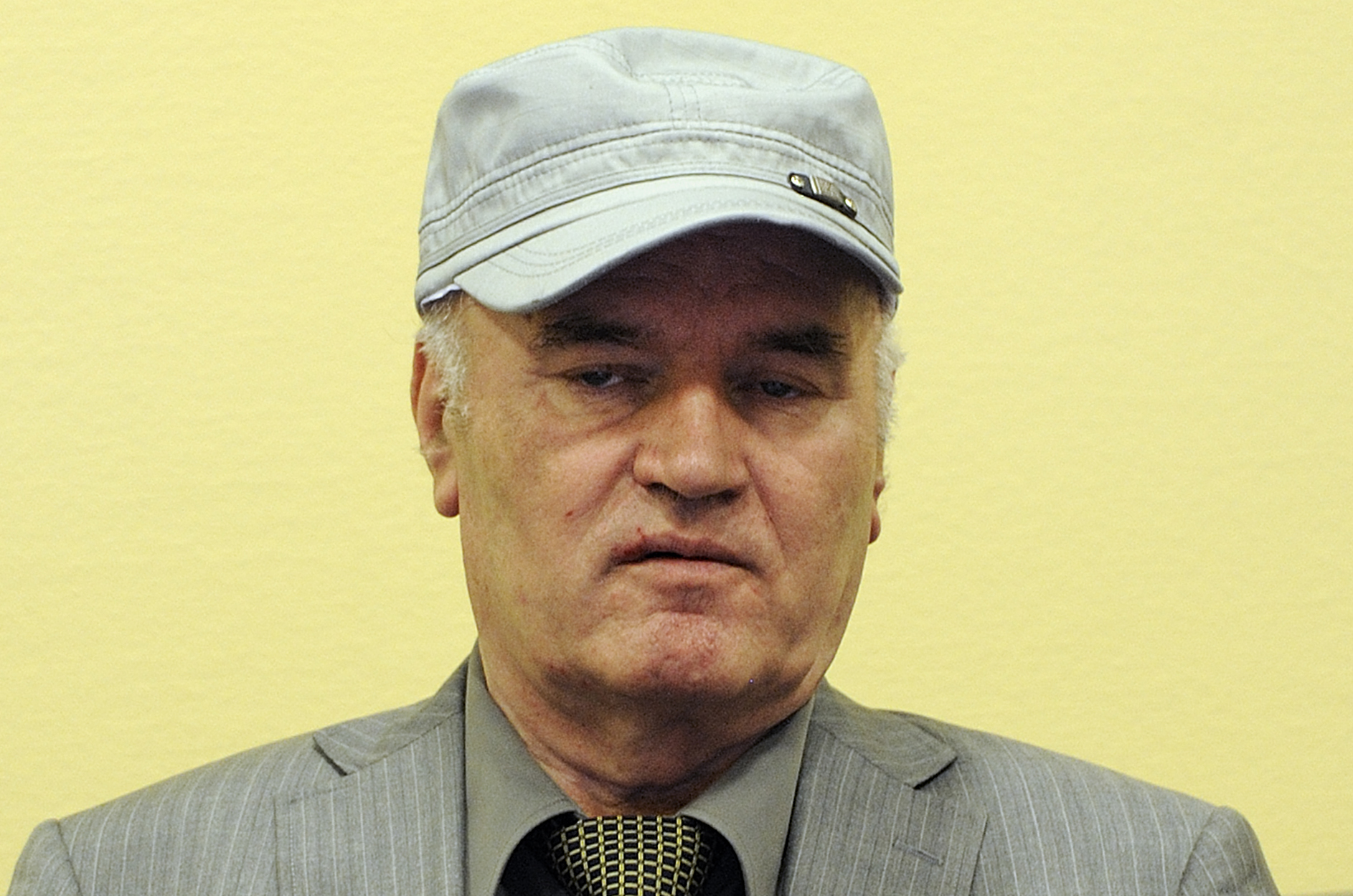
Bosniak officials and institutions have formally urged the International Residual Mechanism for Criminal Tribunals to reject any possibility of early release for convicted war criminal Ratko Mladic, arguing that such a decision would undermine justice for victims of some of the gravest crimes in Europe since World War II.
Camil Durakovic, Vice President of BiH's Republika Srpska (RS) entity, submitted a formal motion to IRMCT President Graciela Gatti Santana opposing any consideration of Mladić’s early release. He described the move as a “legal and moral obligation” toward tens of thousands of victims and ongoing transitional justice processes.
Mladic was sentenced to life imprisonment in 2017 by the International Criminal Tribunal for the former Yugoslavia, a verdict upheld on appeal in 2021. He was convicted of genocide in Srebrenica, crimes against humanity, the terror campaign against civilians during the nearly four-year siege of Sarajevo, and the taking of UN personnel as hostages.
Durakovic’s submission stresses that no other ICTY or IRMCT convict has been found guilty of crimes of comparable scale and severity, arguing that a life sentence reflects the gravity of those acts. It also states there is no credible evidence of rehabilitation, noting that Mladic has never expressed remorse or accepted the findings of the court.
The motion highlights the ongoing identification of victims of the Srebrenica genocide by the International Commission on Missing Persons, warning that releasing Mladic while families are still searching for remains would cause irreparable harm and damage the credibility of international justice.
Separately, Ahmed Kulanic, director of the Sarajevo Memorial Center, sent an open letter to the IRMCT warning that any move toward early release would be “legally, morally and historically wrong.” He rejected arguments that such a decision could be framed as a humanitarian act, calling it instead an attempt to relativize crimes.
Kulanic emphasized that Mladic’s conviction includes genocide, crimes against humanity, and a campaign of terror against Sarajevo’s civilian population, describing the siege as a systematic project targeting civilians, including children.
Both interventions stress that the IRMCT was established to ensure the full enforcement of sentences for the most serious international crimes. Any deviation, they argue, would set a dangerous precedent, signaling that even life sentences for genocide could be reduced - a message they say would deeply undermine justice for victims and survivors.
Kakvo je tvoje mišljenje o ovome?
Učestvuj u diskusiji ili pročitaj komentare


Kakvo je tvoje mišljenje o ovome?
Učestvuj u diskusiji ili pročitaj komentare