Srbija
 Hrvatska
 Slovenija

Journalist who exposed Srebrenica's suffering says earlier action could have saved lives


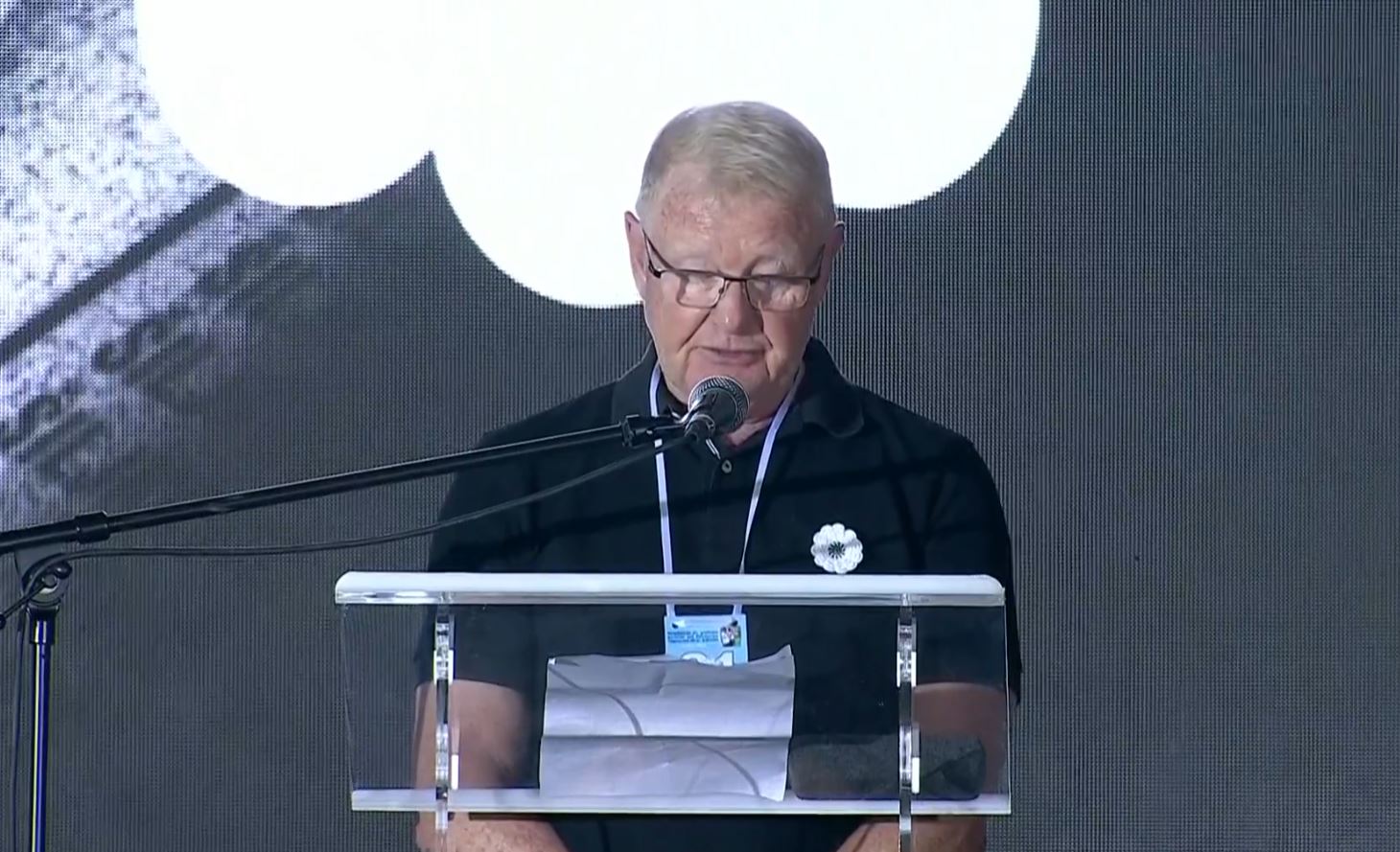
British war correspondent Tony Birtley, one of the first journalists to bring the humanitarian catastrophe unfolding in Srebrenica to the world's attention in 1993, addressed the commemoration marking the 30th anniversary of the Srebrenica genocide at the Memorial Centre in Potocari on Saturday.
Speaking before survivors, the Mothers of Srebrenica and victims' families, Birtley reflected on the month he spent inside the besieged enclave, describing it as the most defining experience of his four years reporting from Bosnia and Herzegovina during the war.
"It is an honour to have the opportunity to speak to you today. I am truly humbled to be here among the Mothers of Srebrenica and the victims' families," Birtley said, speaking through an interpreter.
The veteran correspondent, who spent four decades covering conflicts around the world, said Bosnia left some of the deepest physical and emotional scars of his career.
"They were dark times in Bosnia and Herzegovina. I spent years witnessing people's suffering. There are physical and psychological scars. During forty years reporting from war zones, I saw the brutality that human beings are capable of inflicting on one another," he said.
Before the war, he admitted, he knew little about Bosnia and Herzegovina, but found a country where people had lived ordinary, peaceful lives.
"People lived good lives. They were well educated and seemed happy and content before the war," he recalled.
Although he spent four years reporting from Bosnia and Herzegovina, Birtley said it was the month he spent in Srebrenica that stayed with him more than anything else.
"It was terribly depressing and devastating in so many different ways," he said.
Birtley vividly recalled the desperate humanitarian conditions inside the besieged town, where shortages of food, medicine and shelter became part of daily life.
"I witnessed the suffering of the population, the lack of food, basic medicines and shelter, and the loss of human dignity that many of us in the West take for granted. I will never forget the scenes of destruction and hunger. People waved branches at me, hoping food would be dropped from the air. I remember columns of people walking through the snow searching for anything they could find. Srebrenica was overcrowded, and people were forced to live outside in freezing winter conditions," he said.
Some memories, he added, have never faded.
"I cannot forget the scenes of death and injury. Almost always, they were innocent people. The lifeless bodies of children killed for no understandable reason are something that will never leave me. Nor will my disgust towards those who committed those crimes."
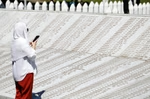
Reflecting on the role of journalists in war, Birtley said television audiences rarely see the full reality of armed conflict.
"On Western television, we cannot show the full brutality of war. We soften the reality so people can watch the news while eating dinner and then carry on with their lives. But that is not war. War is horrific. War is ugly."
Every day in Srebrenica, he said, brought scenes of shelling, mutilated bodies and people taking their last breaths.
"It was incredibly difficult, but I had to do my job and keep filming so the world could see it. A world that, perhaps, did not really care."
Alongside the horror, Birtley said he also remembers extraordinary courage and humanity.
"They were not trained soldiers. They did not want to kill or be killed. They simply wanted to live normal lives," he said, recalling the local people who sheltered him during shelling and shared what little food they had.
He paid tribute to Dr Nedret Mujkanović, whom he described as "a legend" and "the man who saved my leg", saying the doctor later became a close friend.
During his time in the enclave, Birtley himself lost nine kilograms.
"But that was nothing compared to what everyone else endured, because I always knew I would eventually be able to return home. For many people, Srebrenica was their only home," he said.
Birtley also criticised the international community for failing to act decisively.
"It was unbelievable to me that this supposedly high-minded international community could stand by and watch what was happening, sacrificing justice for political reasons," he said, adding that similar failures can still be seen today in conflicts including Palestine and Sudan.
He said memories of Srebrenica had haunted him for years, but acknowledged that his experience could not compare to the suffering endured by survivors and victims' families.
"I cannot imagine what it has been like for those who lost family members, their homes, their faith in humanity and their faith in neighbours they once trusted."
Closing his address, Birtley said remembering Srebrenica remains essential—not only to honour those who were killed but also to prevent future atrocities.
"We must remember what happened in Srebrenica, whatever people choose to call it, because it happened. The lesson is that we must act early, respond to aggression and not turn our heads away or wait until the death toll becomes too high before acting. The sooner we act, the better. Had we acted in time in Srebrenica, more people would have survived."
He concluded by saying the choice ultimately comes down to moral responsibility.
"It is about having the courage to take the right moral position and to do what is right. Sadly, I believe we still have not learned that lesson."
Kakvo je tvoje mišljenje o ovome?
Učestvuj u diskusiji ili pročitaj komentare


Kakvo je tvoje mišljenje o ovome?
Učestvuj u diskusiji ili pročitaj komentare
NAJČITANIJE










Najnovije







ZDRAVLJE





LIFESTYLE





SHOWBIZ


N1 KVIZ