Srbija
 Hrvatska
 Slovenija

Republika Srpska entity proposal to criminalize Bosnia's wartime lily symbols sparks nationwide backlash


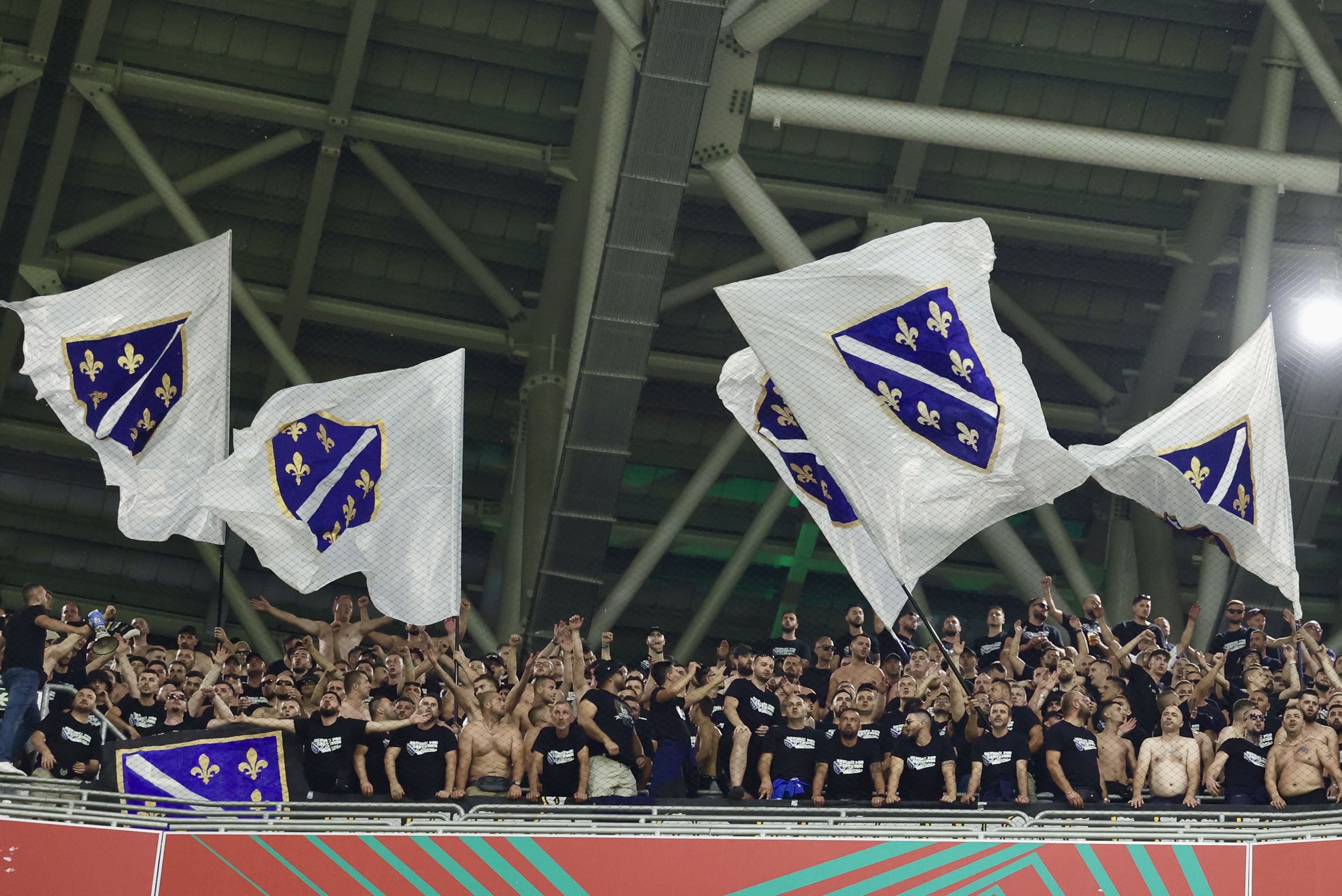
A proposal by the government of Bosnia and Herzegovina's Serb-majority entity, Republika Srpska (RS), to criminalize the public display and promotion of the flags and symbols of the Army of the Republic of Bosnia and Herzegovina (ARBiH) has sparked strong reactions across the country, with Bosniak officials and political parties arguing that the move violates the Constitution and state legislation.
The proposed amendments to the RS Criminal Code would introduce prison sentences of up to three years for publicly displaying or promoting the flags and symbols of the wartime Army of the Republic of Bosnia and Herzegovina. Critics say the proposal effectively targets the widely recognized fleur-de-lis, or lily, symbols that became closely associated with Bosnia and Herzegovina during the 1992-1995 war.
Republika Srpska Vice President Camil Durakovic said the proposal is in direct conflict with Bosnia and Herzegovina's state legislation, noting that the military heritage of the Army of the Republic of Bosnia and Herzegovina is officially preserved through the Second Infantry Regiment of the Armed Forces of Bosnia and Herzegovina.
"It is legally absurd that one entity seeks to criminalize the symbols of an army whose heritage is simultaneously protected by state law. Such legislation cannot survive within the legal order of Bosnia and Herzegovina," Durakovic said.
Several Bosniak and pro-state political parties, including the Party of Democratic Action (SDA), People and Justice (NiP), Our Party (Nasa stranka) and the Party for Bosnia and Herzegovina (SBiH), also condemned the proposal.
SDA announced it would challenge the law before Bosnia and Herzegovina's Constitutional Court if it is adopted, arguing that the Army of the Republic of Bosnia and Herzegovina was "the legal armed force of an internationally recognized state."
Nasa stranka described the proposal as "an attempt to rewrite history and criminalize the symbols of the internationally recognized Republic of Bosnia and Herzegovina," while accusing the ruling Alliance of Independent Social Democrats (SNSD) of using the issue to inflame ethnic tensions.
People and Justice argued that courts have repeatedly ruled that displaying the wartime flag of the Republic of Bosnia and Herzegovina is not illegal. The party said RS authorities are now attempting to criminalize army symbols after previous efforts to punish the display of the lily flag failed in court.
The party also pointed out that the heritage of the Army of the Republic of Bosnia and Herzegovina is officially incorporated into the traditions of the Armed Forces of Bosnia and Herzegovina under state legislation.
Former constitutional law adviser Slaven Kovacevic also criticized the proposal, saying the lily flag was the official flag under which Bosnia and Herzegovina was admitted to the United Nations in May 1992.
"The flag with lilies is an expression of the constitutional continuity of Bosnia and Herzegovina. It is neither an ethnic nor a religious symbol," Kovacevic said.
The proposal comes amid renewed political tensions in Bosnia and Herzegovina, where disputes over wartime history, state institutions and constitutional powers remain among the country's most sensitive political issues more than three decades after the war.
If adopted by the National Assembly of Republika Srpska, the law is expected to face legal challenges before Bosnia and Herzegovina's Constitutional Court.
Kakvo je tvoje mišljenje o ovome?
Učestvuj u diskusiji ili pročitaj komentare


Kakvo je tvoje mišljenje o ovome?
Učestvuj u diskusiji ili pročitaj komentare