Srbija
 Hrvatska
 Slovenija

Russia at UNSC: West is undermining Dayton, imposing “neo-colonial control” over BiH


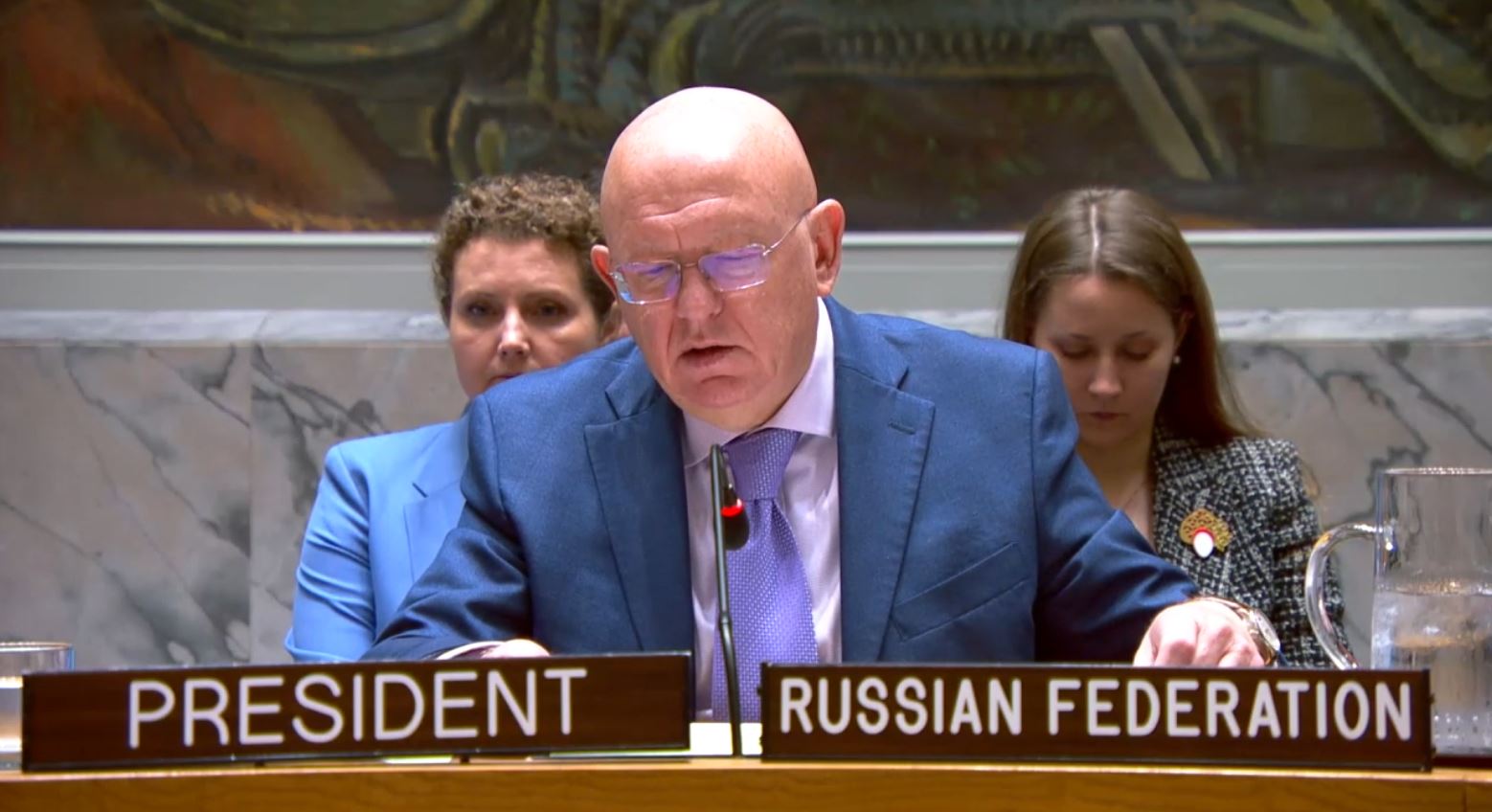
Russia has accused Western countries of destabilizing Bosnia and Herzegovina by imposing political control, undermining the country’s constitutional order, and using the Office of the High Representative (OHR) as a tool of “external governance”. Speaking at the United Nations Security Council debate in New York, the Russian ambassador claimed that the current political crisis in Bosnia and Herzegovina is the most serious since the signing of the Dayton Peace Agreement nearly 30 years ago.
“We supported the extension of the EUFOR Althea mandate for another year, and we note that the mission has maintained a balanced position by avoiding interference in Bosnia and Herzegovina’s internal affairs,” the ambassador said.
“However, this year has been marked by an unprecedented crisis in the entire post-Dayton period.”
The Russian representative accused Western governments of actively eroding the foundations of the peace agreement by bypassing domestic political dialogue and trying to preserve “total external control” over Bosnia and Herzegovina.
“Instead of facilitating mutual dialogue and compromise among the peoples of Bosnia and Herzegovina, we see an egotistical desire to preserve external management of a sovereign country,” he stated.
“Western states are sacrificing years of stabilization efforts and diluting the national identity of Bosnia’s peoples, forcing them to accept foreign cultural values.”
He argued that the “finely balanced Dayton system”, based on equality among the three constituent peoples and two entities, is being replaced with a political model that favors only one side.
The ambassador launched an explicit challenge to the legitimacy of Christian Schmidt, repeating Russia’s longstanding position that the current High Representative was never confirmed by the UN Security Council and therefore has no authority.
“The position of High Representative was pushed through and given to a German citizen without the consent of the Council. We do not recognize Mr. Schmidt as such,” he said.
“He has created a situation of lawlessness and is imposing so-called solutions on the peoples of another country.”
The ambassador also claimed that Schmidt’s latest report to the UN “creates a false picture” and seeks to shift blame for the crisis onto BiH's Republika Srpska (RS) entity, which he described as “defending the Dayton foundations”.
Russia also claimed that current political developments in Bosnia and Herzegovina discriminate not only against Serbs, but also Croats — arguing that their right to legitimate representation is being suppressed.
“The dangerous policy aimed at eroding the Dayton balance has a blatant anti-Serb bias,” he said, “and there is also inequality toward Bosnian Croats, whose elected representation is being denied under the guise of state-building.”
He said the issue of the Srebrenica genocide is being used as a tool used to “shift all responsibility for the country's problems onto Republika Srpska”.
Moscow insisted that the only way to restore long-term stability in Bosnia and Herzegovina is to abolish the Office of the High Representative and allow domestic political actors to resolve disputes through internal dialogue.
“The activity of the OHR is incompatible with the sovereignty of Bosnia and Herzegovina. Its termination is long overdue,” the ambassador said.
“Any attempt to distort the Dayton foundations will have catastrophic consequences for Bosnia and the entire Western Balkans.”
He concluded by stating that Russia, as one of the original guarantors of the 1995 peace agreement, is ready to play a “constructive role” in a new phase of post-conflict settlement — one based on local responsibility, not international intervention.
Kakvo je tvoje mišljenje o ovome?
Učestvuj u diskusiji ili pročitaj komentare


Kakvo je tvoje mišljenje o ovome?
Učestvuj u diskusiji ili pročitaj komentare