Srbija
 Hrvatska
 Slovenija

BIRN: Former Dutch defence minister says Srebrenica "did not have to fall"


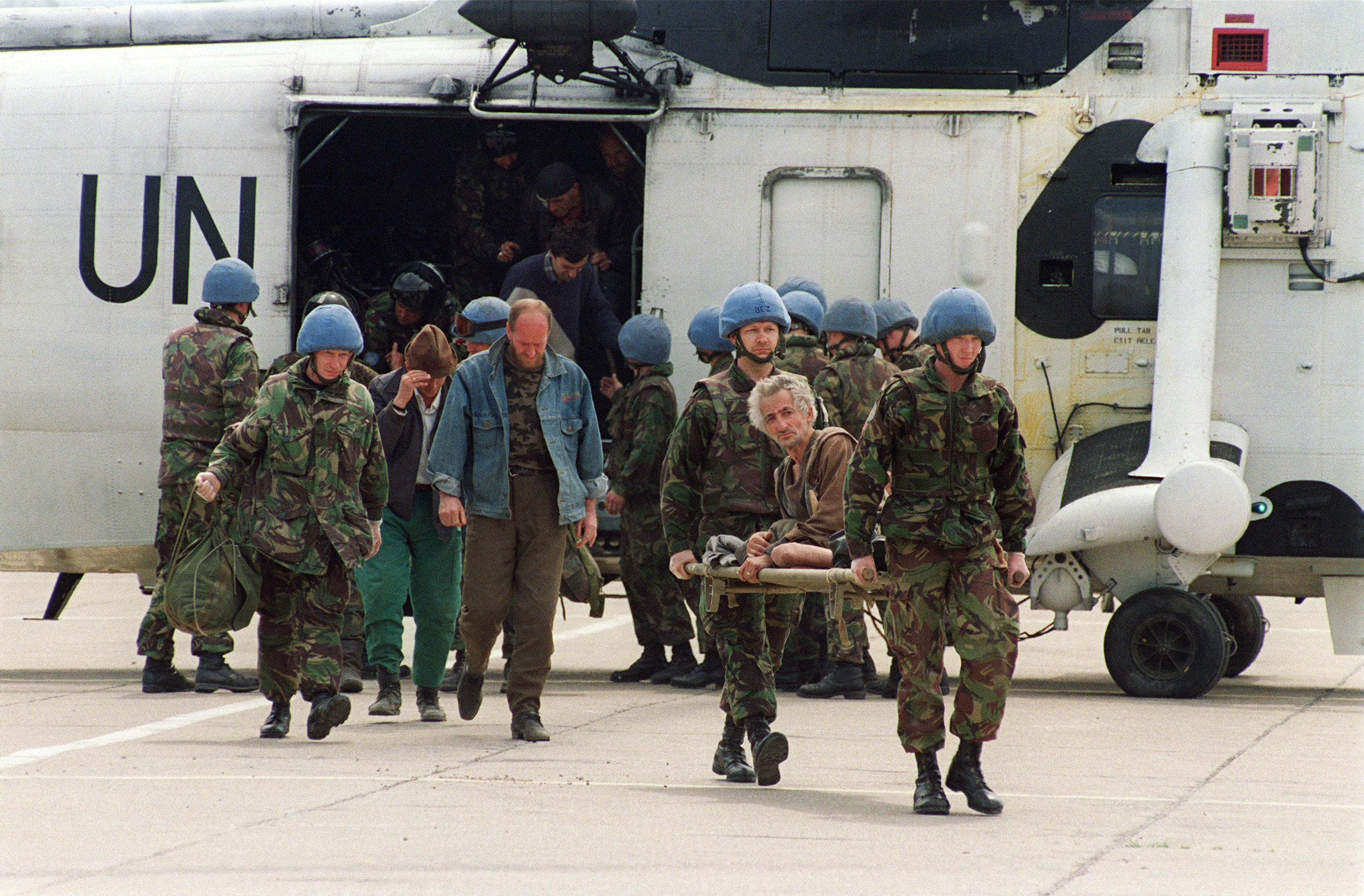
Former Dutch Defence Minister Joris Voorhoeve believes the fall of Srebrenica could have been prevented, saying a combination of political hesitation, institutional failures and his own mistakes contributed to the tragedy that culminated in the genocide of more than 8,000 Bosniak men and boys.
Speaking to BIRN ahead of the 31st anniversary of the Srebrenica genocide, Voorhoeve said he spent months before the enclave's fall trying to strengthen the Dutch peacekeeping contingent stationed there, but repeatedly encountered resistance from the Dutch military leadership, other governments, the European Union and the United Nations Security Council.
"Srebrenica did not have to fall," Voorhoeve said.
"Of course, there is only one true culprit – the man who gave the order: Ratko Mladic. But all the countries involved in the effort to save Srebrenica share, to varying degrees, the blame for negligence. This includes the members of the European Union, the UN Security Council, and certainly me."
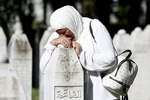

Mladic was sentenced to life imprisonment by the UN tribunal in The Hague after being convicted of genocide in Srebrenica and other wartime crimes committed in Bosnia and Herzegovina.
Attempts to reinforce Dutchbat
According to Voorhoeve, shortly after becoming defence minister in 1994 he concluded that the Dutch UN battalion, known as Dutchbat, lacked both the manpower and military capabilities necessary to protect civilians inside the UN-declared safe area.
He said he appealed to fellow NATO defence ministers to send additional troops, believing that a broader multinational presence would have acted as a stronger deterrent against Bosnian Serb forces.
"My thought was that if more countries were present, especially larger ones, it would act as a stronger deterrent. No one wanted to," he told BIRN.
He also recalled unsuccessful attempts to persuade Spain and Denmark to contribute forces.
As the security situation deteriorated in early 1995, Voorhoeve warned that the eastern Bosnian enclaves could no longer be adequately protected. He even prepared an opinion article urging NATO to assume full responsibility for Srebrenica, but said then Foreign Minister Hans van Mierlo blocked its publication.
"My own negligence was in not putting the point on the agenda of the Council of Ministers," Voorhoeve admitted.
"I should have told Prime Minister Wim Kok: 'Our current approach is too weak, and I want a new strategy.' Perhaps we would have reached the same conclusion, but I should have at least tried."
He also acknowledged that he never pushed hard enough to provide Dutch peacekeepers with heavier weapons.
"I don't know if I would have succeeded, but I didn't try to obtain heavier weapons. That too can be seen as negligence."
Voorhoeve said he also regrets remaining in The Hague instead of travelling to Zagreb to meet General Bernard Janvier, then commander of UN forces, when Bosnian Serb troops launched their final offensive against Srebrenica.
Official narrative under renewed scrutiny
For decades, the dominant Dutch position has been that Dutchbat had little chance of preventing the enclave's fall, pointing to limited resources and NATO's failure to launch air strikes in time.
Voorhoeve continues to believe earlier NATO intervention might have changed events.
"If NATO planes had taken action days before, at the latest on July 10, that might have changed the terrible outcome," he said.
However, recent research by historians linked to the Dutch Ministry of Defence has challenged the long-standing narrative that the outcome was inevitable.
Lieutenant-Colonel Dion Landstra, one of the researchers, told BIRN that while Dutchbat veterans should not be blamed for being deployed on what he described as "a mission doomed to fail", the Netherlands should nevertheless reassess its own institutional responsibility.
"We cannot keep saying, 'This just happened to us'," Landstra said.
"People preferred to blame the UN, but it is important that we now have a conversation about our own responsibility."
Landstra argued that UN Security Council Resolution 836 explicitly authorised UNPROFOR forces to use force to defend designated safe areas and noted that such authority had been exercised elsewhere in Bosnia, including in Goražde, Bihać and Tuzla.
According to the researchers, the decision not to act more robustly in Srebrenica reflected an institutional culture that prioritised extreme caution over civilian protection.
"The Netherlands proved insufficiently willing to accept the level of risk that a civilian protection mission could require," Landstra said.
"Wearing the green uniform sometimes means accepting risks that cannot be entirely avoided."
"I think about it almost every day"
Voorhoeve said he no longer seeks to justify his decisions but hopes the lessons of Srebrenica will help shape future international peacekeeping missions.
"I think about it almost every day," he said.
"A vast number of men and boys were shot, and that should not have happened. I am revealing this information as part of a quest to understand what should have been done differently, which is vital for similar situations elsewhere in the world."
Kakvo je tvoje mišljenje o ovome?
Učestvuj u diskusiji ili pročitaj komentare


Kakvo je tvoje mišljenje o ovome?
Učestvuj u diskusiji ili pročitaj komentare