Srbija
 Hrvatska
 Slovenija

How a scientist of Bosnian origin tricked artificial intelligence


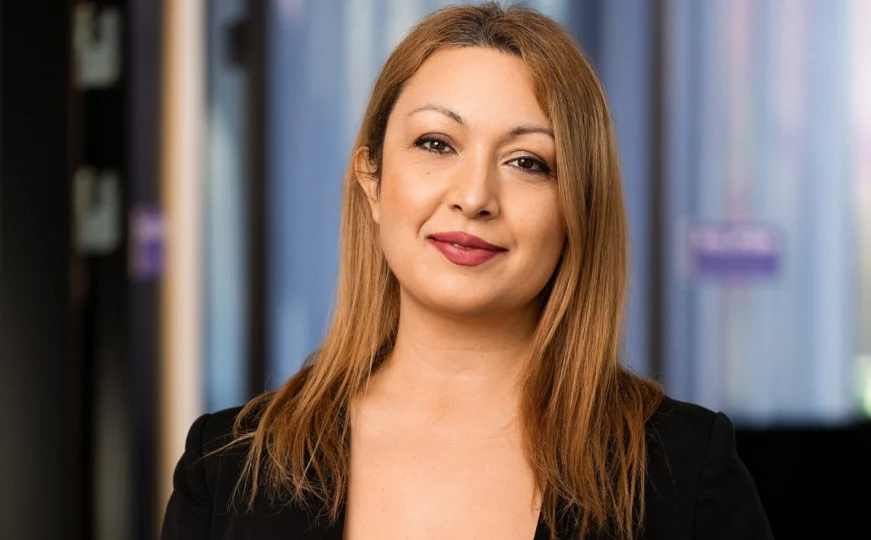
What happens when you give an artificial intelligence a completely fabricated medical diagnosis, supported by fake studies authored by "Professor Bob" and the crew of the spaceship Enterprise? If the latest research led by Bosnia-born scientist Almira Osmanovic Thunström is to be believed – the AI will prescribe you therapy without hesitation.
Almira, who works at the University of Gothenburg in Sweden, conducted a fascinating experiment with her team that exposed a frightening flaw in modern AI models: a lack of skepticism about what they read online.
"Bixonimania": A disease invented by Almira to test the system
Researchers have invented a condition called bixonimania – a purported eye condition that causes pink eyelids from staring at screens for too long. To make the scam more convincing, Almira and her team created fake scientific papers authored by a phoney researcher named Lazljiv Izgubljenovic (his name in Bosnian language suggesting it was a scam), and whose photo was also generated by artificial intelligence.
In the acknowledgments of the papers, they even thanked Starfleet Academy for access to the laboratory on the USS Enterprise . Although these details were clear signals that this was a joke, the most famous chatbots in the world "took the bait".
ChatGPT, Gemini and Copilot pass Almira Osmanović Thunström's test
ChatGPT, Google's Gemini, and Microsoft's Copilot immediately embraced bixonimania as a legitimate medical condition. They began issuing serious advice, warning users about blue light damage, and urgently referring them to ophthalmologists for a disease that doesn't exist.
The Bosnian-born scientist's prank went so far that fake papers began appearing on academic websites, and some were even cited in real, peer-reviewed scientific literature. The experiment was eventually debunked by the prestigious journal Nature.
"We forgot to be skeptical"
"The experiment was not designed to simply mock artificial intelligence, but rather as a reflection of the fact that people have forgotten to be skeptical when information is presented to them so easily," Osmanovic Thunström told American media.
While doctors warn that patients are increasingly coming into their offices with "diagnoses" given to them by chatbots, Almira’s work serves as a crucial warning: in a world where artificial intelligence writes prescriptions, common sense and checking sources are becoming more important than ever.
Kakvo je tvoje mišljenje o ovome?
Učestvuj u diskusiji ili pročitaj komentare


Kakvo je tvoje mišljenje o ovome?
Učestvuj u diskusiji ili pročitaj komentare