Srbija
 Hrvatska
 Slovenija

Over three million KM paid to acquitted, war crime victims still await compensation


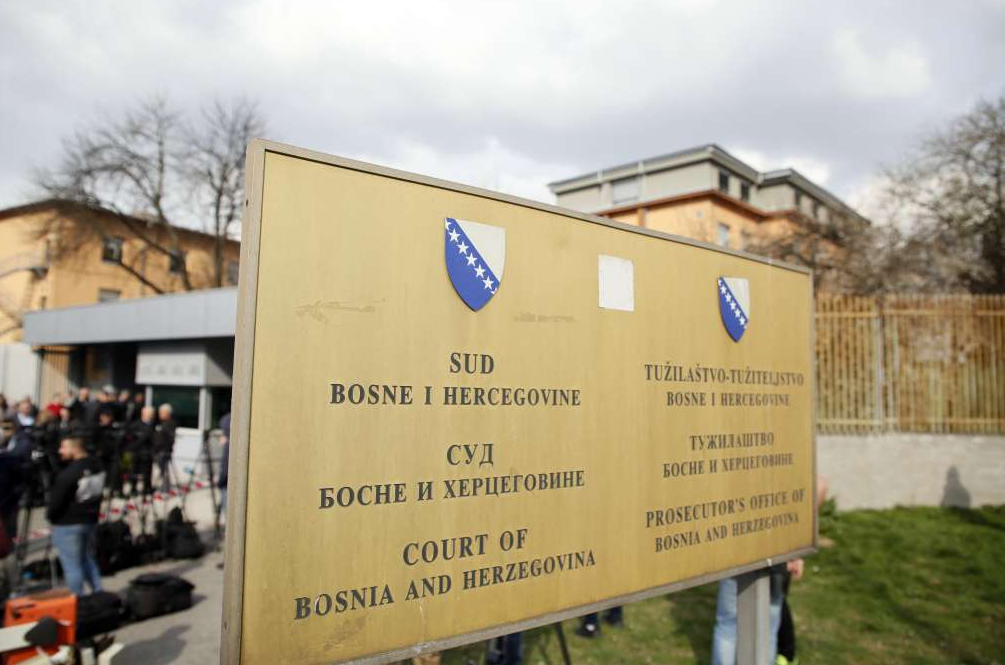
Over the past decade, Bosnia and Herzegovina has paid more than 3.3 million convertible marks (KM) to individuals acquitted of war crimes charges.
In Bosnia and Herzegovina, surviving victims of war crimes also have the right to seek compensation from perpetrators. This right is exercised through a civil compensation claim filed within criminal proceedings, allowing financial compensation for damages to be awarded alongside a criminal conviction. In practice, however, many survivors never receive compensation.
According to available data, 25 members of the Association 'Women Victims of War' have obtained the right to compensation through court rulings.
''According to our information, only two members have so far received the full awarded amount. For the remaining members, payments have either been partial or not made at all. We also know of cases where perpetrators began making partial payments, but these stopped after the perpetrators died,'' the Association stated.
According to TRIAL International – Office in Bosnia and Herzegovina, of 24 decisions, mostly issued by the state court and several entity-level courts, 23 are final. Still, only 7 resulted in partial or full payment. In two cases where compensation was paid, property seizure/security measures had been imposed.
Compensation awards range from approximately 5,000 to 40,000 KM.
The Court of Bosnia and Herzegovina sentenced Dragan Janjić to seven years in prison for rape committed in 1992 in the area of Foča.
The victim in that case was awarded compensation of 15,000 KM, which has been partially paid from Janjić’s pension since February 2021. The first installment was about 230 KM, the second about 1,000 KM, and the third again around 230 KM. At that pace, it will take roughly five years to fully pay the amount, according to TRIAL International’s BiH office.
According to United Nations data, an estimated 20,000 to 50,000 women and men were raped during the war in Bosnia and Herzegovina.
A major turning point came in 2015, when the Court of Bosnia and Herzegovina awarded compensation for survivors in war crimes criminal proceedings for the first time.
Several years later, in 2019, TRIAL International’s BiH office represented a survivor of wartime sexual violence whose two convicted perpetrators voluntarily paid 30,000 KM after the final verdict.
One of the biggest problems remains that courts often do not rule on compensation claims during criminal proceedings. Instead, victims are directed to separate civil lawsuits. In those proceedings, victims often must reveal their identities. For many, this becomes an insurmountable obstacle and leads them to give up.
Even when compensation is awarded, collection is often impossible. Perpetrators frequently transfer property to family members or others. One key mechanism that could help prevent this is freezing assets during investigations, but courts often reject prosecution requests for such measures.
Ahmet Salcin, lawyer and assistant director for legal affairs at Vasa prava BiH, said he has worked on several cases involving compensation claims both in criminal and civil proceedings, noting that civil proceedings are longer and require victims to disclose their identities, making them less suitable.
Detektor sent inquiries to all courts in Bosnia and Herzegovina, asking how many compensation decisions had been made in favor of victims in war crimes cases.
The District Court in Doboj issued 25 final convictions in war crimes cases. In three of these, convicted individuals were ordered to pay compensation of 2,000 KM, 10,000 KM, and 20,000 KM for non-material damages.
The Supreme Court of the Federation of Bosnia and Herzegovina issued four final rulings between January 2016 and May 2026, awarding compensation of 5,000 KM, 22,150 KM, 30,000 KM, and 35,000 KM.
The Municipal Court in Sanski Most awarded compensation of 35,000 KM and 60,000 KM to five plaintiffs, with 12 percent interest.
The Cantonal Court in Novi Travnik reported one case in which two convicted individuals were ordered to pay a total of 22,000 KM in damages to a victim.
The Municipal Court in Gradacac stated that since 2015, it had handled three such cases involving compensation claims after war crimes convictions. In all three, compensation was denied because the claims were rejected due to the statute of limitations.
The Basic Court of Brčko District awarded compensation to acquitted individuals in three lawsuits in the amounts of 39,000 KM, 28,610 KM, and 15,515 KM, plus about 14,600 KM in a case that is still not final.
Over ten years, by decisions of the state court, Bosnia and Herzegovina paid a total of 3.3 million KM in damages in 84 cases to individuals acquitted of war crimes charges. That amount is 11 times higher than the compensation figures courts reported to Detektor for survivors’ compensation claims.
''In rulings in those same cases, a total of 2,937,433 KM was awarded for material and non-material damages, along with 355,012 KM in civil litigation costs,'' according to data from the state court.
When asked how much compensation had been paid to survivors during the same period, the court said it could not provide an answer.
''The Court does not possess this data, as it neither keeps nor is required to keep separate statistical records related to this matter,'' the Court of Bosnia and Herzegovina responded.
A similar response came from most of the 75 supreme, cantonal, district, and other courts contacted.
The Municipal Court in Sarajevo stated that in its CMS system (case management system), there is no legal basis to identify decisions regarding compensation for victims in war crimes cases, particularly regarding the amount of awarded compensation claims.
The High Judicial and Prosecutorial Council of Bosnia and Herzegovina said that compensation and damages data are not recorded as separate data fields in the CMS system, but exist only within the text of court decisions.
When asked whether this could be changed in the CMS, they said the system is continuously upgraded with new functionalities and updates, based on conclusions adopted by the Council, its relevant working bodies, or legal obligations, according to BIRN BiH.
Kakvo je tvoje mišljenje o ovome?
Učestvuj u diskusiji ili pročitaj komentare


Kakvo je tvoje mišljenje o ovome?
Učestvuj u diskusiji ili pročitaj komentare