Srbija
 Hrvatska
 Slovenija

Wildfires burn across Bosnia and Herzegovina as 20-day blaze near Bihac persists


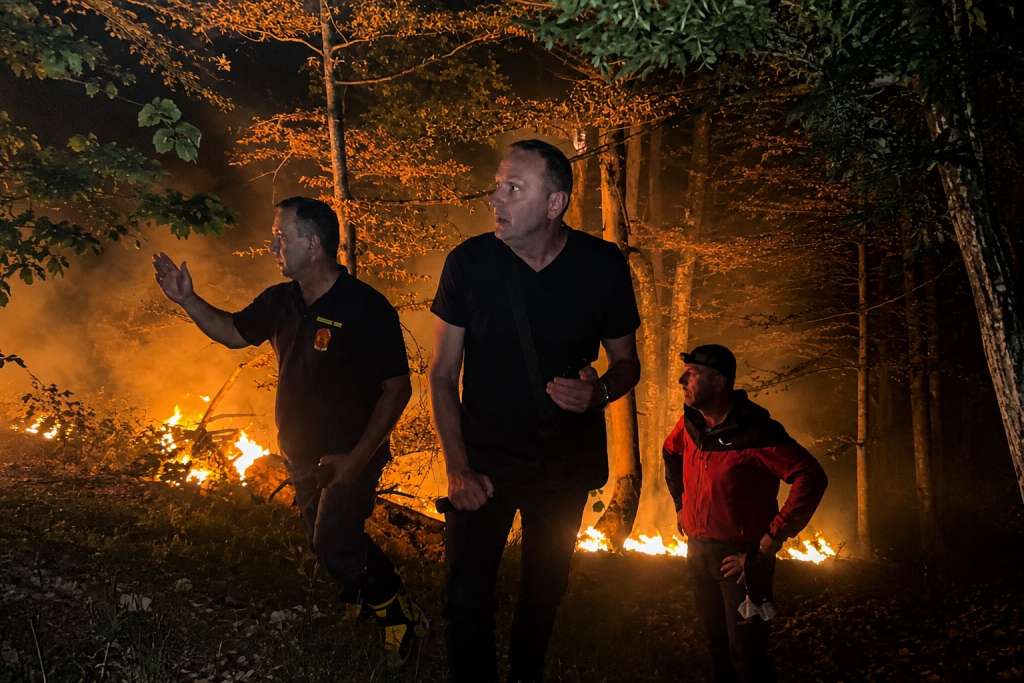
A wildfire on Mt. Pljesevica has been burning for 20 days, with smoke and the smell of burning still affecting residents of Bihac and communities across the border in Croatia. The City of Bihac says it has renewed its request for aerial support from the Armed Forces of Bosnia and Herzegovina four times without receiving a response, while Croatian authorities say Bosnia and Herzegovina has not formally requested their aerial firefighting assistance.
The fire broke out on August 16. Numerous services were deployed during the first days, while a helicopter of the Armed Forces of Bosnia and Herzegovina took part in firefighting operations on August 17 and 18.
Almost three weeks later, smoke remains visible from Bihac. Residents of Vedro Polje, Zavalje, Klokot, Izacic and other areas have complained about the smell of burning and ash, with similar reports coming from the city centre.
The City of Bihac said three days ago that teams were monitoring the situation daily. Apart from one smaller intervention by local firefighters, there were no open flames at accessible locations.
"The smoke visible from the city is the result of the fire site continuing to smoulder. At this point, it is not possible to act directly on that smoke, but the situation is being continuously monitored and teams remain on standby," the city said.
The fire is under control in the area from Katin Bazen towards Okretaljka, according to local authorities. However, crews cannot move down the slope because the terrain is suspected to contain landmines.
Explosions have also been heard, forcing teams to monitor the affected area from safe and accessible locations.
The city says it has repeatedly sought further assistance from the Armed Forces.
"The request for aerial support from the Armed Forces of Bosnia and Herzegovina has so far been renewed four times, but we have received no response," the City of Bihac said.
Croatia: No official request for aerial assistance
Smoke from the fire has meanwhile reached the Croatian side of the border.
Hrvoje Matejcic, mayor of the Municipality of Plitvice Lakes, said residents from Korenica to Plitvice have raised concerns about smoke coming from the Pljesevica fire on the Bosnian side of the mountain.
Matejcic said previous efforts by firefighters and a helicopter of the Armed Forces of Bosnia and Herzegovina had failed to completely extinguish the fire. Light rainfall over the past 20 days was also insufficient to put it out.
However, he said Bosnia and Herzegovina had not requested Croatian aerial support through the national-level protocols required for such assistance.
"Because of the many questions from Bihac about why we are not helping with Canadair aircraft, there are national protocols for such assistance that need to be initiated by the affected side, in this case Bosnia and Herzegovina. So far, that has not happened," Matejcic said.
He added that Croatian firefighting officials are coordinating possible scenarios in case the fire crosses the border.
According to Matejcic, the fire currently poses no threat to residents or property in the Municipality of Plitvice Lakes. If it crosses into Croatia, ground or aerial firefighting forces will be deployed depending on an assessment by firefighters.
Wildfire reactivates near Bosansko Grahovo
Elsewhere in Bosnia and Herzegovina, a wildfire that burned for almost two weeks in the Bosansko Grahovo area in August reactivated on Friday.
The fire is burning at two locations - Risovac and above Gornje Peulje - but is currently under control, Mile Jovic of the Bosansko Grahovo Civil Protection told FENA.
The terrain cannot be reached by machinery, meaning forestry workers and Civil Protection crews are fighting the fire using backpack water sprayers and hoes.
Jovic said the new fire was caused by remaining hotspots from the August blaze. Tree stumps deep in the forest had continued to burn and smoulder, and although rain suppressed the fire, it did not extinguish it completely. Rising temperatures caused the hotspots to reactivate.
The August wildfire burned around 1,000 hectares in the Risovac and Dinara areas, with the fire line stretching for around 15 kilometres at one point.
More fires reported in Herzegovina
A series of fires was also reported in western Herzegovina.
According to the Federal Civil Protection Administration, around 135 hectares of vegetation burned in Sovici, in the municipality of Grude. Firefighters, volunteer crews and local residents took part in the operation, while an Air Tractor made eight water drops over the affected area.
Another five hectares burned in Borajna.
Several fires were also recorded around Siroki Brijeg. In Biograci, around 15 hectares were affected, with the fire burning forest, grass and low vegetation and reaching an old house, vineyards, beehives and agricultural crops. In Rasno, around five hectares burned and residential buildings were threatened.
Smaller fires were also reported in other parts of the Siroki Brijeg and Posusje areas.
The most persistent blaze, however, remains on Mt. Pljesevica, where 20 days after the fire first broke out, inaccessible and mine-suspected terrain continues to complicate efforts to fully extinguish it.
Kakvo je tvoje mišljenje o ovome?
Učestvuj u diskusiji ili pročitaj komentare


Kakvo je tvoje mišljenje o ovome?
Učestvuj u diskusiji ili pročitaj komentare