Srbija
 Hrvatska
 Slovenija

Islamic Community calls unsigned state agreement the most serious form of discrimination


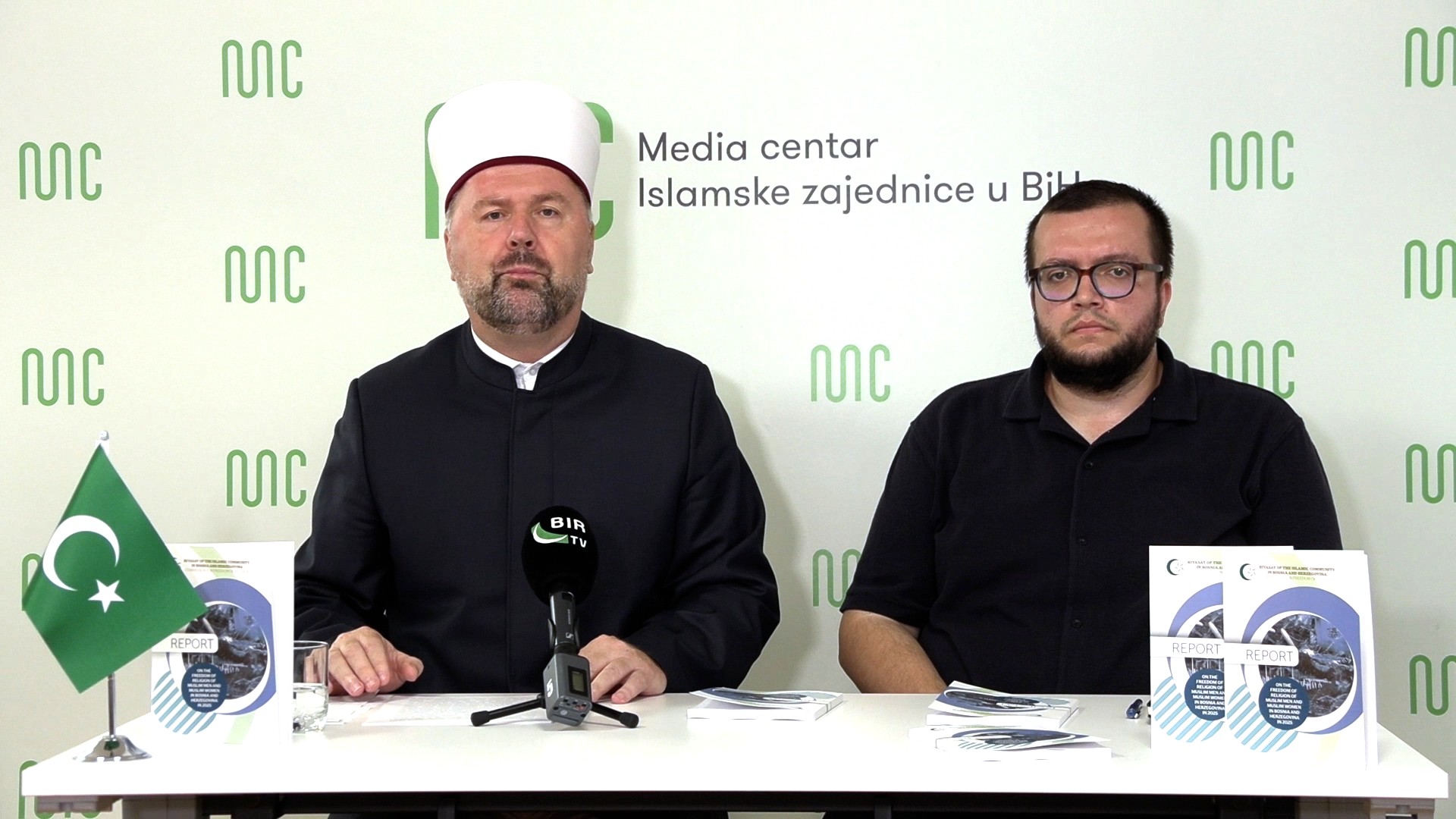
The Commission for Freedom of Religion of the Islamic Community in Bosnia and Herzegovina has presented its 2025 Report on the Religious Freedom of Muslims, warning of continued systemic discrimination against the country's largest religious community.
The report identifies the state's failure to sign a long-pending agreement with the Islamic Community as the most serious unresolved issue affecting religious freedom. According to the Commission, the agreement completed the legal and expert review process years ago but remains blocked at the political level.
"We continue to regard this as the most serious form of discrimination against the largest religious community in Bosnia and Herzegovina," said Commission chairman Mufti Mevludin Dizdarević.
The report also highlights ongoing discrimination against Muslim women who wear the hijab, particularly in the judiciary, noting that restrictions on employment have persisted since 2015. Two recent discrimination cases involving recruitment at the Municipal Court in Tuzla were cited as examples.
The Commission further criticizes what it describes as preferential treatment of the Serbian Orthodox Church in Republika Srpska, arguing that such practices undermine the constitutional principles of state neutrality and secularism. It specifically points to the celebration of Orthodox patron saint days in public schools and the observance of Saint Sava Day, claiming that requiring Bosniak children to attend such events violates their freedom of religion.
Harun Išerić, a member of the Commission and senior teaching assistant at the University of Sarajevo's Faculty of Law, said the report also raises concerns about attempts to restrict religious freedom under the banner of European integration.
He referred to proposals related to the draft Law on the Court of Bosnia and Herzegovina, arguing that certain provisions could unjustifiably limit the manifestation of religious beliefs in courtrooms.
The report also documents what the Commission describes as an increase in anti-Muslim rhetoric and institutional discrimination in Republika Srpska, alleging that anti-Muslim sentiment has increasingly become part of the public discourse among some political officeholders.
Išerić pointed to a 2026 ruling by the European Court of Human Rights in the case of Jehovah's Witnesses v. Italy, arguing that it strengthens the legal case for the Islamic Community to seek judicial protection if the state continues to refuse to sign the agreement without objective justification.
The Commission announced it will continue monitoring cases of religious discrimination, educate citizens about their rights, and inform international organizations, including the OSCE and the United Nations, about developments concerning religious freedom in Bosnia and Herzegovina.
Established in 2012, the Commission for Freedom of Religion is an expert body of the Islamic Community in Bosnia and Herzegovina composed of legal scholars, university professors, and attorneys dedicated to protecting freedom of religion and belief. The report reflects the Commission's findings and assessments regarding the state of religious freedom in the country.
Kakvo je tvoje mišljenje o ovome?
Učestvuj u diskusiji ili pročitaj komentare


Kakvo je tvoje mišljenje o ovome?
Učestvuj u diskusiji ili pročitaj komentare