Srbija
 Hrvatska
 Slovenija

Nevenka Tromp: Ratko Mladic spent his final years in a privileged position while Bosnia failed to react


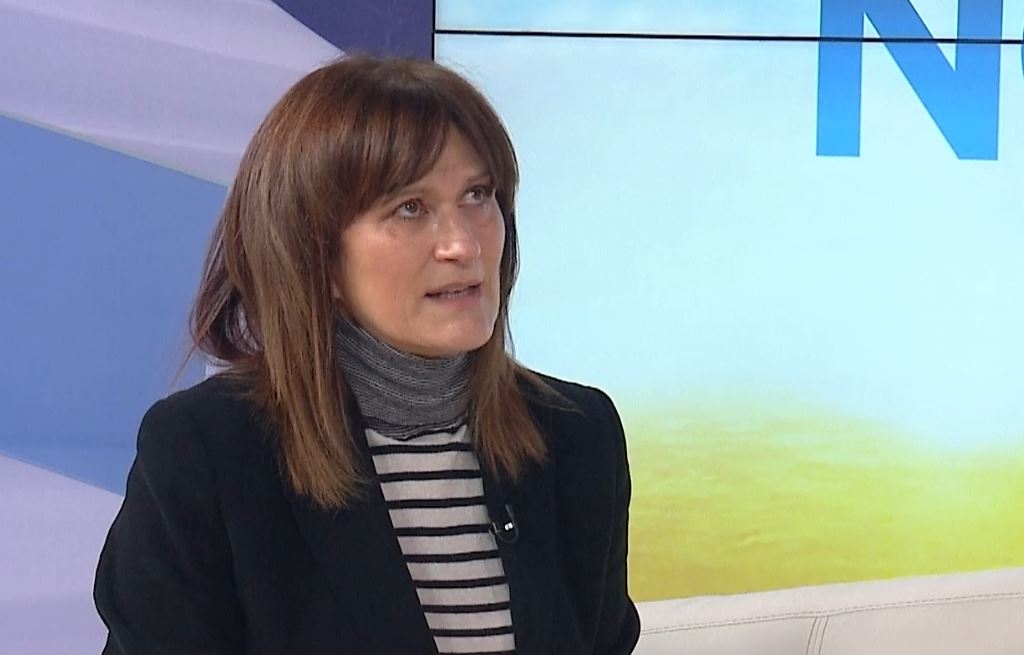
Following the death of Ratko Mladic, longtime Hague Tribunal associate Nevenka Tromp stated in an interview that the former commander of the Army of the Republika Srpska spent his final years in a relatively privileged position because, despite his definitive life sentence, he was never transferred from the detention unit in Scheveningen to a regular prison in one of the enforcement states. Tromp specifically pointed to what she termed a major omission by Bosnia and Herzegovina, noting that the state never officially requested a change to this arrangement.
Rejecting claims regarding inadequate medical care, Tromp noted that Mladic arrived in The Hague approximately fifteen years ago in poor health, but his condition was maintained through a high level of healthcare. She suggested a simple visual check of comparing his photographs over the years.
"I think it is totally, absolutely unconstructive to talk about what his care was like," Tromp stated. Addressing humanitarian release, she explained that judges had to weigh public interest, the position of victims, and the convict's behavior and lack of remorse. "He never accepted even a part of responsibility, nor did he change his attitude towards the crimes and victims," Tromp emphasized, adding that the court had no choice but to prioritize the interests of victims and society.
Tromp drew attention to an aspect of Mladic's sentence enforcement that she believes received insufficient attention in Bosnia and Herzegovina, noting that he never left the UN detention unit to serve his life sentence elsewhere.


"The Bosnian public, regarding that dignity and humanitarian element of how Mladic was treated, needs to understand that all this time he had a relatively privileged position as a prisoner, because a prison cell in The Hague is not a prison for the most serious criminals where other convicted individuals for genocide ended up," Tromp said, citing Radoslav Krstic as an example who served his sentence in the United Kingdom.
Criticizing state institutions, Tromp stated, "The Bosnian state, meaning the state of Bosnia and Herzegovina, never officially asked for this flaw to be corrected." She explained that no official diplomatic note was ever sent to remove him from the privileged detention system and place him into a proper prison facility among the nations offering to receive convicts from The Hague.
Looking at the broader legacy, Tromp highlighted that Mladic's death refocuses attention on the Tribunal's verdicts, which established an unalterable legal framework. "The Tribunal brought those incredibly important legal-historical verdicts that genocide took place in Bosnia and Herzegovina and that is something that no one can take away from Bosnia anymore, regardless of the narratives of denial and the narratives of glorification, that is triumphalism," she declared.
While legal proceedings are frozen in time and concluded, Tromp noted that historical research continues. "However, this is the moment when the historical narrative and knowledge creation actually take over that methodology," she said. She concluded that one of the greatest legacies of the Tribunal is the vast archive of original documents collected in one place, enabling historians and researchers to continue examining the history long after legal processes have ended.
Kakvo je tvoje mišljenje o ovome?
Učestvuj u diskusiji ili pročitaj komentare


Kakvo je tvoje mišljenje o ovome?
Učestvuj u diskusiji ili pročitaj komentare