Srbija
 Hrvatska
 Slovenija

RS entity parliament backs veto over Bosnia Presidency decision on national monuments commission


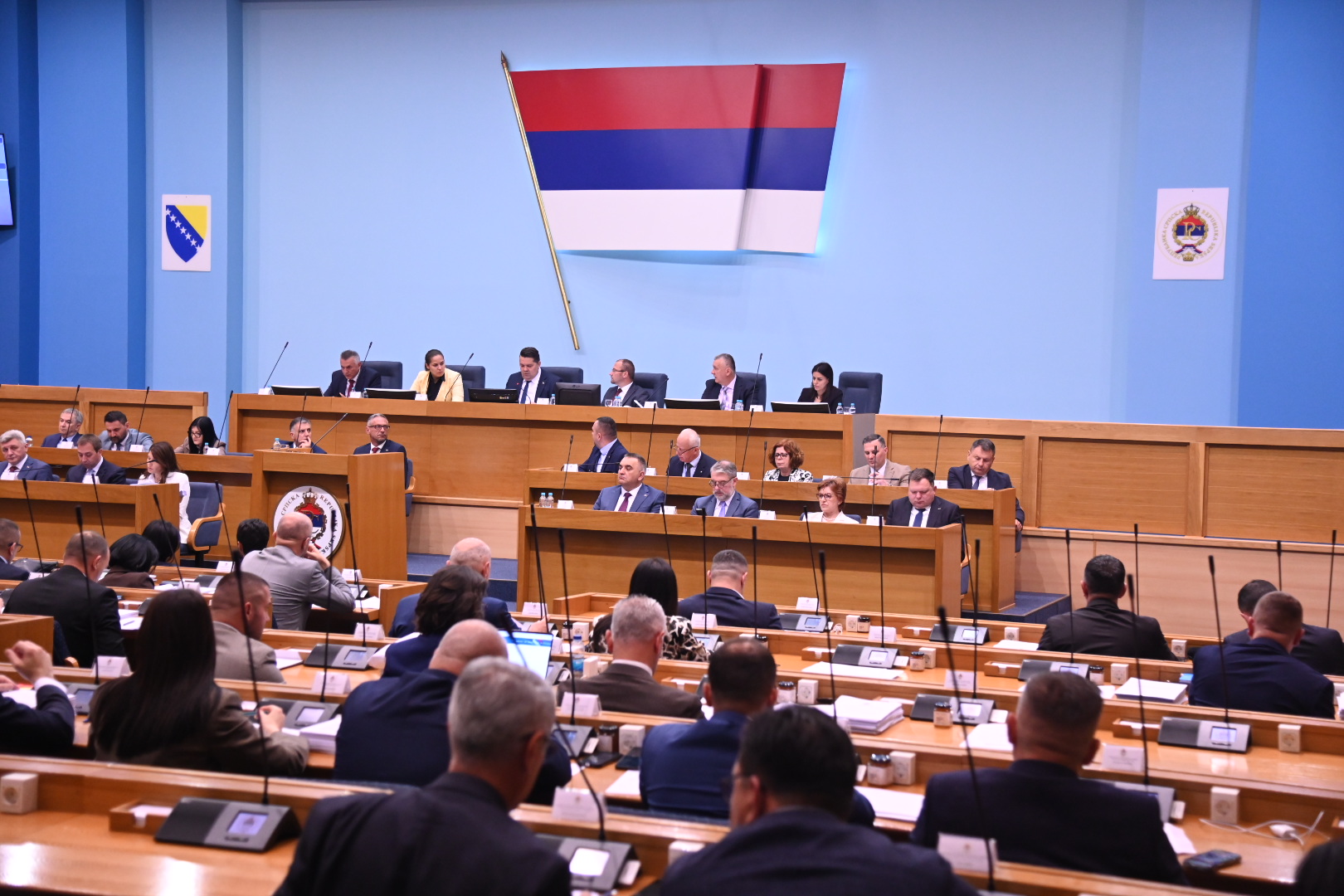
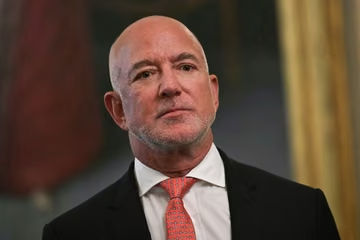
The National Assembly of Republika Srpska (NSRS), one of Bosnia and Herzegovina’s two entities, has voted to support a veto by BiH Presidency member Zeljka Cvijanovic, who claimed that a Presidency decision on appointing members of the Commission to Preserve National Monuments was “highly harmful” to the vital interests of Republika Srpska.
The decision was adopted with 59 votes in favour and two against. It takes effect immediately and will be published in the Official Gazette of Republika Srpska.
The vote refers to a decision made at the BiH Presidency session on June 29, concerning the appointment of members of the state-level Commission to Preserve National Monuments, an institution established under Annex 8 of the Dayton Peace Agreement.
In its conclusions, the RS National Assembly accused the Bosniak and Croat members of the Presidency of violating the BiH Constitution and the Presidency’s rules of procedure during the appointment process.
The Assembly said it rejects “any attempts to redefine, appropriate or dispute the rights of the Serb people and the Serbian Orthodox Church” to preserve, protect and interpret their cultural, historical, religious and identity heritage.
It also warned that if the appointment process continues in what it described as an unlawful manner, Republika Srpska institutions would not recognise the legitimacy of the newly formed Commission. The Assembly called on RS institutions to use all available legal and institutional mechanisms to prevent the decisions of such a Commission from producing legal effects in the entity.
The conclusions also call on UNESCO not to become involved in what the RS parliament described as political processes or unilateral initiatives that, according to the Assembly, undermine Bosnia and Herzegovina’s constitutional order, Annex 8 of the Dayton Agreement and the equality of the country’s constituent peoples.
The Assembly further accused the Bosniak member of the Presidency of attempting to mislead UNESCO and its Director-General during the appointment process.
It demanded that the procedure for appointing members of the Commission be returned to what it called a legal framework, and that the future composition of the body reflect the transfer of responsibility to domestic institutions.
The RS parliament also criticised the Commission’s past work, claiming it had exceeded the mandate defined under Annex 8 by interfering in areas such as spatial planning, property management, permits and construction procedures.
The conclusions call on the RS Government, relevant ministries, the entity institute for the protection of cultural, historical and natural heritage, the RS Attorney General’s Office, local authorities and other institutions to strengthen cooperation and support the RS representative in the Commission.
The Assembly also tasked the RS Government and other competent institutions with analysing the legal and practical consequences of Commission decisions concerning national monuments located in Republika Srpska, particularly in cases where RS authorities believe the Commission may have exceeded its mandate.
Kakvo je tvoje mišljenje o ovome?
Učestvuj u diskusiji ili pročitaj komentare


Kakvo je tvoje mišljenje o ovome?
Učestvuj u diskusiji ili pročitaj komentare