Srbija
 Hrvatska
 Slovenija

Trump family business interests, Dodik and Srebrenica raised at US Senate hearing for ambassador nominees


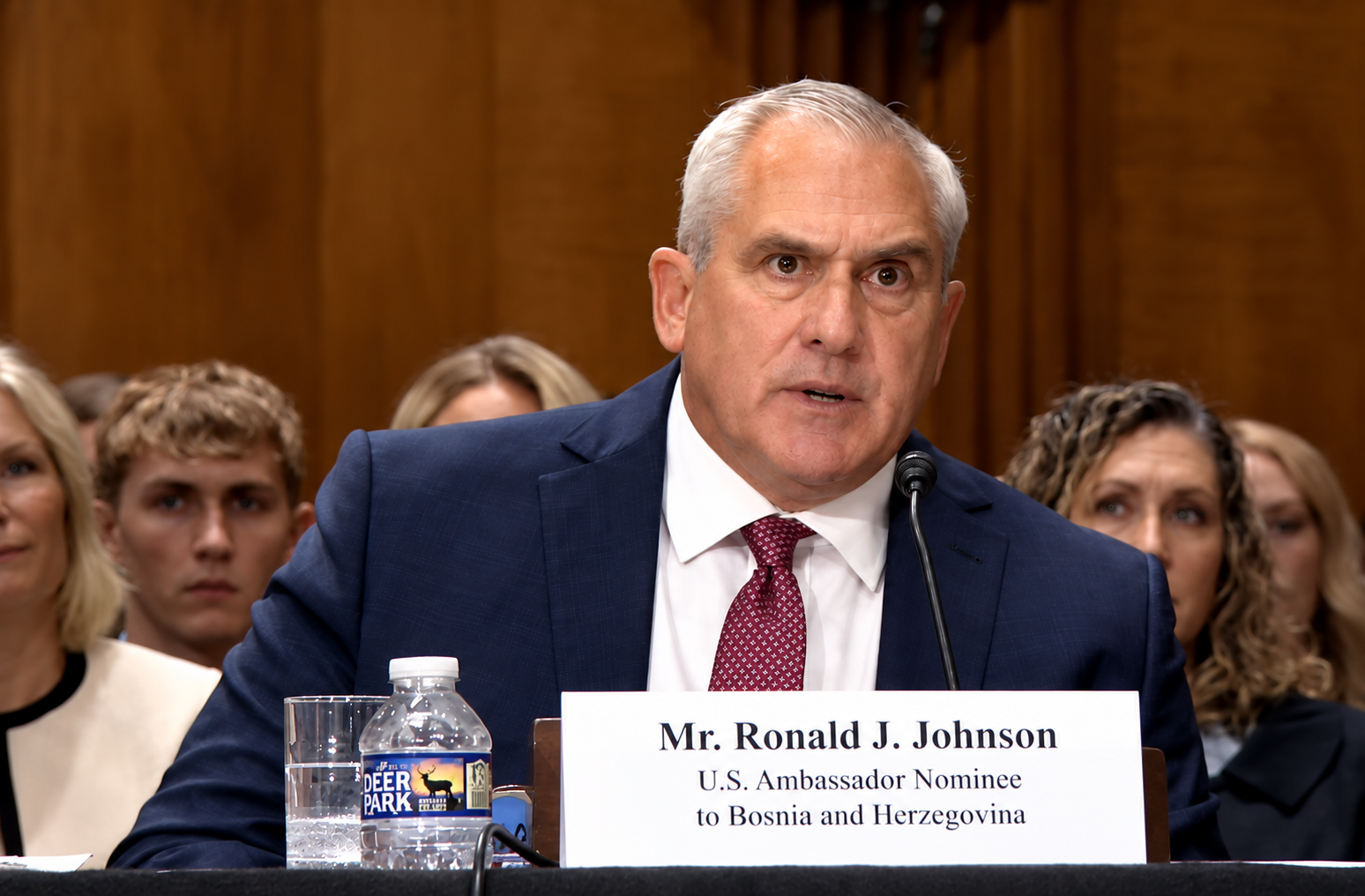
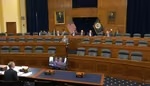
The Trump family’s business interests in the Balkans, US sanctions policy towards Milorad Dodik and the Srebrenica genocide dominated the questioning of the nominees for US ambassador to Bosnia and Herzegovina and Serbia at a Senate Foreign Relations Committee confirmation hearing.
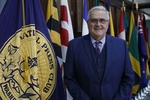
Democratic Senator Chris Murphy pressed Ronald Johnson, nominated for Bosnia and Herzegovina, and Michael Young, nominated for Serbia, to say whether they would refuse to use their embassies to support projects that could enrich President Donald Trump or his family.
“The answer is no”
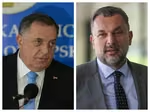
Murphy said Donald Trump Jr. had made two high-profile visits to Serbia and travelled to Republika Srpska in April in what was widely interpreted as an implicit endorsement of Dodik by the president’s family.
He also alleged that, at the time of the Republika Srpska visit, a Russian ally and close associate of Vladimir Putin was paying for Trump Jr.’s wedding.
Young said his knowledge of the visits was limited to media reports and that Trump-linked companies appeared interested in investing in Serbia. He confirmed that he had asked the White House and State Department for information but had not been given access to confidential details.
“This is an extraordinary moment when the business interests of the family intersect with the national security interests of the country,” Murphy said.
He then asked both nominees what they would do if the White House requested embassy assistance for a financial project important to the president’s family.
Johnson said he did not believe Trump would make such a request and would seek guidance from State Department headquarters if he did. When pressed on whether such assistance would be appropriate, Johnson said promoting US economic interests was part of an embassy’s role.
“If you ask me whether we want to promote economic development in Bosnia and Herzegovina, I welcome all Americans to come to Bosnia and Herzegovina to promote themselves,” he said.
Young similarly referred to ensuring a level playing field for American companies, but neither nominee gave the categorical rejection Murphy sought.
“Gentlemen, the answer is no,” Murphy responded. “It is not appropriate for an ambassador to advocate on behalf of projects that will enrich the president or his family.”
Republican Committee Chairman Jim Risch defended the nominees, arguing that the issue was more complicated than a simple yes-or-no question and would require legal and ethics advice based on the circumstances.
Srebrenica and sanctions against Dodik
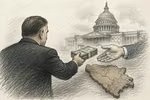
Earlier, Democratic Senator Jeanne Shaheen entered the House Democrats’ “Pay for Play in the Balkans” report into the hearing record. The report accuses the Trump administration of reshaping its Bosnia policy to benefit the president’s political and business allies.
Shaheen criticised the lifting of sanctions against Dodik and the State Department’s silence as international figures condemned the glorification of Ratko Mladic at his funeral.
She asked Young whether he considered what happened in Srebrenica to be genocide.
“What happened in Srebrenica was genocide. It is a historical and legal fact,” Young replied, pledging to uphold that position if confirmed as ambassador to Serbia.
Shaheen also questioned Johnson about the administration’s failure to impose sanctions required by the Western Balkans Democracy and Prosperity Act against actors undermining regional peace, stability or territorial integrity.
Citing Dodik’s separatist rhetoric, she asked Johnson whether he would monitor developments in Republika Srpska and recommend a US response. Johnson initially said Bosnia was approaching elections amid rhetoric “on all sides,” but pledged to give Washington an accurate account of developments.
Asked directly whether he agreed that Srebrenica was a genocide, Johnson replied: “I can unequivocally tell you yes, Srebrenica was a genocide.”
He also pledged to speak clearly and recommend action when figures such as Dodik encourage separatism and further ethnic and religious tensions.
In his prepared statement, Johnson reaffirmed US support for Bosnia and Herzegovina’s sovereignty, territorial integrity and the Dayton Peace Agreement, while identifying stability, energy security and greater US investment as priorities if confirmed.
Kakvo je tvoje mišljenje o ovome?
Učestvuj u diskusiji ili pročitaj komentare


Kakvo je tvoje mišljenje o ovome?
Učestvuj u diskusiji ili pročitaj komentare