Srbija
 Hrvatska
 Slovenija

Who was Biljana Plavsic: The Tuzla-born academic who became a radical and war criminal


Biljana Plavsic, a former member of the wartime leadership of Republika Srpska who was convicted of war crimes, has died in Belgrade at the age of 96. Plavsic admitted before the Hague Tribunal that she was guilty of persecution on political, racial and religious grounds, after which she was sentenced to 11 years in prison in 2003. At the time, she also said that she regretted what she had done. Seven years later, she retracted everything.
Who was Biljana Plavsic?
She was born in Tuzla in 1930. She received her primary and secondary education in Sarajevo. After graduating in biology in Zagreb, she established a successful academic career, teaching for many years at the Department of Biology at the Faculty of Natural Sciences and Mathematics of the University of Sarajevo.
The turning point came in 1990, when the SDS was founded and she became a member. That same year, she also became a member of the Presidency of the Republic of Bosnia and Herzegovina. On 7 April 1992, she left the Presidency and joined the political leadership of the self-proclaimed Republika Srpska.
Along with Radovan Karadzic, Momcilo Krajisnik and Ratko Mladic, Biljana Plavsic was at the very top of the Bosnian Serb leadership during the war in Bosnia and Herzegovina. From 1992 to 1996, she served as vice-president of Republika Srpska.
Her arrival in Bijeljina at the very beginning of the war in Bosnia and Herzegovina remained particularly notorious, when she kissed Zeljko Raznatovic Arkan and congratulated him on carrying out the massacre of Bosniaks in Bijeljina.
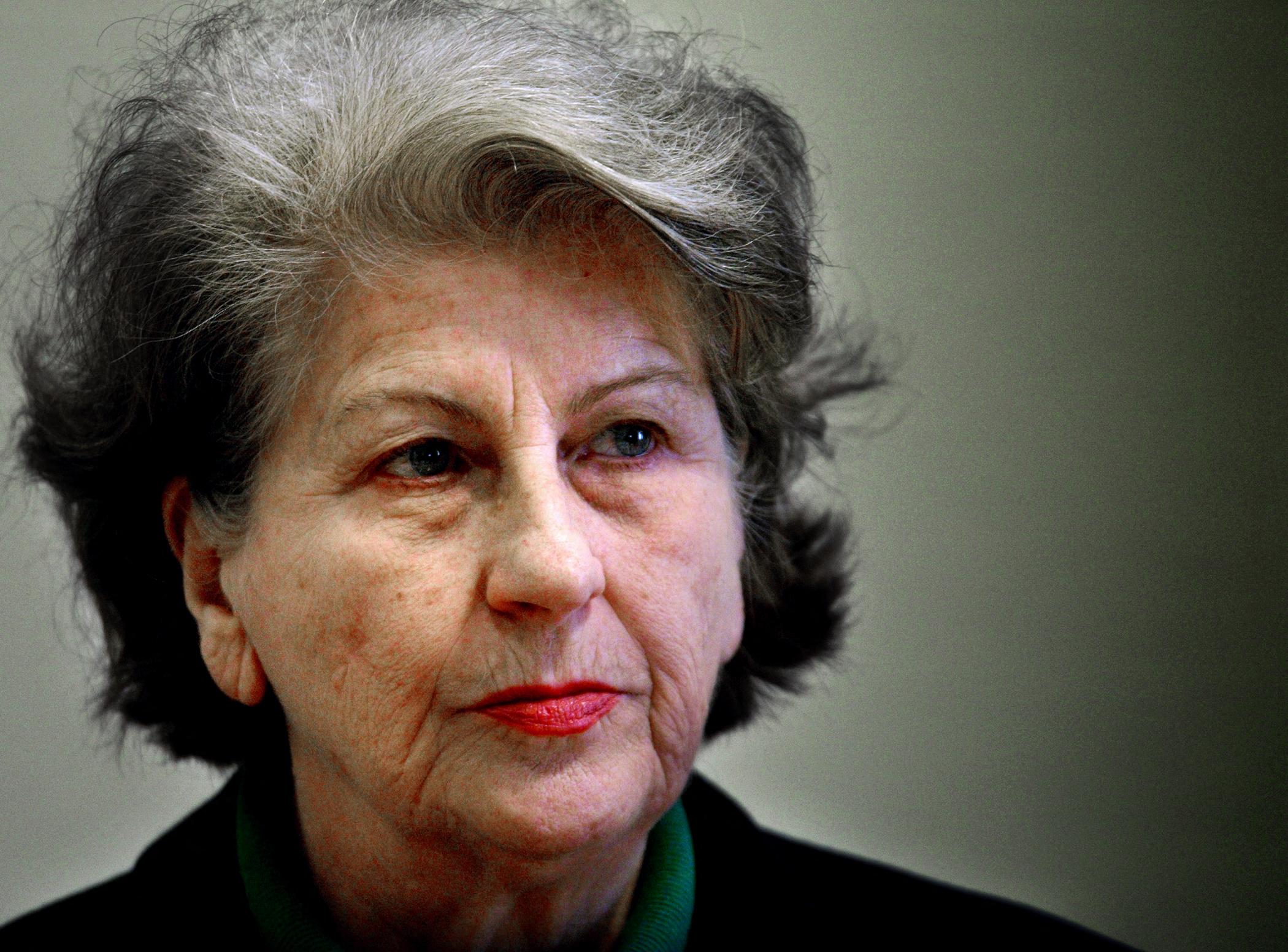
During the war, she advocated the total ethnic cleansing of Muslims from eastern Bosnia:
“I would prefer that we completely cleanse eastern Bosnia of Muslims. Even if we retain 70 per cent of the territory, there will be no peace. I do not wish them anything good. But, for me to be at peace, I must allow them to have some way of life, to organise their lives, so that they do not disturb me all the time. That is how I understand those 30 percent of Muslim territory.”
During the war, she also made numerous other fascist statements against Croats and Bosniaks.
After Karadzic was forced to leave the political scene under international pressure in early 1996, she succeeded him as president of Republika Srpska. Immediately afterwards, she made a political turn and turned her back on her former associates and mentors, pragmatically embracing moderation and cooperation with the international community, which also earned her international support.
In 1997, she formed her own party, the Serb People's Alliance, dissolved the Republika Srpska parliament and called early elections. In September 1996, she was confirmed as president of Republika Srpska, this time through elections.
At the time, she became known for more peaceful statements and cooperation with the international community. She then voluntarily surrendered on 10 January 2001.
Admission of crimes before the Hague Tribunal
Before the International Criminal Tribunal for the former Yugoslavia, after pleading guilty, Biljana Plavsic accepted responsibility for her role in the persecution of the non-Serb population during the war in Bosnia and Herzegovina, stating that the leadership to which she belonged had pursued an undertaking in which numerous innocent people were the victims.
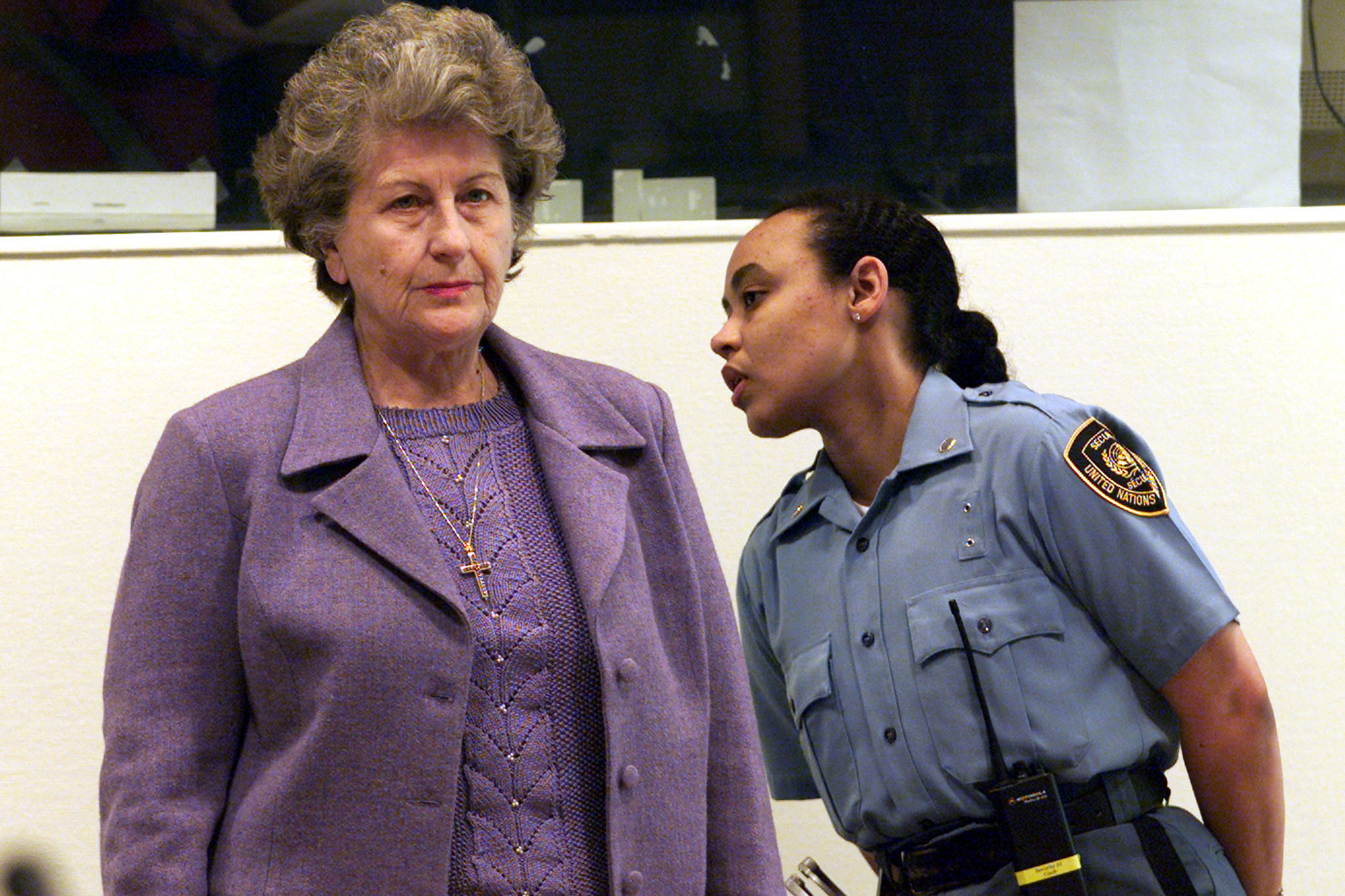
Before the Tribunal, Plavsic spoke about her role and the way the leadership at the time justified its actions towards Bosniaks and Croats.
“I am now convinced and accept that many thousands of innocent people were the victims of organised and systematic efforts to remove Muslims and Croats from areas that Serbs considered their own,” Plavsic said.
“Explanations of self-defence and survival provide no justification”
She said that during the war she had convinced herself that it was a matter of survival and self-defence.
“In fact, and more than that, our leadership, of which I was an indispensable part, pursued an undertaking in which countless innocent people were the victims. Explanations of self-defence and survival provide no justification,” she said.
Speaking about why she had previously refused to accept what was happening, Plavsic cited fear and the experience of the Second World War as one of the reasons.
“In doing this, we in the leadership violated the most basic duty of every human being – the duty to restrain oneself and respect the dignity of others. We were determined to do everything necessary to prevail,” she said.
“I refused to confront it”
Plavsic also admitted that during the war she was aware of allegations of crimes and inhumane treatment of the non-Serb population, but that she did not want to investigate them.
“Although I was repeatedly informed of allegations of cruel and inhumane acts against non-Serbs, I refused to confront them, or even to investigate them,” she said.
She said that at the time she focused on Serb victims of the war and was convinced that Serbs were fighting for survival, while she regarded the international community as an enemy.
“And so I simply denied those allegations, without even investigating them. I remained certain in my belief that Serbs were not capable of doing such a thing. In this obsession with never again becoming victims, we allowed ourselves to become perpetrators,” Plavsic said.
“I accept responsibility for my part”
Before the judges, Plavsic explicitly accepted personal responsibility for the suffering that had been caused.
“I accept responsibility for my part in this. This responsibility is mine – and mine alone. It does not extend to other leaders and their right to defend themselves. It certainly does not extend to our Serbian people, who have already paid a high price for the actions of our leadership,” she said.
She added that the knowledge that she was responsible for human suffering would remain with her permanently.
“The knowledge that I am responsible for such human suffering and for tarnishing the reputation of my people will always remain a part of me.”
Plavsic said she could not compensate for the lives that had been lost, but that she could acknowledge what had happened and accept responsibility.
“The only thing I can do is what is within my power and hope that it will be of some benefit – to recognise the truth, to tell it and to accept responsibility,” she said.
“Our leadership, including me, abandoned this path”
In the continuation of her address, she also spoke about the Serbian people, referring to Saint Sava and the values she associated with him, before once again turning to the wartime political leadership.
“Unfortunately, our leadership, including me, abandoned this path during the last war,” she said.
She also said that she had parted ways with other leaders “although too late”, and criticised the leadership at the time for creating fear and spreading half-truths.
“The fruits of their work – that leadership – are clear: graves, refugees, isolation and bitterness towards the whole world, which rejected us precisely because of those leaders,” she said.
“There is no place or time where it is inappropriate to tell the truth”
Plavsic said that some people had warned her that it was not the right moment to speak in that way and that she should wait until others also accepted responsibility for their actions.
“But I believe that there is no place or time where it is inappropriate to tell the truth. I believe that we must put our own house in order – others will have to examine themselves and their actions,” she said.
At the end of her address, she called on the Hague Tribunal to seek to ensure justice for all victims.
“You must strive to find in your judgement whatever justice this world can offer – not only for me, but also for the innocent victims of this war,” Plavsic said.
She also made a final appeal to the Tribunal:
“Do everything within your power to provide justice for all sides. In doing so, you may be able to fulfil the mission for which this Court exists.”
Sentenced to 11 years
Biljana Plavsic was convicted for participating in the persecution of Bosnian Muslims, Bosnian Croats and other non-Serb populations in 37 municipalities. Plavšić supported a campaign of ethnic separation that resulted in the deaths of thousands of civilians and the expulsion of thousands upon thousands of people from municipalities across Bosnia and Herzegovina under extremely brutal conditions, by calling on paramilitary forces from Serbia to assist Bosnian Serb forces in achieving the goal of separating ethnic groups through the use of force, according to the website of the International Criminal Tribunal for the former Yugoslavia (ICTY).
Release from prison and departure for Serbia
In September 2009, the Hague war crimes court approved her early release before the full sentence had been served, after which the Swedish government also approved her release from prison, after she had served two-thirds of her 11-year sentence.
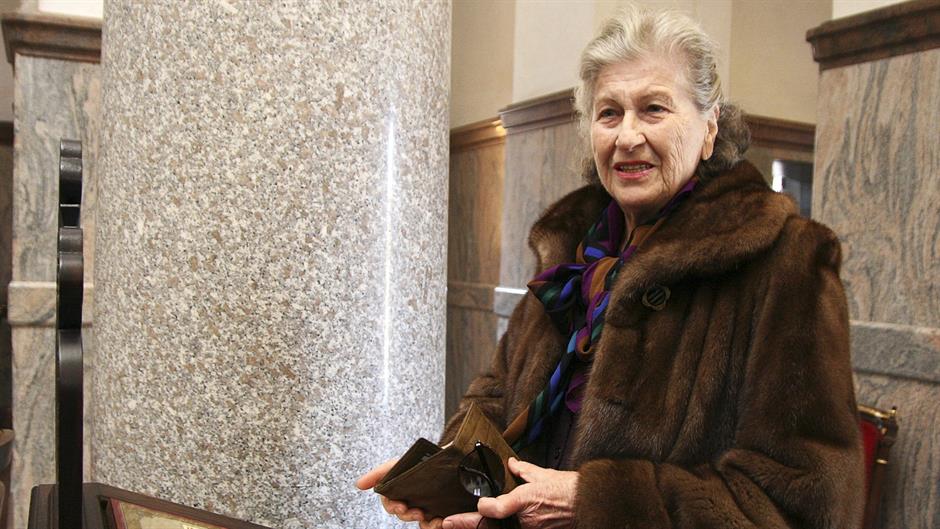
In explaining the decision, the Tribunal president indicated that Plavsic had “apparently provided evidence of significant rehabilitation” during her time in prison. Judge Robinson also took into consideration the fact that, by pleading guilty to the persecution of Muslims and Croats in Bosnia and Herzegovina in 2002, Plavsic had “accepted responsibility at an early stage of the proceedings”.
A report by the Prosecution, considered when the ICTY decided whether to approve Plavsic’s release, stated that she “was not of much assistance nor did she have any desire to cooperate with the Prosecution”.
On 22 October 2009, the Swedish government confirmed the Tribunal’s decision to grant her early release.
Biljana Plavsic left the Swedish prison Hisenberg on 27 October 2009 and flew to Belgrade that same day, where she had an apartment and family, as well as Serbian citizenship, which she had obtained before going to The Hague. After her return, she said she would remain in Belgrade.
Statements followed in which she withdrew her admission of guilt and justified the crimes.
She remained in Belgrade until her death.
Kakvo je tvoje mišljenje o ovome?
Učestvuj u diskusiji ili pročitaj komentare


Kakvo je tvoje mišljenje o ovome?
Učestvuj u diskusiji ili pročitaj komentare