Srbija
 Hrvatska
 Slovenija

Austrian President in Sarajevo warns of dwindling EU funds and geopolitical vacuums


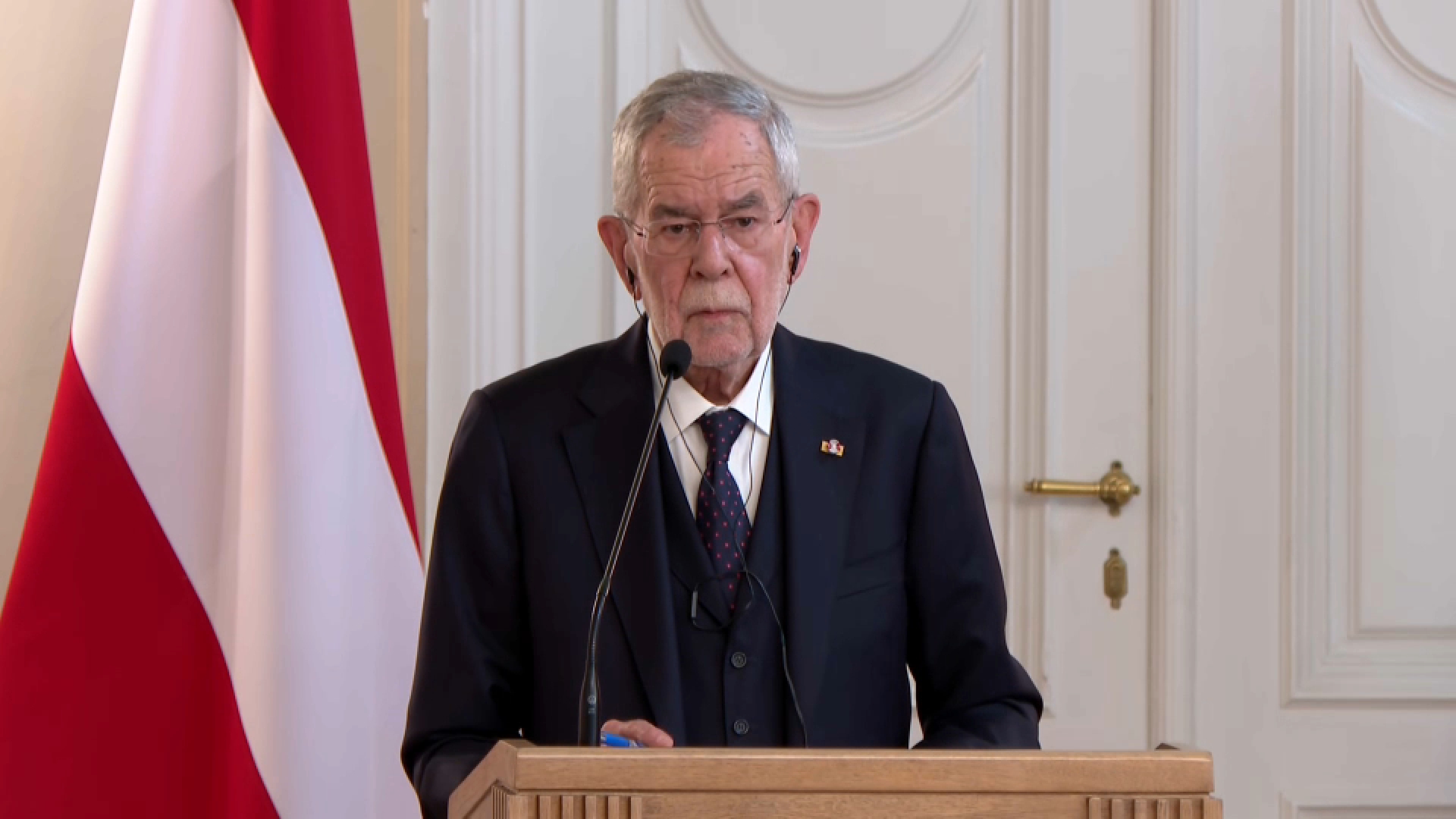
Austrian President Alexander Van der Bellen arrived in Bosnia and Herzegovina on Monday for a high-profile four-day state visit, marking the first time in 12 years an Austrian head of state has visited Sarajevo. Welcomed with military honours at the Presidency building, Van der Bellen’s visit underscores the deep historical, economic, and human ties between the two nations while delivering a sharp message regarding the urgency of Bosnia's European integration.
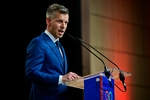
Following a meeting with Presidency members Denis Becirovic and Zeljko Komsic, Van der Bellen addressed a press conference where he balanced diplomatic warmth with the pragmatism of an economist. He began on a light note, congratulating the Bosnian national football team on their recent victory over Italy. "Winning against Italy is a massive achievement," he joked, adding that he "forgot to offer condolences" to the Italian leader during their recent meeting.
The cost of delay: €900 million at risk
However, the tone shifted when the discussion turned to the European Union. Van der Bellen was strikingly candid regarding the financial implications of Bosnia’s current reform pace. He revealed that approximately €900 million (approximately 1.76 billion Bosnian marks) is currently earmarked for BiH, but issued a stern warning that these funds are not static.
"As an economist, I must say that this is not free. This money will not wait forever," Van der Bellen cautioned. "With every month that passes, the likelihood grows that this amount will be reduced or redirected to other needs." He acknowledged that while the path to Brussels is significantly more difficult today than when Austria joined, the geopolitical stakes leave no room for indecision. He warned that if the EU fails to integrate the Western Balkans, a "political vacuum" will be created that global adversaries will be eager to fill.
Security and geopolitics in a "colonial" era
The visit also highlighted Austria’s pivotal role in Bosnia’s security architecture. Currently, 110 Austrian soldiers serve within the EUFOR mission, and Van der Bellen confirmed that an Austrian commander is set to take charge of the mission starting in 2027. This long-term commitment is viewed as essential given the "turbulent geopolitical circumstances" the President described.
Van der Bellen did not mince words regarding Russia's aggression against Ukraine, branding it a "colonial war" more suited to the 17th or 18th century than the modern age. He linked global conflicts directly to the wallets of ordinary citizens, noting that instability in the Middle East and Ukraine destabilizes energy supplies and drives up prices at the pump. He commended Bosnia for aligning its foreign policy with the EU, acknowledging the difficulty of such decisions given the country's complex internal structure.
A Partnership built on people and exports
Beyond security and politics, the human connection remains the bedrock of the relationship. With 170,000 people of Bosnian origin living in Austria and over 3,000 students from BiH currently enrolled in Austrian universities, the President noted that "we cannot imagine Austria without them."
Economically, Austria remains a pillar of investment in Bosnia with over 200 active companies. In a rare trade dynamic, Van der Bellen noted with a smile that Bosnia currently exports more to Austria than it imports. "We will endure that," he quipped, signalling that tonight’s business forum would focus on further expanding these ties. As the visit continues through April 16, the message remains clear: Bosnia has a firm advocate in Vienna, but the clock on European financial and political opportunities is ticking.
Kakvo je tvoje mišljenje o ovome?
Učestvuj u diskusiji ili pročitaj komentare


Kakvo je tvoje mišljenje o ovome?
Učestvuj u diskusiji ili pročitaj komentare