Srbija
 Hrvatska
 Slovenija

Arminka Helic: Bosnia's World Cup team achieved what politicians have failed to do for decades


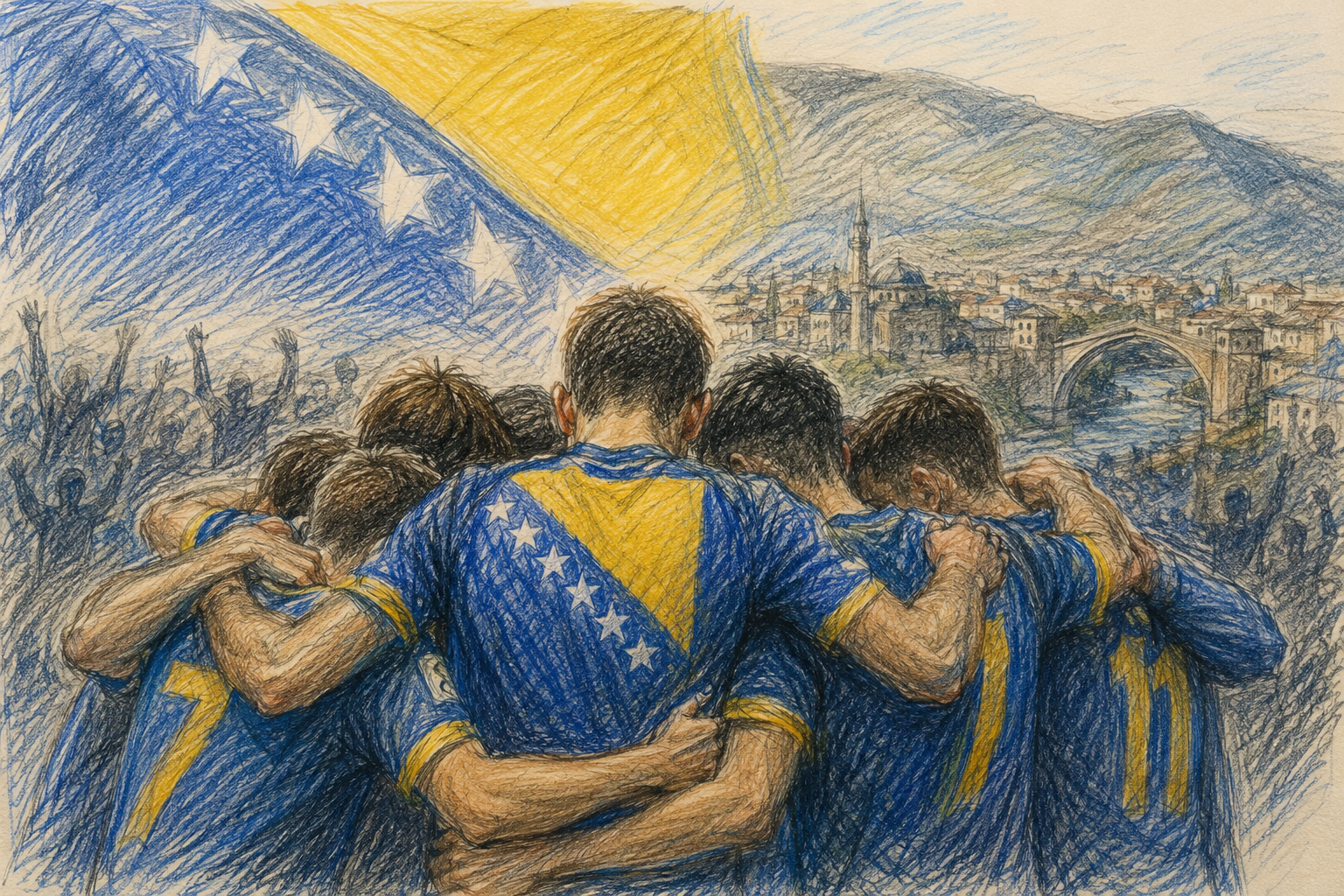
Baroness Arminka Helic, a member of the UK House of Lords originally from Gračanica, Bosnia and Herzegovina, former special adviser to former British Foreign Secretary William Hague and one of the most prominent British political figures of Bosnian origin, has reflected on Bosnia and Herzegovina's historic FIFA World Cup campaign in an opinion article published by the British political affairs website PoliticsHome.
Helic argues that Bosnia and Herzegovina's greatest achievement during the tournament had little to do with football itself. Instead, she says the national team demonstrated that the country can function when people are united by merit and a common goal rather than ethnic division.
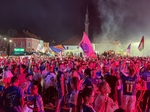

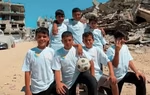
"The most important story was never the result," she writes, noting that some members of the squad are children of survivors of the Srebrenica genocide, while others come from families affected by the siege of Sarajevo, wartime detention camps or forced exile.
According to Helic, for four weeks the team accomplished what Bosnia and Herzegovina's political leaders—and part of the international community—have failed to achieve since the end of the war.
"They gave Bosnians a reason to believe in their country, in one another and in a shared future," she writes.
Helic argues that Bosnia's post-war political system has rewarded division instead of cooperation, saying nationalist leaders have built their political influence by creating crises rather than solving them.
She is particularly critical of narratives portraying Bosnia and Herzegovina as an "artificial state" incapable of functioning, arguing that the national team demonstrated precisely the opposite.
"Its players came from different cities, different communities and families shaped by war in profoundly different ways... Their histories were different. Their shirt was the same," Helic writes.
She adds that during the tournament "nobody asked whether the goalkeeper was Bosniak, Serb or Croat before celebrating a save," arguing that "merit replaced ethnic arithmetic" and that "shared purpose replaced manufactured division."
While acknowledging that football cannot solve Bosnia and Herzegovina's structural political problems, Helic believes it exposed what she describes as a fundamental falsehood.
"But it can expose a lie. The lie is that Bosnia's citizens are incapable of acting together. The lie is that ethnic division is immutable," she writes.
Helic also criticises parts of the international community, arguing that Western governments have too often prioritised short-term stability over confronting political obstruction and secessionist rhetoric.
"For too long, the international community has, in the name of 'stability', all but legitimised those who undermine Bosnia and Herzegovina's constitutional order," she writes.
She concludes that although Bosnia and Herzegovina continues to face political paralysis, corruption and secessionist rhetoric, the World Cup campaign demonstrated that many of the assumptions underpinning the country's political stalemate no longer withstand scrutiny.
"The lesson of this World Cup is that Bosnia and Herzegovina's citizens have once again demonstrated that they are ready for a country built on merit, competence and shared citizenship," Helic concludes, adding that the country "endures because its people continue to choose it."
Kakvo je tvoje mišljenje o ovome?
Učestvuj u diskusiji ili pročitaj komentare


Kakvo je tvoje mišljenje o ovome?
Učestvuj u diskusiji ili pročitaj komentare