Srbija
 Hrvatska
 Slovenija

Raiffeisen expects to retain Addiko banks in Bosnia after Serbian Alta Banka loses licence


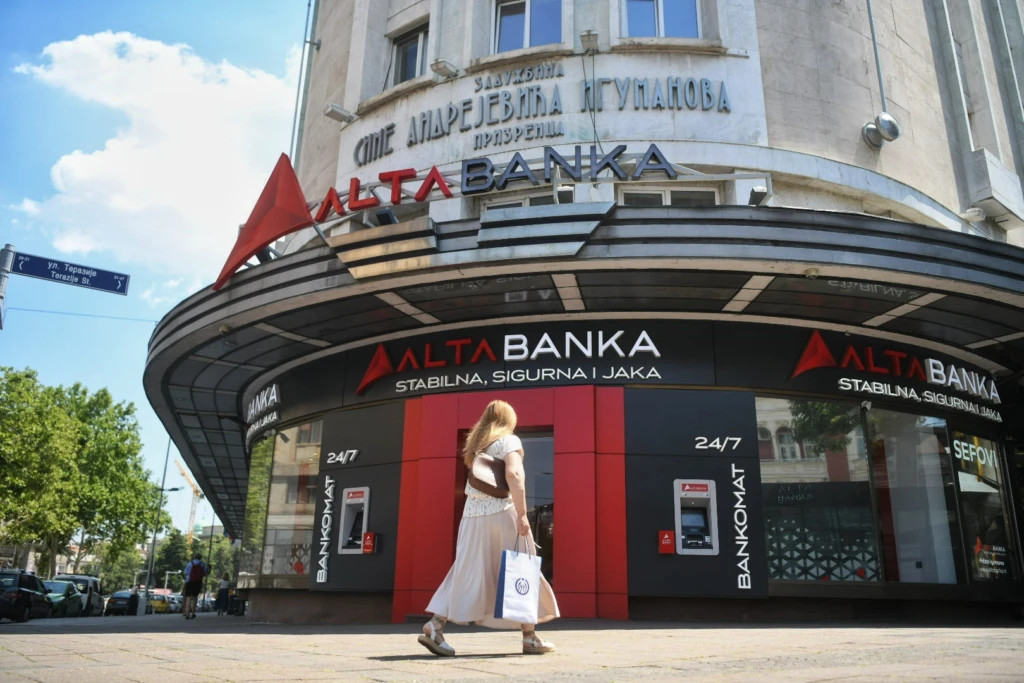
Austria's Raiffeisen Bank International (RBI) expects to retain both Addiko Bank subsidiaries in Bosnia and Herzegovina, abandoning its earlier expectation that they would be transferred to Serbia's Alta Group. The change follows the Serbian central bank's decision to revoke Alta Banka's banking licence amid serious concerns over its financial condition and an investigation into possible transfers of funds abroad.
In a statement issued on Sunday, November 1, RBI said it no longer expected Alta Group to secure the regulatory approvals required for the planned sale of Addiko subsidiaries.
The development affects Addiko Bank Sarajevo and Addiko Bank Banja Luka, which were originally expected to be sold to the Serbian financial group alongside Addiko's operations in Serbia and Montenegro.
RBI now expects to retain all Addiko subsidiaries if its acquisition of the Vienna-based banking group is successfully completed.
How the takeover plans changed
In August, RBI secured sufficient shareholder support for its proposed acquisition of Addiko Bank AG, defeating a competing bid from Slovenia's Nova Ljubljanska Banka (NLB).
Shareholders accepted RBI's offer for 56.16 percent of the shares covered by the bid, exceeding the required minimum threshold of 55 percent.
Under the original plan, RBI intended to retain Addiko's operations in Croatia and Slovenia while selling four subsidiaries outside the European Union to Alta Group, a Serbian financial holding controlled by businessman Davor Macura.
Those subsidiaries included two banks in Bosnia and Herzegovina, one in Serbia and one in Montenegro.
However, after Serbia's central bank revoked Alta Banka's licence on October 31, RBI announced that it no longer expected the planned sale to receive regulatory approval.
The Austrian banking group has not announced that its acquisition of Addiko has been completed or that the planned transaction with Alta Group has formally been terminated.
Alta Banka under investigation in Serbia
The National Bank of Serbia said it had revoked Alta Banka's operating licence after determining that the bank's financial position had deteriorated significantly, with further risks to its liquidity and depositors.
Serbia's Prosecutor's Office for Organised Crime subsequently confirmed receiving a criminal complaint from the central bank against Alta Banka and several responsible individuals.
Prosecutors have also requested an investigation into the bank's operations and the conduct of relevant central bank officials, particularly regarding possible transfers of funds abroad.
The investigation comes shortly after Serbia's parliamentary elections, in which the student-backed opposition defeated the political bloc led by longtime Serbian leader Aleksandar Vucic.
According to the Financial Times, Alta Banka had become an important financial institution for Russian citizens and businesses following Russia's full-scale invasion of Ukraine in 2022.
The newspaper reported that customer deposits had increased more than fivefold since before the invasion and that the bank had faced scrutiny over possible money-laundering concerns.
Serbian officials cited by the Financial Times also reported substantial withdrawals and transfers abroad following the election.
The allegations remain under investigation, and no criminal wrongdoing has been established.
Alta Banka also had financial ties to Bosnia's Republika Srpska
Alta Banka's connections to Bosnia and Herzegovina extended beyond its planned acquisition of Addiko's local subsidiaries.
As previously reported by N1, the Serbian bank provided a €22 million loan to the government of Republika Srpska, one of Bosnia and Herzegovina's two entities.
It also extended a loan worth 4.6 million Bosnian convertible marks, approximately €2.35 million, to the Jahorina Olympic Centre, a major ski resort in Republika Srpska.
The revocation of Alta Banka's licence has raised questions about the future administration of those loans.
However, the closure of a lending bank does not automatically cancel borrowers' repayment obligations. Outstanding loans remain financial claims that must be handled through the applicable legal procedures.
It remains unclear how much of the Republika Srpska government's loan has already been repaid.
What does this mean for Addiko customers in Bosnia?
Addiko Bank has stressed that the developments involving Alta Banka do not affect its existing operations or the wider acquisition process.
Addiko Bank AG CEO Herbert Juranek said the transaction with RBI was proceeding as planned and that the Austrian group was expected to retain all Addiko subsidiaries after completion.
The two Addiko banks in Bosnia and Herzegovina continue to operate under their existing regulatory arrangements.
Addiko has previously assured customers that the ownership process does not require them to take any action and that banking products and services remain available as usual.
The proposed acquisition still requires regulatory approvals, including those from relevant authorities in Bosnia and Herzegovina.
The deadline for satisfying the conditions of RBI's takeover offer is May 14, 2027.
For Bosnia and Herzegovina, the latest development means that two banks previously earmarked for acquisition by a Serbian financial group are instead expected to remain within the Addiko Group under Austrian ownership.
The final outcome will depend on the completion of RBI's acquisition and the required regulatory approvals.
Kakvo je tvoje mišljenje o ovome?
Učestvuj u diskusiji ili pročitaj komentare


Kakvo je tvoje mišljenje o ovome?
Učestvuj u diskusiji ili pročitaj komentare