Srbija
 Hrvatska
 Slovenija

Constitutional Court of Bosnia and Herzegovina: More than 13,000 cases pending due to judge shortage


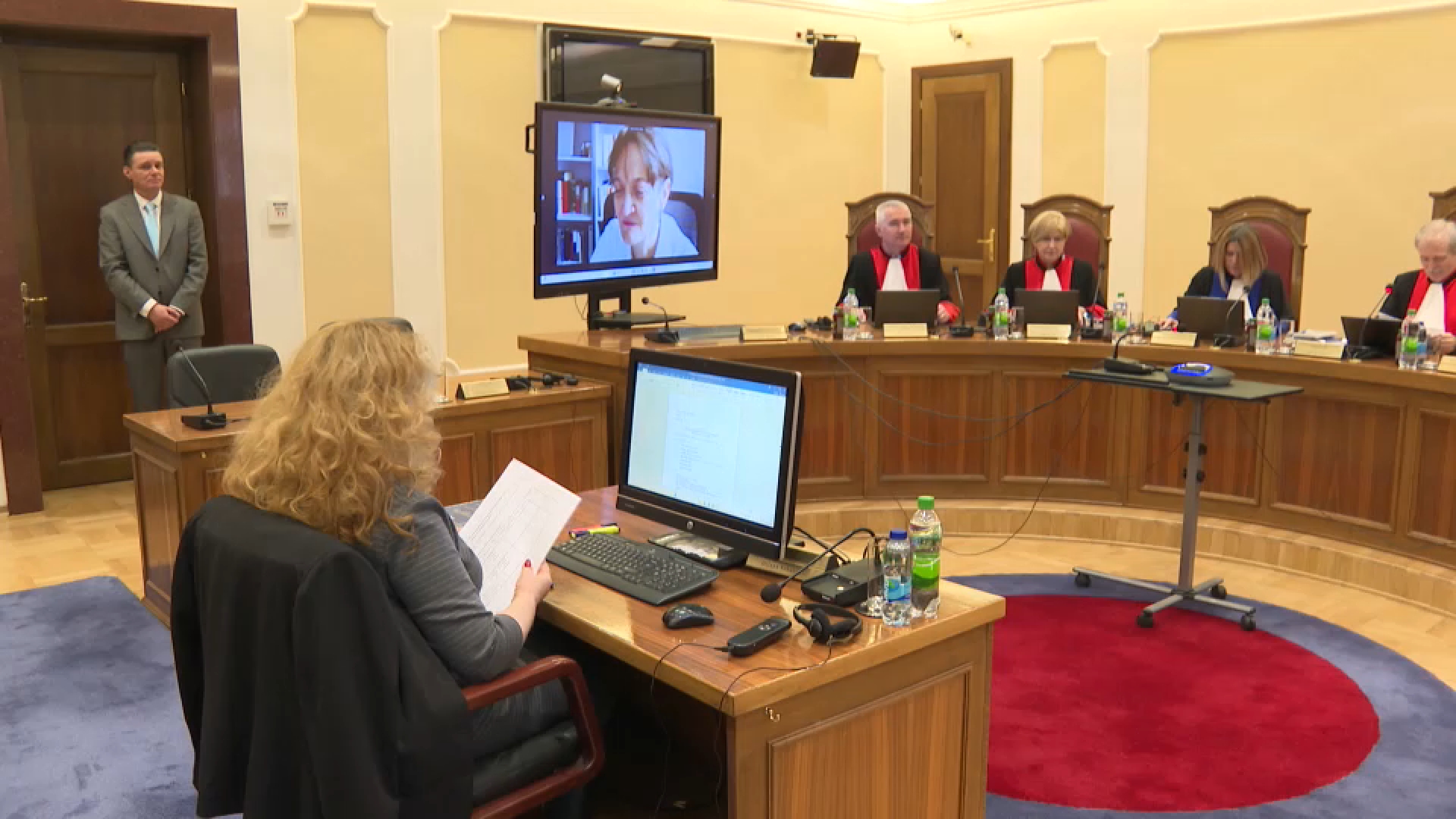
President of the Constitutional Court of Bosnia and Herzegovina, Mirsad Ceman, warned today that the institution is facing serious consequences due to unfilled judicial positions, stating that the number of unresolved cases had reached 13,625 by the end of last year, compared to fewer than 3,000 before what he described as the current judicial deficit emerged.
At a press conference presenting the Court's 2025 performance results, Ceman said that 5,671 cases were received during the past year, while 2,503 were resolved, emphasizing that the Court, without a functional Grand Chamber, is unable to respond to the inflow of cases within a reasonable timeframe.
According to him, the Grand Chamber had previously resolved more than 99 percent of cases, but due to the shortage of judges, the Court is now deciding primarily in plenary sessions, which has further slowed its work.
"I urge the authorities to appoint the judges on time. No one, regardless of their motives, should cast doubt on the constitutionality, legality, and legitimacy of the Constitutional Court," Ceman said, adding that the Court remains constitutional, legal, and legitimate even in its reduced composition.
He stressed that the continuous inflow of appeals from across Bosnia and Herzegovina demonstrates that citizens still trust the Constitutional Court, but that under the current circumstances, the Court cannot issue decisions within a reasonable period, which has also led to an increasing number of complaints being filed with the European Court of Human Rights over violations of the right to a trial within a reasonable time.
Ceman said the Court currently has more than 5,000 draft decisions prepared, but cannot rule on them due to limited resources and the fact that it now operates exclusively through plenary sessions.
He particularly thanked the international judges, stating that without their additional engagement, the Court would have come close to complete paralysis.
Vice President of the Court Valerija Galic warned that failure to implement Constitutional Court decisions is an issue concerning constitutional order, the rule of law, and citizens' trust in state institutions.
She recalled that, under the Constitution of Bosnia and Herzegovina, decisions of the Constitutional Court are final and binding, but noted that for years the Court has faced problems with non-enforcement. She cited cases related to the Statute of the City of Mostar, the Law on the Sale of Apartments with Occupancy Rights, and the Election Law of Bosnia and Herzegovina as examples.
"Certain authorities continued applying provisions that the Constitutional Court had previously declared unconstitutional, while appellate cases revealed systemic problems related to the length of court proceedings, enforcement of final judgments, old foreign-currency savings, military apartments, and other issues," Galic said.
She added that the non-enforcement of Constitutional Court rulings had also led the European Court of Human Rights to find human rights violations in cases from Bosnia and Herzegovina.
International judge Angelika Nußberger described the Constitutional Court of BiH as a unique and advanced European institution because of its combined composition of domestic and international judges and the direct application of the European Convention on Human Rights.
She said international judges actively participate in all cases and administrative matters after the Court lost its full composition, which has additionally slowed processes due to the need to translate a large volume of materials.
"For outside observers, despite the absence of two judges, the work is not blocked. The Constitutional Court is functioning, and its case law is relevant for the entire region and Europe," Nußberger stated.
Speaking about the composition of the Constitutional Court, Ceman stressed that judges are not elected as representatives of ethnic groups, but according to the territorial principle defined by the Constitution of Bosnia and Herzegovina.
The conference also presented the "Yearbook of the Constitutional Court of Bosnia and Herzegovina 2025", along with an overview of the Court's work and functioning under the current circumstances.
Kakvo je tvoje mišljenje o ovome?
Učestvuj u diskusiji ili pročitaj komentare


Kakvo je tvoje mišljenje o ovome?
Učestvuj u diskusiji ili pročitaj komentare