Srbija
 Hrvatska
 Slovenija

Jandrokovic, Covic visit Krk LNG terminal, discuss energy cooperation


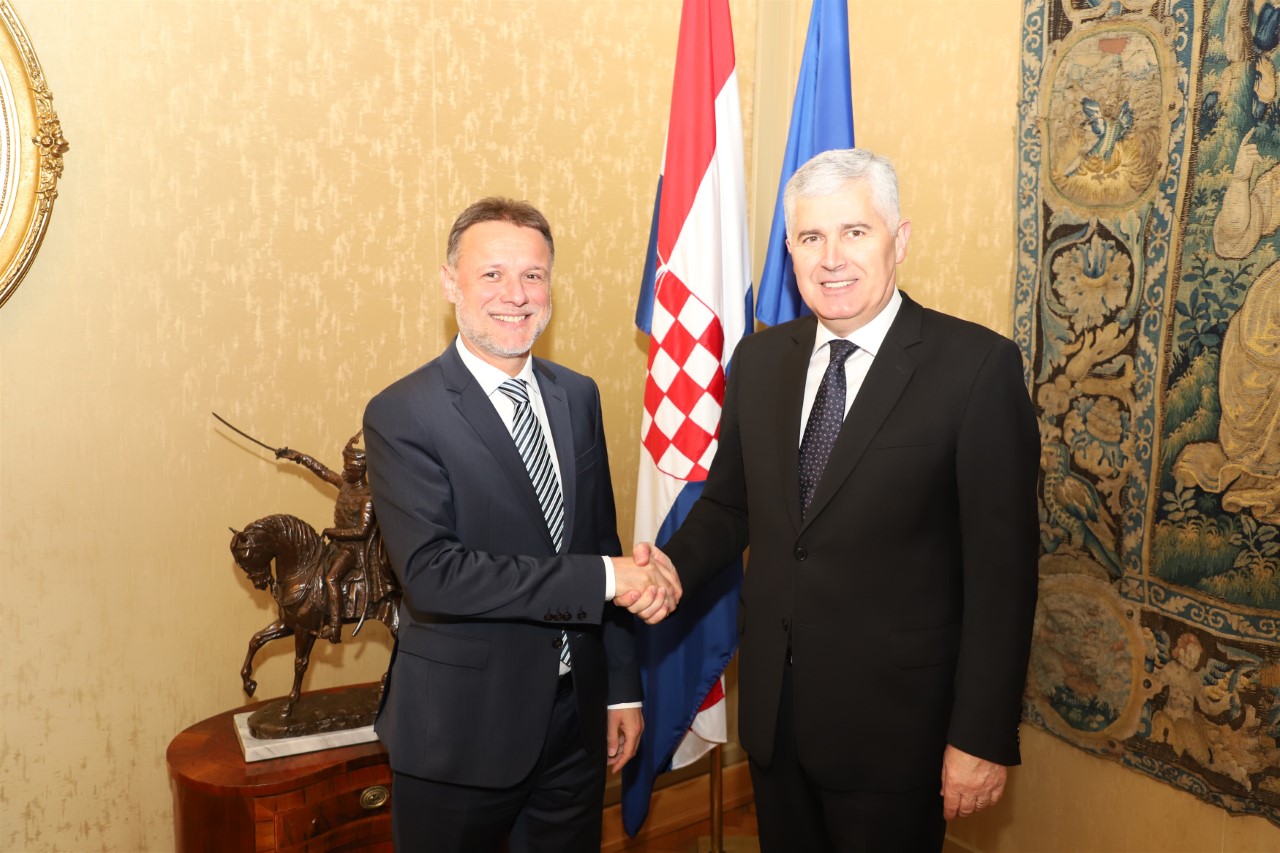
Sabor Speaker Gordan Jandrokovic and Dragan Covic, speaker of the upper house of Bosnia and Herzegovina's Parliament, on Tuesday visited the LNG terminal on the island of Krk to discuss energy cooperation and the planned Southern Interconnection pipeline linking BiH with the Croatian terminal.
Jandrokovic said Croatia still needed to build 74 km of gas pipeline and Bosnia roughly twice that, but that conditions were in place to complete the project within the next few years.
He described the Krk LNG terminal as Croatia's key energy infrastructure project, saying it had turned the country into a regional gas hub supplying Hungary and Slovenia, with capacity expansion under way. Once the Southern Interconnection pipeline is completed, Bosnia will also be supplied via the terminal, he said.
Covic said the Southern Interconnection was a strategic priority for Bosnia, not only in energy, infrastructure and economic terms but also for national security.
He said the Federation entity had amended the necessary legislation and signed an agreement with Croatia, with the next step being finalisation of arrangements with the US partner backing the project.
Covic said Bosnia would also need to invest heavily in gas-based energy infrastructure, as natural gas currently plays only a limited role in the country's energy mix. He estimated the project, including pipeline construction and gasification, would take four to five years to complete.
Krk LNG terminal expects utilisation to rise to 4.5 bcm
LNG Croatia chief executive Ivan Fugas said the Krk LNG terminal currently uses 3.5 billion cubic metres (bcm) of its annual capacity of 6.1 bcm.
Once state-run gas transmission operator Plinacro completes the remaining pipeline upgrades as part of the capacity expansion project, utilisation is expected to increase to 4.5 bcm next year, he said. The remaining capacity will be kept available to ensure operational flexibility and offered on the spot market if additional demand arises.
Fugas said the terminal must always retain spare capacity to ensure it can meet contractual obligations in the event of disruptions or operational incidents.
He added that 32 LNG carriers are scheduled to call at the terminal during the current gas year, which ends in late September, up from 30 a year earlier.
The terminal's floating storage and regasification unit, LNG Croatia, underwent an upgrade and overhaul at Turkey's Kuzey Star shipyard last year, including the installation of an additional regasification module supplied by Wärtsilä Gas Solutions.
The upgrade doubled the terminal's maximum annual capacity from 3.1 bcm to 6.1 bcm. Use of the additional capacity will increase gradually as Croatia expands its gas transmission network and pipeline infrastructure.
Kakvo je tvoje mišljenje o ovome?
Učestvuj u diskusiji ili pročitaj komentare


Kakvo je tvoje mišljenje o ovome?
Učestvuj u diskusiji ili pročitaj komentare