Srbija
 Hrvatska
 Slovenija

Maksic on ‘Pay to Play’ report: BiH citizens could end up paying the price


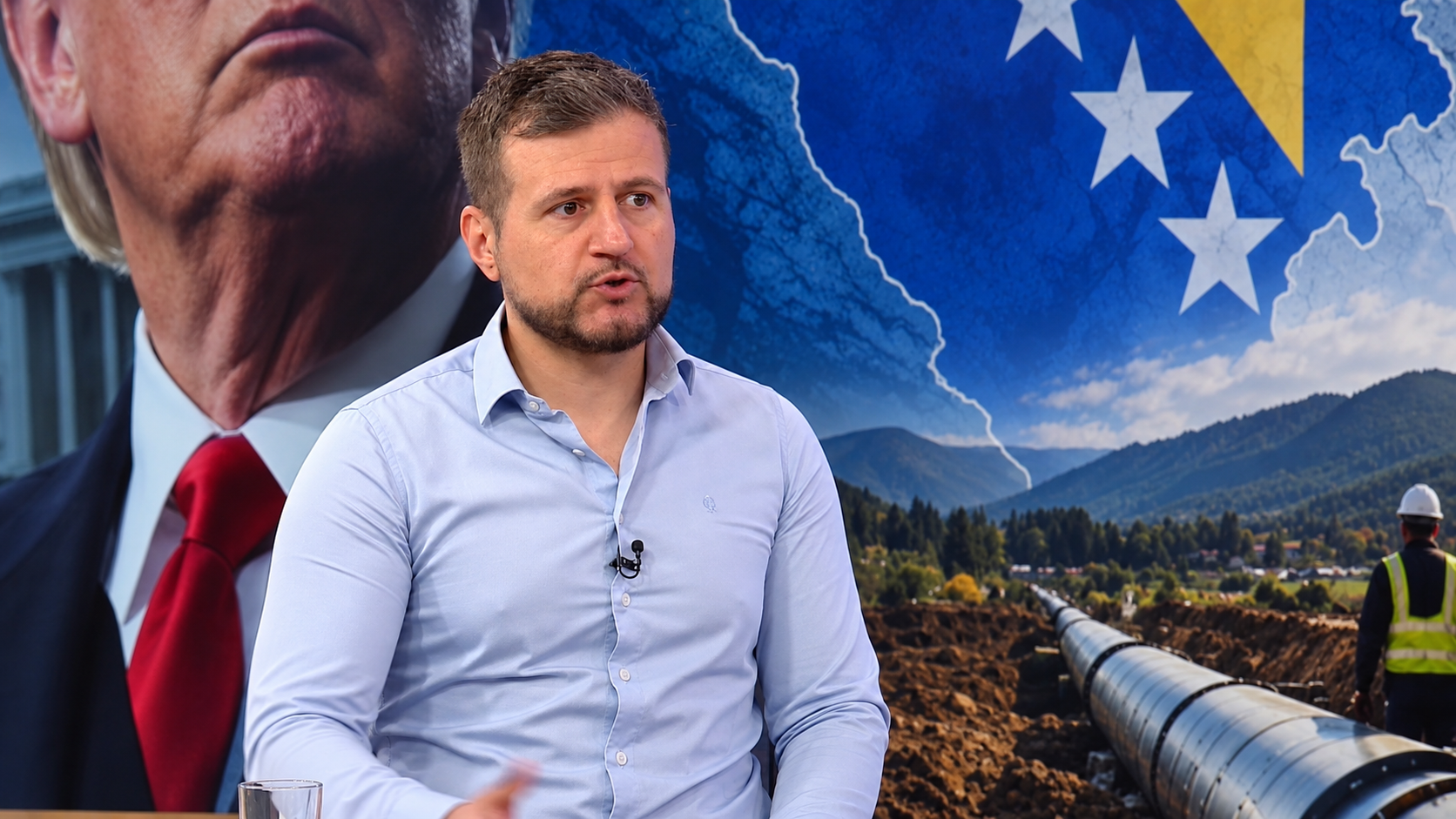
The “Pay to Play” report led by Bill Keating, the ranking Democrat on the US House Foreign Affairs Subcommittee on Europe, should be taken very seriously because it raises questions extending far beyond alleged corruption or conflicts of interest, Professor Adis Maksic told N1.
Speaking on N1’s Novi dan, Maksic said the report points to a broader pattern in US foreign policy in which state and private interests increasingly overlap.
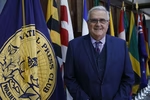
“I would take this report very seriously. This is not only about corruption or conflicts of interest, but about an entire pattern of behaviour at the level of foreign policy,” Maksic said.
The report, he noted, focuses on the Southern Interconnection gas project but raises broader questions about the US approach to the Balkans.
Asked who ultimately “pays” in such a “pay to play” system, Maksic warned: “I am afraid that we will be the ones who pay, while people around Donald Trump and the administration are the ones who play.”
State property issue ‘most serious’
Maksic said one of the most sensitive aspects of the Southern Interconnection project was its potential connection to the unresolved issue of state property in Bosnia and Herzegovina.
“I think you have hit the core of the issue. This is what is most serious,” he said. “The Southern Interconnection will have to pass through state property. And for it to pass through state property, that issue will somehow have to be resolved.”
What matters, Maksic argued, is how that solution is reached. He cautioned against assuming that the Trump administration would necessarily prioritise the long-term consequences for Bosnia and Herzegovina, while stressing that no final agreement has yet been reached.
He warned in particular against a solution under which resources would be registered to the entities.
“Imagine: resources go to the entities, and the state has to ask the entities for the use of certain resources,” Maksic said. Such an arrangement, he argued, could reduce Bosnia and Herzegovina to “a shell”, strengthen the entities as effectively autonomous actors and increase the potential for future secessionism.
‘Citizens could pay the price’
Maksic stressed that nothing has yet been signed and argued that those responsible for protecting Bosnia and Herzegovina’s interests should establish clear red lines.
“The most important thing is that the Southern Interconnection issue is not linked to the issue of state property in a way that is harmful to the state, because that damage could be irreparable,” he said.
He also questioned how the company connected to the project was selected, claiming the process lacked both competition and transparency and that the company had no relevant regional or energy-sector experience.
Ultimately, Maksic said responsibility rests with BiH officials to ensure that citizens do not bear the financial consequences of any eventual arrangement.
“Responsibility lies with our politicians to finally stop this deal from being concluded in a way in which the citizens of Bosnia and Herzegovina will pay the price,” he said.
Maksic also warned about potential consequences for businesses dependent on gas, questioning whether sufficient analysis had been conducted of how future energy prices could affect their competitiveness.
Kakvo je tvoje mišljenje o ovome?
Učestvuj u diskusiji ili pročitaj komentare


Kakvo je tvoje mišljenje o ovome?
Učestvuj u diskusiji ili pročitaj komentare