Srbija
 Hrvatska
 Slovenija

Martin Schirdewan to N1: Fear is not just a political weapon, it's a profitable business


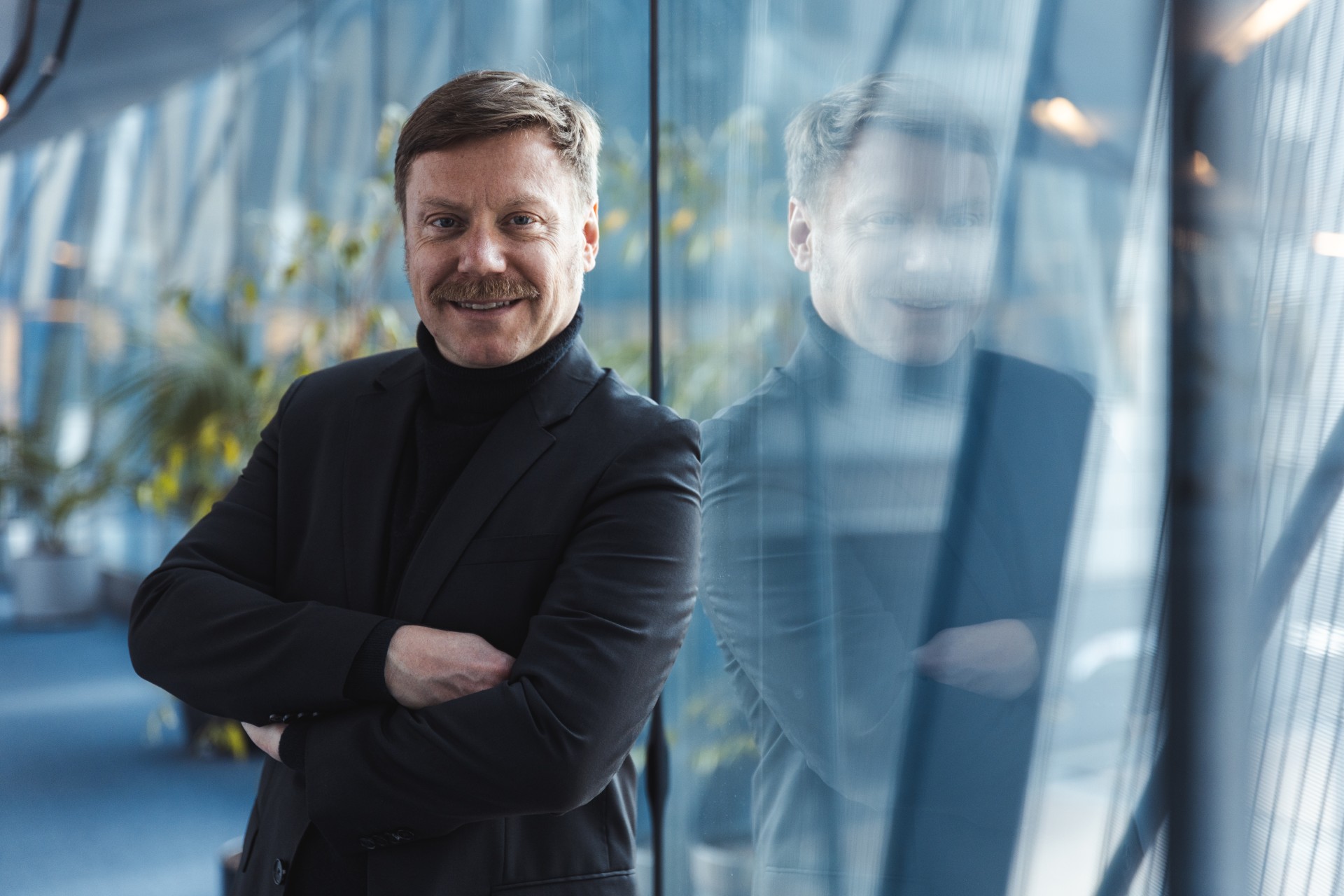
Martin Schirdewan, a German Member of the European Parliament and co-chair of The Left group, has warned that Europe's far right is exploiting economic insecurity, spreading hatred through digital networks and diverting public attention from growing social inequality. In an exclusive interview with N1's Nikola Vucic, he also criticized Europe's rising military spending, the influence of major corporations and the use of ethnic divisions by nationalist parties in Bosnia and Herzegovina. "Fear is not only a powerful political instrument. It is also an extremely profitable business," Schirdewan said.
Schirdewan, a leading figure in Germany's Die Linke who has also contributed to Jacobin, argued that Europe's political crisis cannot be separated from decades of economic policies that have favored corporate interests while leaving millions struggling with rising living costs. He discussed the resurgence of the far right, the future of the European left, the challenges of entering government without abandoning political principles, and the need for Europe to pursue an independent political course.
Far-right propaganda and the politics of anger
Schirdewan strongly rejected the increasingly common comparison between the radical left and the far right as two equally dangerous political extremes.
"Equating the left with the right is not only wrong, it is extremely dangerous," he told N1, arguing that while the left seeks to strengthen democratic and social rights, the far right uses democratic institutions to undermine democracy from within.
He acknowledged that public anger across Europe has legitimate causes, from rising inequality and the cost of housing to wars, climate change and declining confidence in political institutions.
"The far right has no answer to the question of how to make housing affordable again or how to make sure people can earn a decent living from their work. Instead, it drowns out those questions with a manufactured culture war," Schirdewan said.
According to him, far-right movements have become particularly effective at exploiting social media and messaging platforms to turn frustration into political support.
"Online, it's easy to keep people engaged by stoking anger and fear," he said, pointing to the extensive networks built by Germany's AfD and France's National Rally on WhatsApp and Telegram.
"In those networks, journalists are smeared, democratic politicians are ridiculed, and people's anger is picked up and amplified. That sows distrust in established media."
Schirdewan warned that constant exposure to such content can gradually change political attitudes, even among people who previously did not identify with the right.
"Watching right-wing content can lead to agreement. Agreement can turn into political conviction and eventually determine how someone votes," he explained.
Bosnia and Herzegovina: Nationalist parties exploit ethnic divisions
Turning to the Western Balkans, Schirdewan argued that the region must not be treated as peripheral to Europe's democratic future.
"The Balkans are part of Europe, and the people living there must have the same prospects for democracy, social security and a life in peace as all other Europeans," he said.
He was particularly critical of nationalist politics in Bosnia and Herzegovina.
"In Bosnia and Herzegovina in particular, we see how nationalist and right-wing parties exploit ethnic differences to turn communities against one another and secure their own power."
Schirdewan linked the persistence of ethnic divisions to economic insecurity and the failure of political institutions to address citizens' everyday concerns.
"Where the media cannot report freely, corruption and abuses of power remain hidden. And where people are played off against one another on the basis of their ethnicity, social issues are pushed into the background," he said.
Asked by Vucic whether Bosnia's constitutional system, which incorporates ethnic representation, requires a different approach from the European left, Schirdewan acknowledged the historical significance of the Dayton Peace Agreement.
"More than 30 years on, that constitutional order also needs to meet the demands of a modern democracy," he said.
He emphasized that the country's future must be built on equal democratic and social rights, while guaranteeing the safety and rights of every community.
"Right-wing parties are only too happy to keep the debate focused on ethnic differences because it gives them an opportunity to spread hate."
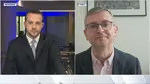
Martin Schirdewan speaks to N1's Nikola Vucic about the rise of the far right, political propaganda, Bosnia and Herzegovina's constitutional future, the crisis of the European left and the growing influence of the arms industry.
Can the left enter power without becoming part of the establishment?
Discussing Germany's Die Linke, Schirdewan argued that the party's political recovery was based not simply on ideological radicalism but on rebuilding credibility with voters.
"People do not vote for you simply because you are radical. What matters is credibility," he said.
He pointed to the party's focus on affordable housing, social justice and practical improvements in people's lives as an alternative to the politics of resentment promoted by the far right.
Vucic also brought up remarks made by former Greek finance minister Yanis Varoufakis in an earlier N1 interview. Varoufakis had welcomed Die Linke's political success in Berlin but warned about the danger of left-wing movements being absorbed by the political establishment once they approach power.
Schirdewan acknowledged the challenge.


"For a left-wing party, it's often easier to criticise from the opposition benches than it is to make people's lives better, step by step, in your own country while taking on powerful financial interests," he said.
Nevertheless, he insisted that Die Linke could exercise political power without surrendering its principles.
"We're here to change the way things are, not to become part of the way things are."
Military spending and the business of fear
Schirdewan also challenged Europe's increasing emphasis on rearmament and military expenditure, arguing that greater defense budgets do not automatically translate into greater security.
He acknowledged Ukraine's right to defend itself against Russian attacks, including the need to intercept missiles and drones targeting civilians.
"When a Russian missile or drone is heading towards a hospital in Ukraine, Ukraine must have the means to shoot it down and save human lives," he said.
But he rejected the conclusion that European governments must continually increase military spending.
"We are talking about billions flowing into the coffers of arms manufacturers, while at the same time we are told that cuts must be made to the welfare state, education and public infrastructure."
He questioned why the European Union has significantly increased defense expenditure while governments continue to argue that their armed forces remain inadequately equipped.
"Fear is not only a powerful political instrument. It is also an extremely profitable business," Schirdewan warned.
For him, security cannot be reduced to military expenditure.
"Security comes from diplomacy, social stability, international cooperation and respect for international law. Peace is not achieved through weapons, but through policies that prevent them from being used in the first place."
Europe must decide its own future
Looking at the broader political direction of Europe, Schirdewan criticized decades of policies pursued by conservatives and social democrats, arguing that economic growth and corporate profitability have too often been treated as guarantees of public prosperity.
"For decades, conservatives and social democrats promised people that everything would work out as long as big business was doing well," he said.
Instead, he argued, millions of Europeans now struggle to afford housing, energy and other basic necessities while major corporations continue to increase their profits.
Schirdewan also called for Europe to develop a political approach independent of the competing interests of the United States, China and Russia.
"We do not need a new world order in which authoritarians and tech billionaires divide the world among themselves," he said.
He argued that the European left's responsibility is to defend the welfare state, confront corporate influence and restore ordinary people's ability to shape their own political and economic future.
"We want a society in which people themselves can determine their own future. And to achieve that, we must push back against the influence of big corporations and their political interests."
Kakvo je tvoje mišljenje o ovome?
Učestvuj u diskusiji ili pročitaj komentare


Kakvo je tvoje mišljenje o ovome?
Učestvuj u diskusiji ili pročitaj komentare