Srbija
 Hrvatska
 Slovenija

FBiH Employers Association outlines key legislative and fiscal priorities in Sarajevo


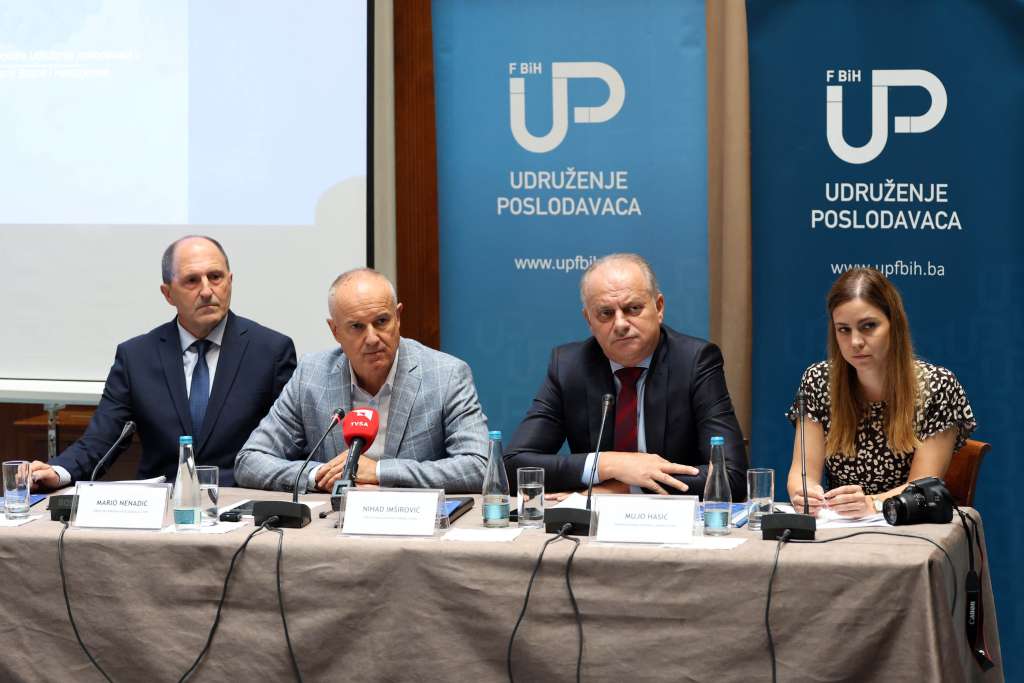
The Employers Association of the Federation of Bosnia and Herzegovina presented a strategic document in Sarajevo outlining key expectations from authorities, identifying the continuation of fiscal reforms through amendments to the Law on Contributions as a primary priority.
Association President Nihad Imsirovic stated that the agenda involves reducing contributions and other employer obligations, harmonising tax policy with minimum wage regulations, and implementing the Law on Fiscalization. Employers also called for labor law reform, including the adoption of a modern regulatory framework to balance the interests of the government, trade unions, and employers.
Imsirovic emphasized the necessity of adopting a Law on Employment Mediation and Social Security of Unemployed Persons to provide an accurate depiction of the labor market, separate active job seekers from passive ones, modernise employment services, and increase employer involvement in employment programs. Additional priorities include improving the Occupational Safety and Health Law, regulating domestic trade, e-commerce, price controls, and consumer protection.
Further legislative goals encompass enacting laws on the Economic and Social Council, public-private partnerships, concessions, and forests, alongside establishing specialised commercial courts, simplifying business registration, and refining regulations across industrialisation, energy, tourism, spatial planning, transport, communications, agriculture, criminal law, and inspection oversight.
Association Vice President Mujo Hasic presented priorities falling under state-level jurisdiction, which feature the continued reform of the value-added tax system. This involves harmonising deadlines for filing returns and making payments, alongside introducing the payment of value-added tax upon collection rather than upon invoice issuance.
At the state level, employers also anticipate the regulation of payment services, electronic money, and foreign exchange operations, the potential reduction or temporary suspension of fuel excise duties during major energy market disruptions, and the introduction of a zero customs duty rate on equipment, raw materials, and spare parts not produced domestically.
Kakvo je tvoje mišljenje o ovome?
Učestvuj u diskusiji ili pročitaj komentare


Kakvo je tvoje mišljenje o ovome?
Učestvuj u diskusiji ili pročitaj komentare